
Garnet · Grade 6
Wonder Town › Question banks › Japan › Grade 6
JapanJapanese 6th grade math questions
This bank follows Japan’s Course of Study for sixth grade, the last year of elementary school. It practises symmetrical figures, expressions with x, multiplying and dividing fractions (to divide, multiply by the reciprocal), ratios, enlargements and map scales, the mean, median and mode, the area of a circle, the volume of prisms and cylinders, direct and inverse proportion, and counting arrangements and combinations. Every question has four choices and a short explanation.
Free. Loading needs a sign-in; reading this page does not.
What the Japanese 6th grade math questions cover
Symmetrical figures
How many lines of symmetry a shape has (a rectangle has 2, a parallelogram none), and matching points in line and point symmetry.
Expressions with x
Find x in x × 6 = 48, the value of 8 × x + 5 when x = 7, and a price written with x.
Fraction × and ÷
4/9 × 3/8 = 1/6 (cancel first) and 1/2 ÷ 3/8 = 4/3 (multiply by the reciprocal), also with whole numbers.
Ratios
Simplify 18 : 24, 1.2 : 1.8 or 2/3 : 3/4, find x in 3 : 4 = x : 20, and share 56 in the ratio 3 : 4.
Enlargements and scale drawings
Real distances on a 1 : 25000 map, sides of an enlargement or a reduction, and why the angles stay the same.
Mean, median and mode
The mean, the median and the mode of a small set of data, such as books read by 7 villagers.
Area of a circle
Radius × radius × 3.14, from a radius or a diameter, and half and quarter circles.
Volume of prisms and cylinders
Base area × height for triangular and trapezoid prisms and for cylinders (π = 3.14).
Direct and inverse proportion
y = (fixed number) × x and y = (fixed number) ÷ x: find y, or the formula, from one pair of values.
Arrangements and combinations
Orders in a row, a leader and a deputy, matches between teams, two-digit numbers from cards, and coin tosses.
Which town practises which topic
Wonder Town has 13 towns, opened one after another. With this bank the first 12 walk through its 10 topics in the order of the curriculum, one topic per town, and the core topics get more than one town. The last town mixes every topic as a review. Each question bank keeps its own progress, so changing banks never loses your place in another.
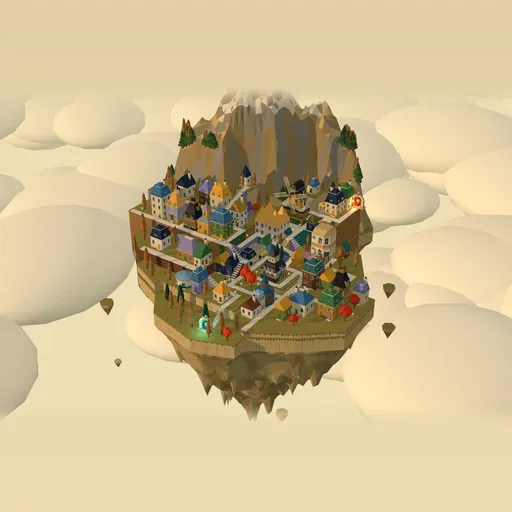 Town 1CloudrestSymmetrical figures
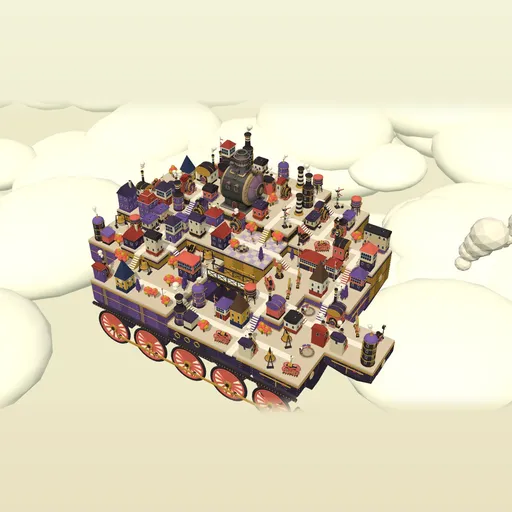 Town 2IronwhistleExpressions with x
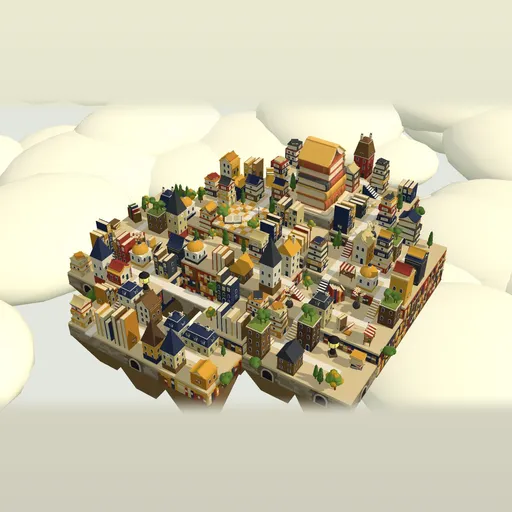 Town 3PagewickFraction × and ÷
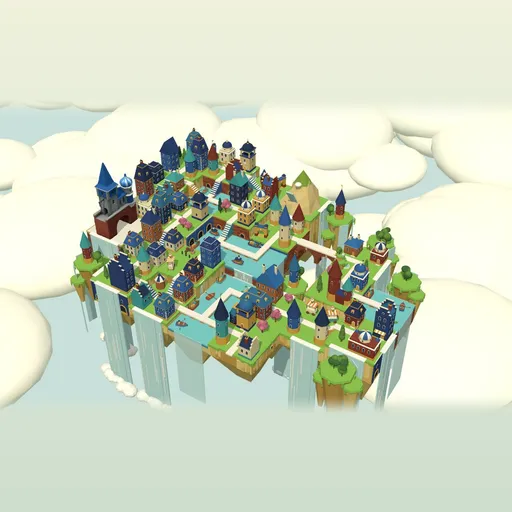 Town 4Blue FallsFraction × and ÷
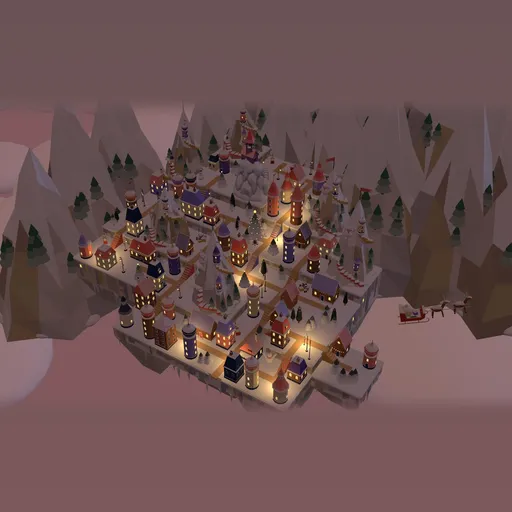 Town 5FrostpeakRatios
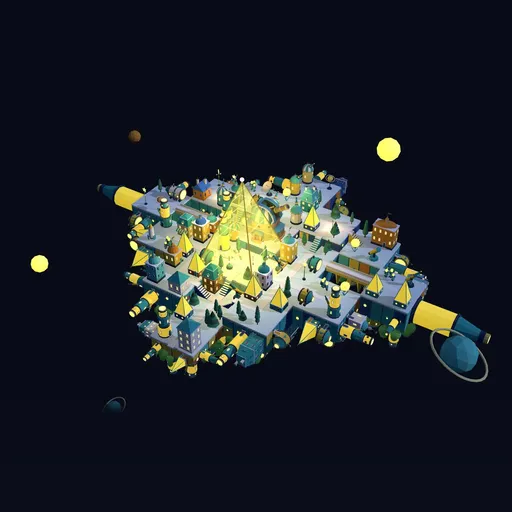 Town 6StarhavenRatios
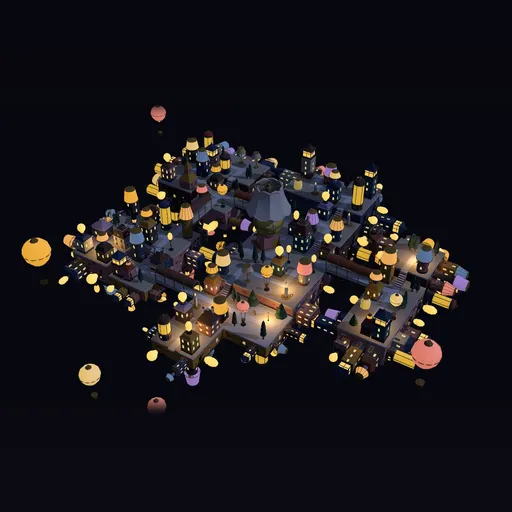 Town 7LumenEnlargements and scale drawings
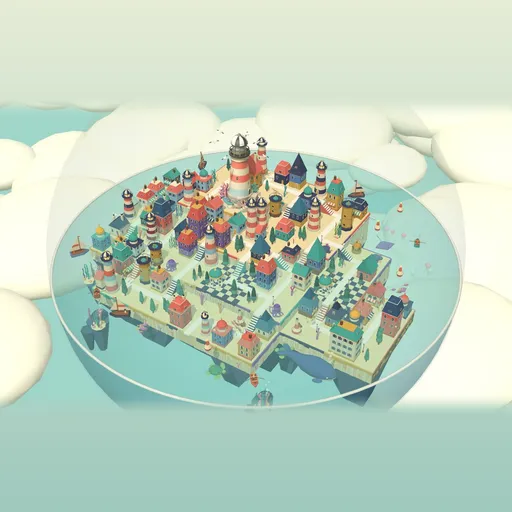 Town 8CoralportMean, median and mode
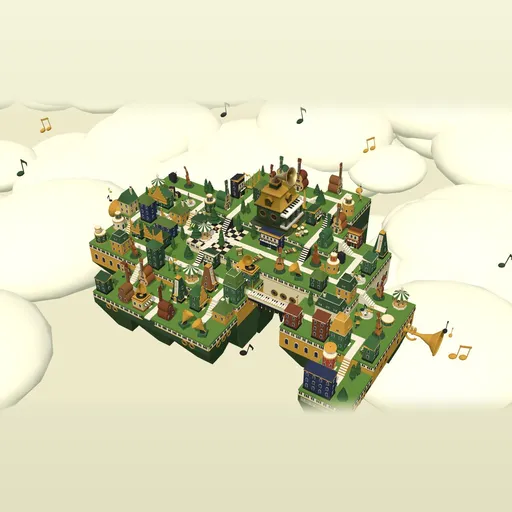 Town 9HarmoniaArea of a circle
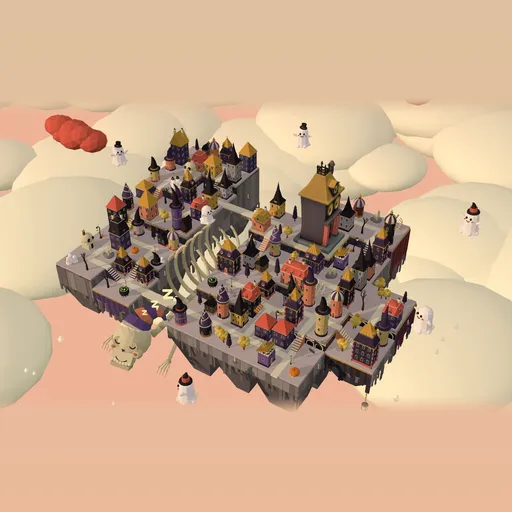 Town 10HollowmereVolume of prisms and cylinders
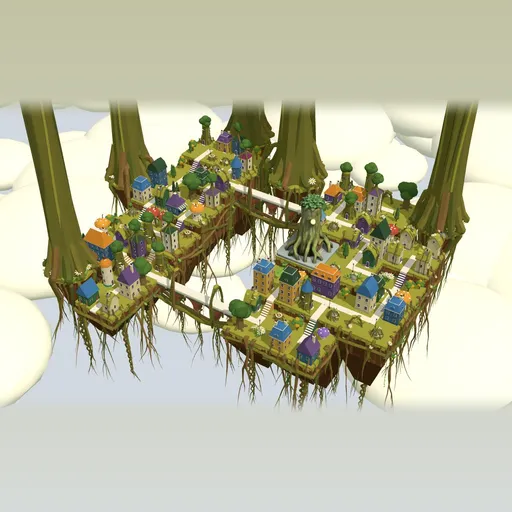 Town 11RootwoodDirect and inverse proportion
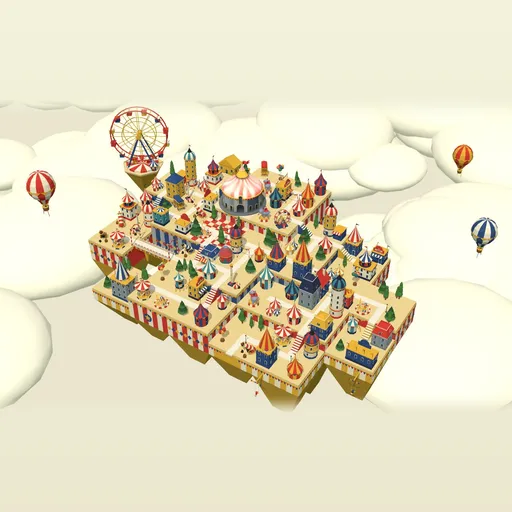 Town 12BigtopArrangements and combinations
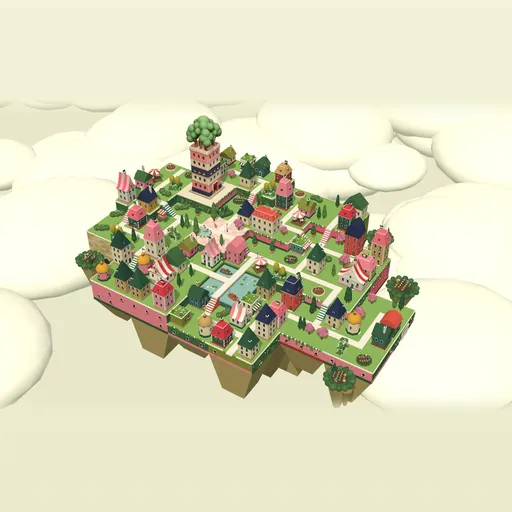 Town 13RosemoorReview of all 10 topics
Sample questions with answers
These were produced by the same generator the game uses, so the questions in the town look like these with different numbers. The correct choice is marked.
How many lines of symmetry does a regular octagon have?
- 16
- 9
- 8
- 7
How to think about it: A regular polygon has as many lines of symmetry as it has sides: 8.
From 4 villagers, a leader and a deputy are chosen. How many different ways are there?
- 12
- 6
- 16
- 8
How to think about it: The leader can be any of 4, then the deputy any of the other 3: 4 × 3 = 12.
1/5 × 5 = ?
- 5/25
- 1/25
- 1
- 6/5
How to think about it: Multiply only the numerator by 5: (1 × 5)/5 = 1.
9/5 ÷ 3 = ?
- 27/5
- 5/3
- 9/8
- 3/5
How to think about it: Multiply only the denominator by 3: 9/(5 × 3) = 3/5.
In an enlargement 2 times as large of a triangle, what does a 70° angle become?
- 35°
- 72°
- 140°
- 70°
How to think about it: Enlarging changes the lengths, not the shape: matching angles stay the same, 70°.
A prism has a trapezoid base (parallel sides 2 cm and 5 cm, height 6 cm). The prism is 9 cm tall. What is its volume in cm³?
- 270
- 378
- 189
- 30
How to think about it: Base area = (2 + 5) × 6 ÷ 2 = 21 cm², so volume = 21 × 9 = 189 cm³.
How to practise with this bank
- Press “Load this question bank”. Its crystal is set into the stele of your account.
- Enter the town and pick a character. A round lasts five minutes.
- Each villager on your road asks one question from this bank. Answer it to pass.
- After a wrong answer, read the explanation and try a new question of the same kind.
The Garnet crystal
Garnet is a deep red stone, clear enough to glow from inside, with flat faces that flash as it turns. It holds the sixth year, the bridge from arithmetic to the algebra that follows.
At a glance
- Country
- Japan
- Grade
- Grade 6
- Subject
- Math
- Question types
- 10
- Format
- Multiple choice, 4 options
- Follows
- Japan’s Course of Study for elementary math (MEXT), grade 6
- Languages
- English, 中文, 日本語
- Price
- Free bank; in the game, the first 3 towns are free and the Passport ($9.80 a month) opens all 13
Other grades · Japan
Grade 6 in other countries
Questions about this bank
What do the Japanese 6th grade math questions cover?
This bank follows Japan’s Course of Study for sixth grade, the last year of elementary school. It practises symmetrical figures, expressions with x, multiplying and dividing fractions (to divide, multiply by the reciprocal), ratios, enlargements and map scales, the mean, median and mode, the area of a circle, the volume of prisms and cylinders, direct and inverse proportion, and counting arrangements and combinations. Every question has four choices and a short explanation. Topics: Symmetrical figures, Expressions with x, Fraction × and ÷, Ratios, Enlargements and scale drawings, Mean, median and mode, Area of a circle, Volume of prisms and cylinders, Direct and inverse proportion, Arrangements and combinations.
Are these Japanese 6th grade math questions free?
Yes. The bank is free to read here and to load, with no ads. In the game the first three towns are free with it: the first town needs no account, towns 2 and 3 a free account. The Passport ($9.80 a month) opens all thirteen towns and question banks of your own.
Do the questions come with answers?
Yes. Every question has one correct choice out of four and a short explanation. In the game the explanation appears after a wrong answer; on this page it is shown under each sample.
How many questions are in the bank?
There is no fixed number. Questions are generated with new numbers each time, so every round is different while the skills stay the same.
What if the Grade 6 questions are too hard or too easy?
Load the bank for Grade 5 or Grade 7 instead. You can change banks as often as you like.