
Wonder Town › Prodigy Math alternative
An alternative to Prodigy Math
Prodigy is one of the best-known math games, and plenty of children love it. Parents who look for an alternative usually want something different: no battles, shorter sessions, no ads, or practice built from what their child got wrong at school. Here is how Wonder Town compares, written by its makers and checked against Prodigy’s own pages.
First town: no account needed · First 3 towns free · No download
Plays onComputersiPad and tabletsiPhone and Android
The short answer
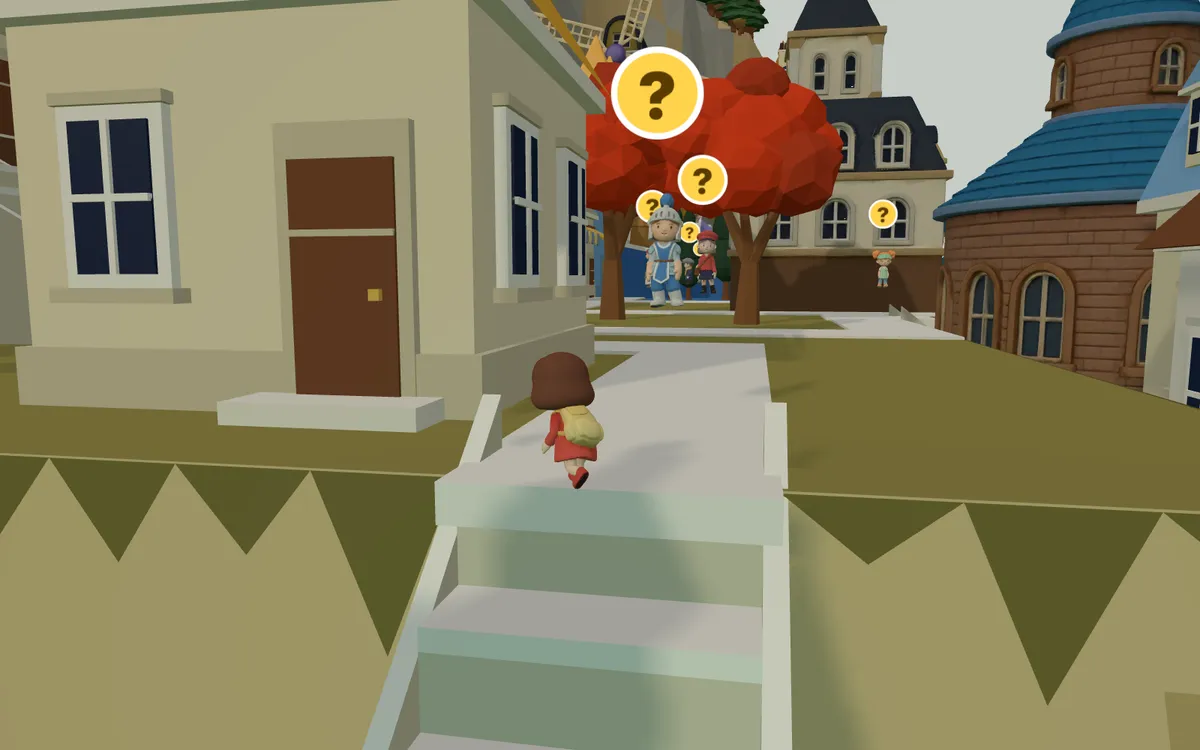
Wonder Town is a good alternative to Prodigy for grades 1 to 5 if you want exploration instead of combat, short rounds with a clear end, a curriculum from the US, China, Japan, Singapore or India, or your child’s own test questions turned into the game. Prodigy is the better choice for grades 6 to 8, for children who love battles and pets, and if you want a placement test and adaptive difficulty, which Wonder Town does not have yet.
Both can be tried for free. Prodigy’s in-game math questions are free, and so are Wonder Town’s first three towns: the first needs no account, the next two a free one.
Wonder Town at a glance
- What it is
- A 3D math adventure game for kids in grades 1–5 (ages 6–11)
- Free
- The first 3 towns
- Account
- None needed for the first town; a free account for towns 2 and 3
- Passport
- $19.80 a month: all 13 towns, cancel any time
- Own question banks
- With the Passport, from photos of tests and homework
- Towns
- 13, each with its own story; the last one reviews every topic
- Ads and chat
- None
- Plays on
- Computers, iPad and other tablets, iPhone and Android phones, in the browser; no download
Sample questions from the game
These are questions Wonder Town’s villagers ask, from the same generators the game uses, with fresh numbers every time.
3 × 8 = ?
- 27
- 16
- 24
- 28
How to think about it: 3 groups of 8: 8 + 8 + 8 = 24.
Long division: 168 ÷ 8 = ?
- 21
- 20
- 22
- 31
How to think about it: 8 × 20 = 160, which leaves 8. 8 × 1 = 8. So the answer is 21.
1/2 + 2/3 = ?
- 3/6
- 4/3
- 3/5
- 7/6
How to think about it: Use the common denominator 6: 3/6 + 4/6 = 7/6.
Prodigy Math and Wonder Town side by side
| Prodigy Math | Wonder Town | |
|---|---|---|
| Grades | Math for grades 1–8 (English and science for grades 1–6) | Math for grades 1–5 |
| Curriculum | “Aligned with your state or province’s curriculum standards” | Question banks for the US (Common Core), China, Japan, Singapore and India |
| How it is played | A wizard battles monsters and other players; a right answer makes a spell succeed | Explore a floating 3D town; villagers block the road with a question; reach the gate before disaster strikes |
| Session length | No fixed length stated | Five minutes on the clock to reach the gate, paused while a question is open |
| How questions are chosen | A placement test, then an adaptive algorithm | You choose the grade and country; each town practises the next topic and the last reviews them all. No adaptive difficulty yet |
| Your child’s own questions | Not described for parents (teachers can set assignments) | Yes: photos of marked tests and worksheets become a question bank of your own (Passport) |
| Free | The in-game math and English questions | The first three towns; the first needs no account |
| Paid | Membership on the web: Core $9.95/month or $58.95/year; Plus $14.95/month or $88.95/year; Ultra $19.95/month or $118.95/year (higher prices in the iOS app) | Passport $19.80/month: all 13 towns and question banks of your own. Optional coins |
| Ads and purchases | In-app purchases in the app (App Store); the pages we read do not mention ads | No ads and no chat; the Passport and coins are bought by a parent on a payment page, never inside a round |
| Platforms | Web, iPhone and iPad, Android | In the browser on computers, iPad and other tablets, iPhone and Android phones; nothing to install |
| For parents | Parent portal, monthly report card | Parental controls (grade and Parent Code); right and wrong counts and the next review for each question in banks of your own; no report card |
Everything about Prodigy comes from Prodigy’s website and its App Store listing, checked on 21 November 2026. Prices and features change, so check Prodigy’s site before you decide.
Sources: Prodigy membership page · Prodigy pricing for parents · Prodigy Math Game on the App Store
How to compare them at home
- Let your child play each for a week, a few rounds a day, and watch which one they come back to on their own.
- Then look at a recent test: which game left them better at the problems they got wrong? In Wonder Town you can photograph that test and make those exact questions the villagers’ questions (Passport).
Who it suits
Choose Wonder Town if
- You want your child to practise the questions they actually missed at school
- Your child prefers exploring to fighting
- You want short, finite rounds and no ads
- Your child follows the curriculum of China, Japan, Singapore or India, or learns in Chinese or Japanese as well as English
Stay with Prodigy if
- Your child is in grade 6 or above
- Battles, pets and levelling up are what keep your child playing
- You want a placement test and adaptive difficulty
- Your child’s teacher sets Prodigy assignments, or you want English and science too
Questions parents ask
Is Wonder Town free like Prodigy?
Partly. The first three towns are free with any of the 25 question banks: the first without an account, towns 2 and 3 with a free one. The Passport ($19.80 a month, cancel any time) opens all thirteen towns and question banks made from your child’s tests.
Does Wonder Town have ads or in-game purchases?
There are no ads. There are optional purchases, the Passport and coins, made by a parent on a payment page outside the rounds. Coins are also earned in play, one for every right answer.
Does Wonder Town adapt to my child’s level?
Not automatically yet; that is in development. You choose the grade, and you can switch to the grade below or above at any time. In a question bank of your own, missed questions come back by spaced repetition until they are known.
Can my child switch from Prodigy mid-year?
Yes. Choose the question bank of your child’s grade; each bank walks through its topics in the order of the school year, and the last town reviews them all.
Further reading
- A math RPG for kids, without the battles
- A math game for kids with no ads
- Turn your child’s math homework into a 3D adventure
- Games like Prodigy: how Wonder Town compares
- The learning ideas behind Wonder Town
- Math games: questions parents ask
Math games by grade: 1st grade · 2nd grade · 3rd grade · 4th grade · 5th grade
More answers for parents
Math RPG games · Math games with no ads · For kids who hate math · Multiplication games · Fraction games · Singapore Math games · Chinese math games · Bilingual math games · Turn a worksheet into a game