
Wonder Town › Guides › Learning ideas
The learning ideas behind Wonder Town
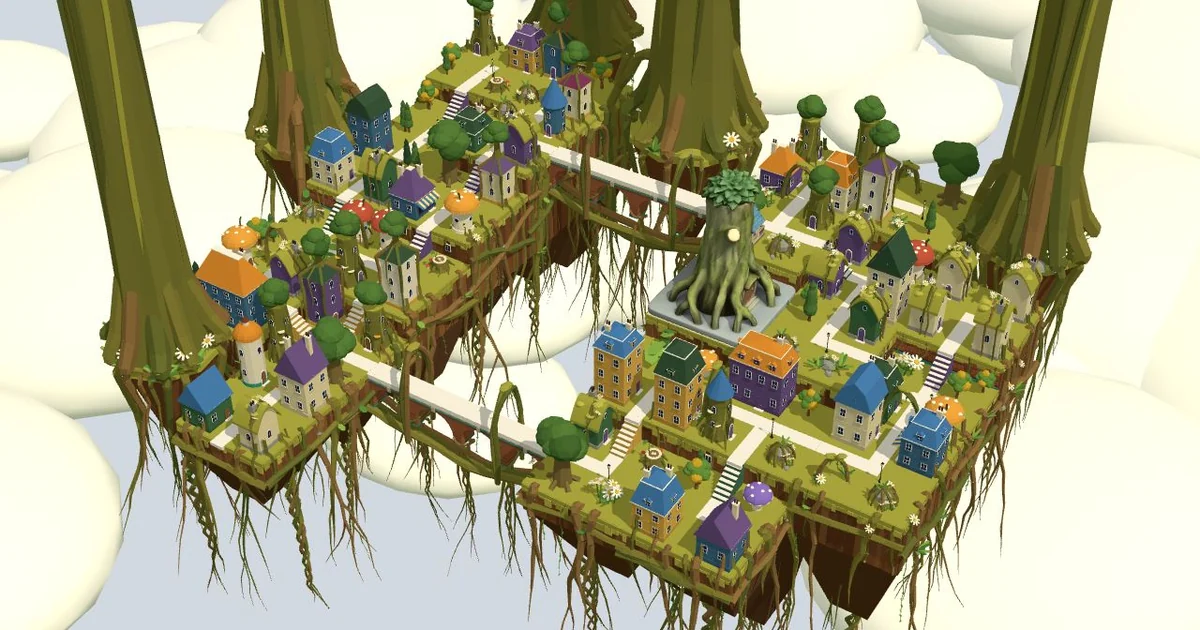
Wonder Town looks like an adventure game, and we want it to feel like one. But almost every rule in it, from the villagers who block the road to the five-minute clock, comes from a handful of ideas about how children actually learn and remember math. Here they are, with what each one changes in the game.
1. Answering beats re-reading
When children try to recall an answer, they remember it far better than when they look at it again. Psychologists call this retrieval practice, or the testing effect. In a well-known experiment, students who practised recalling a text remembered much more of it a week later than students who spent the same time re-reading it (Roediger and Karpicke, 2006). A large review of study techniques rated practice testing as one of the two most useful (Dunlosky and colleagues, 2013).
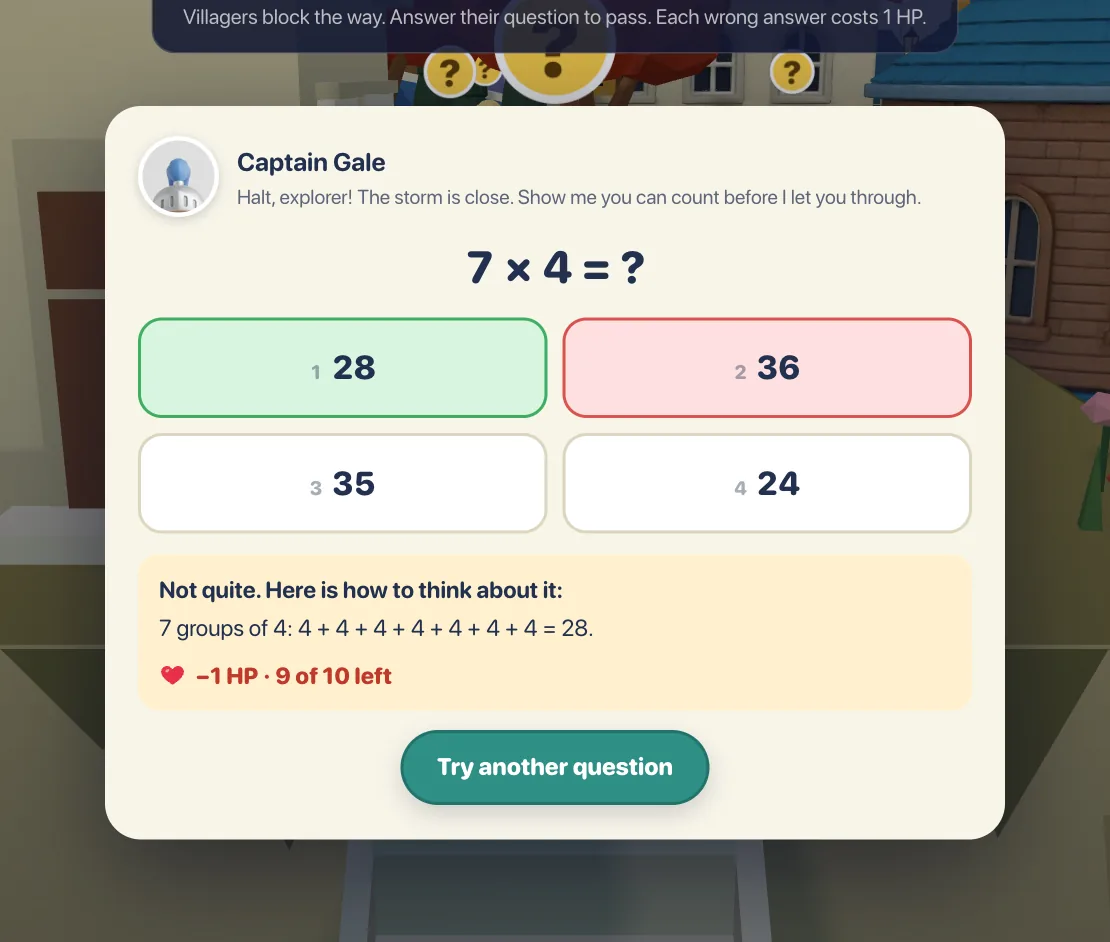
In the game: nobody explains first. Every villager who blocks the road asks a question, and your child has to produce an answer to move on. The game is, quite literally, a long chain of small retrieval attempts.
2. A mistake is worth something, if it is explained
A wrong answer on its own teaches little. A wrong answer followed straight away by why it was wrong, and then another try, is where much of the learning happens.
In the game: after a wrong answer the villager shows how to think about the problem in a sentence or two, the way that country’s classrooms teach it, and then asks a new question of the same kind. A new question, not the same one, so your child has to use the idea rather than remember the answer.
3. Come back just before you forget
Practice spread out over days is remembered much longer than the same practice crammed into one sitting. A review of hundreds of experiments found the benefit again and again (Cepeda and colleagues, 2006). The best gap grows as something becomes better known.
In the game: in a question bank made from your child’s own tests, every question follows a schedule. Answered right, it comes back after 10 minutes, then 1, 3, 7, 14, 30 and 60 days. Answered wrong, it comes back at once and the schedule starts again. The villagers ask the questions that are due before anything else.
4. Mix the topics
When practice is grouped by type (twenty division problems, then twenty fraction problems), children know the method before they read the question. When types are mixed, they first have to work out which method fits, and that is the skill a test asks for. In experiments, shuffling math practice problems this way led to much better scores on a test a week later (Rohrer and Taylor, 2007).
In the game: each of the first twelve towns practises one topic so a new idea gets room to settle, and the thirteenth town mixes every topic of the bank. A bank of your own is mixed from the start.
5. Short sessions with a real ending
Attention is a limited resource for a seven-year-old, and so is a parent’s patience with screens. Practice that ends on its own is easier to keep healthy than practice that never runs out.
In the game: each town has a five-minute clock to reach the gate. It stops while a question is open, so thinking is never rushed, but the round always ends: the town is saved or lost, and that is it. There are no ads, no chat, and nothing to buy during a round: the Passport and coins are bought by a parent on a payment page.
6. Stakes that matter, without shame
Children try harder when something is at stake, but heavy pressure makes them guess or give up.
In the game: the stakes belong to the story. Ten hearts, a storm, a flood or a meteor shower waiting for the town. A wrong answer costs one heart, never a scolding, and a lost town can be tried again straight away. A right answer earns a coin, so effort turns into something your child can see.
7. Their own material, not ours
The questions a child missed on last week’s test are the most precise map of what they have not yet got. Practising those, instead of a generic set, puts every minute where it is needed.
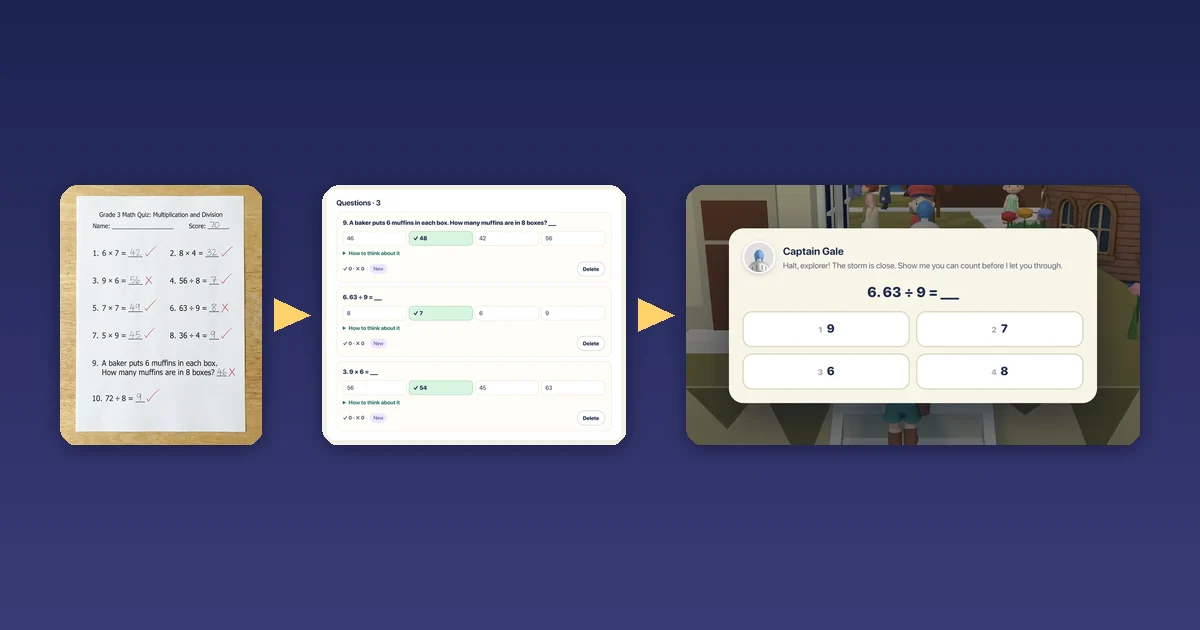
In the game: photograph a marked test and the missed questions become the villagers’ questions. See Turn your child’s worksheets into a math game.
What we do not do yet
Wonder Town does not yet adapt hints and difficulty to how your child is doing; that is in development. For now, you choose the grade, and the advice is simple: if a question often takes more than about twenty seconds, play a few rounds of the grade below, then come back.
Further reading
- Roediger, H. L., and Karpicke, J. D. (2006). Test-enhanced learning: taking memory tests improves long-term retention. Psychological Science, 17(3).
- Cepeda, N. J., Pashler, H., Vul, E., Wixted, J. T., and Rohrer, D. (2006). Distributed practice in verbal recall tasks: a review and quantitative synthesis. Psychological Bulletin, 132(3).
- Rohrer, D., and Taylor, K. (2007). The shuffling of mathematics problems improves learning. Instructional Science, 35.
- Dunlosky, J., Rawson, K. A., Marsh, E. J., Nathan, M. J., and Willingham, D. T. (2013). Improving students’ learning with effective learning techniques. Psychological Science in the Public Interest, 14(1).
Play the first town free · Math games: questions parents ask
More guides
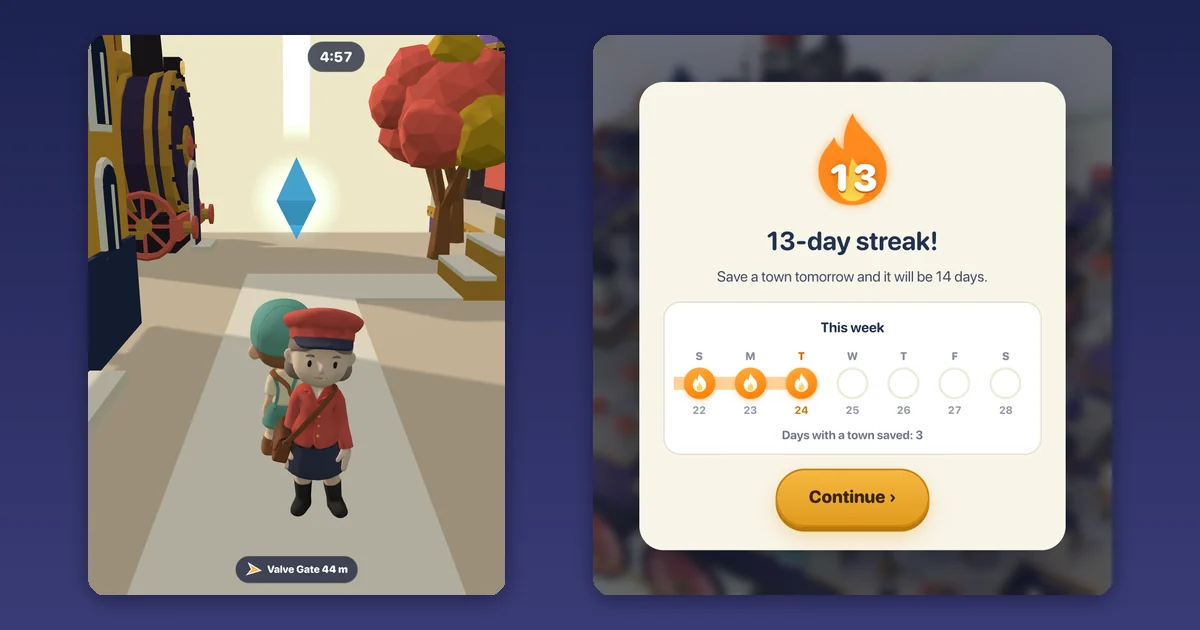 How-to guidesDaily streak and freeze gems: save a town every daySave any town in Wonder Town on a day and that day counts for your daily streak. Where to see the streak and the week, how freeze gems keep it through a missed day, and where the gems hide.November 24, 2026 · 6 min read
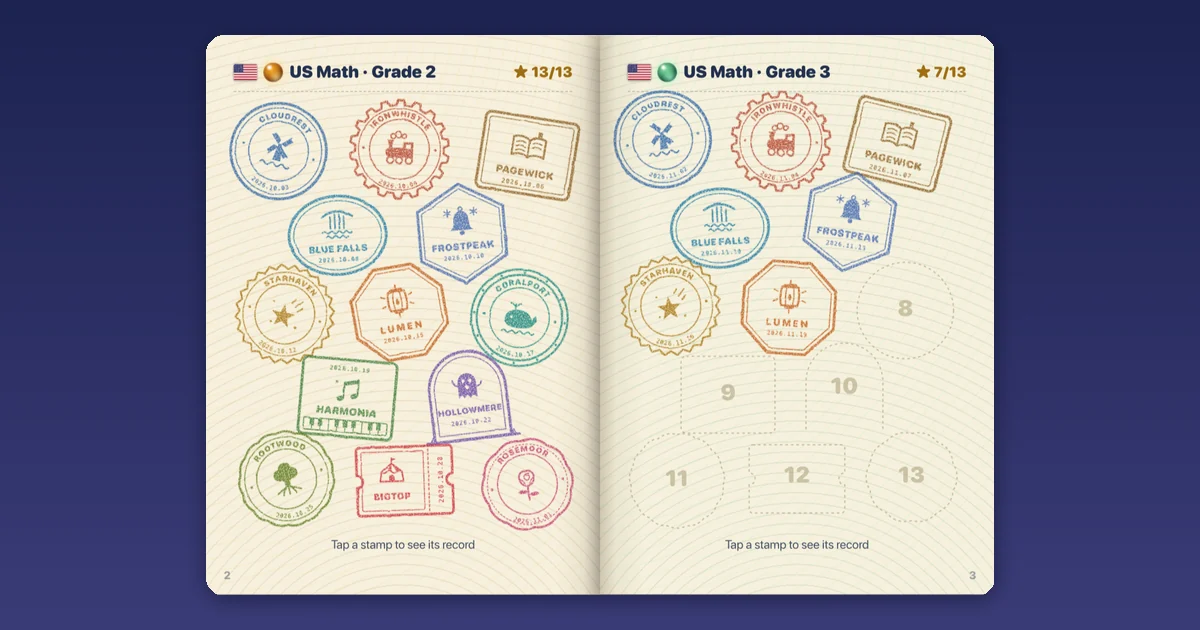 How-to guidesPassport stamps: one for every town you saveEvery town saved in Wonder Town puts a stamp in your Passport, a little book with a page per question bank. How to open it, turn its pages and read each stamp.November 22, 2026 · 6 min read
 About Wonder TownTurn your child’s worksheets into a math gamePhotograph a marked test or worksheet and the questions your child missed become a math game: villagers in a 3D town ask them again until they stick.November 21, 2026 · 4 min read