
Wonder Town › Math RPG games
A math RPG for kids, without the battles
Children who will not open a worksheet will happily spend an hour in a role-playing game. Wonder Town borrows what works in an RPG, a hero to collect, a world to explore and characters with something to ask, and makes math the only way forward. It is for grades 1 to 5 and plays in the browser.
First town: no account needed · First 3 towns free · No download
Plays onComputersiPad and tabletsiPhone and Android
The short answer
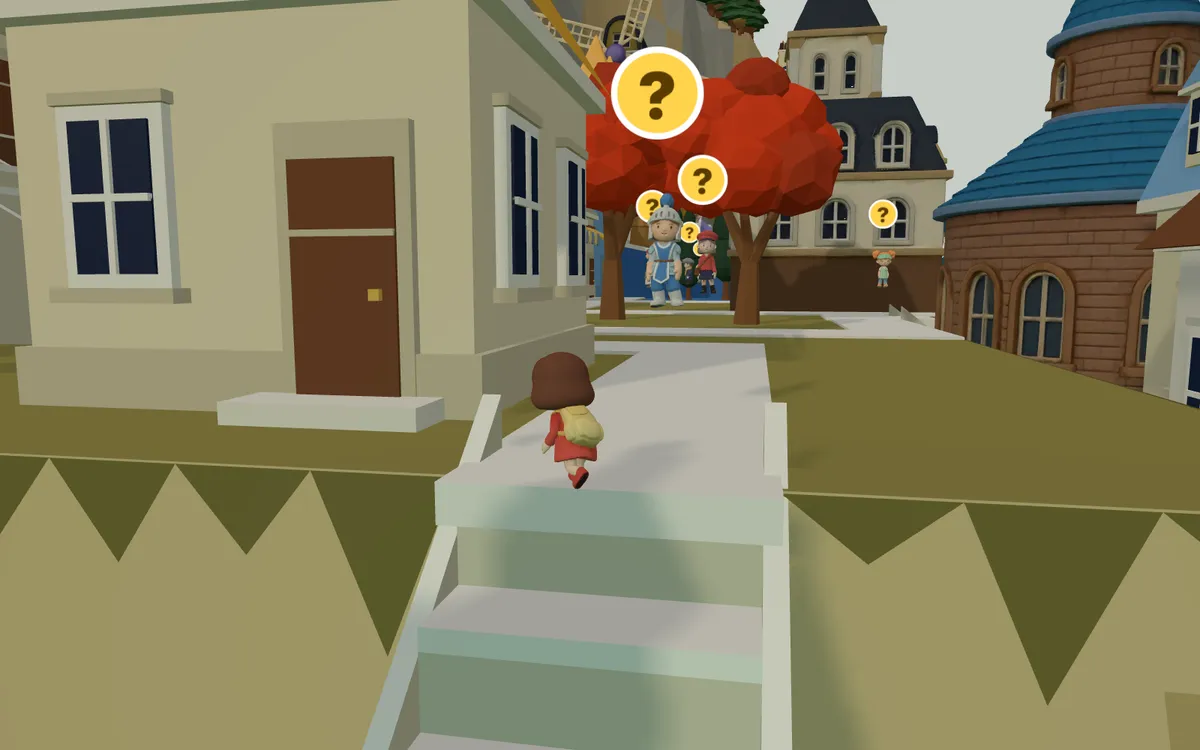
Wonder Town is a 3D math adventure game with role-playing elements. Your child collects a hero from a card pack, explores thirteen floating towns in third person and meets twenty villagers in each one. A villager who blocks the road asks a math question: a right answer opens the way and earns a coin, a wrong one costs one of ten hearts and brings a short explanation. Reach the gate within five minutes and the town is saved from its disaster.
Unlike most math RPGs, there is no combat and no grinding for levels. Heroes differ in look and story, not in strength, so progress depends only on answering questions. The questions follow the grade and the country you choose (the US Common Core, China, Japan, Singapore or India), or come from photos of your child’s own tests.
Wonder Town at a glance
- What it is
- A 3D math adventure game for kids in grades 1–5 (ages 6–11)
- Free
- The first 3 towns
- Account
- None needed for the first town; a free account for towns 2 and 3
- Passport
- $19.80 a month: all 13 towns, cancel any time
- Own question banks
- With the Passport, from photos of tests and homework
- Towns
- 13, each with its own story; the last one reviews every topic
- Ads and chat
- None
- Plays on
- Computers, iPad and other tablets, iPhone and Android phones, in the browser; no download
Sample questions from the game
Every villager asks one question like these, with fresh numbers each time. They come from the same generators the game uses.
Skip count by 10: 30, 40, 50, ?
- 55
- 70
- 60
- 50
How to think about it: Each number is 10 more than the last. 50 + 10 = 60.
6 × 4 = ?
- 24
- 31
- 30
- 20
How to think about it: 6 groups of 4: 4 + 4 + 4 + 4 + 4 + 4 = 24.
Long division: 140 ÷ 7 = ?
- 30
- 19
- 21
- 20
How to think about it: 7 × 20 = 140, which leaves 0. 7 × 0 = 0. So the answer is 20.
1/4 + 4/6 = ?
- 5/12
- 11/12
- 5/10
- 1
How to think about it: Use the common denominator 12: 3/12 + 8/12 = 11/12.
What is RPG about it, and what is not
| In Wonder Town | |
|---|---|
| A hero | Ten heroes in three rarities (Rare, Super Rare and Legendary) from card packs, or a 3D hero made from a photo of your child |
| A world to explore | Thirteen floating towns, from a steam train to a starport, walked in third person; your child chooses the route |
| Non-player characters | Twenty villagers in every town, each with a question; any route to the gate passes at least ten of them |
| A quest | Every town has a story and a disaster on its way: a boiler about to burst, a spring flood, a meteor shower, a sleeping bone giant |
| Rewards | A coin for every right answer, card packs bought with coins, and a stamp in the Passport booklet for every town saved |
| Daily play | A town saved each day keeps a streak going; freeze gems hidden in the towns cover a missed day |
| Battles, levels and stats | None. A right answer is the only way forward |
How to use it well
- Load the question bank of your child’s grade. If a question often takes more than about twenty seconds, play a few rounds of the grade below first.
- Two or three rounds make a good session. Each round ends, saved or lost, so “one more town, then dinner” is easy to keep.
- Let your child choose the hero and the route. Being in charge of something is a large part of why RPGs hold children.
Who it suits
A good fit if
- Your child prefers exploring, collecting and stories to speed drills
- You want short sessions with a clear end
- You want practice that follows the school curriculum, or your child’s own tests
Look elsewhere if
- Your child wants battles, pets and levelling up: a battle-based math RPG will suit them better
- Your child is beyond grade 5
- You want a placement test and difficulty that adapts by itself; Wonder Town does not adapt yet
Questions parents ask
Is Wonder Town a real RPG?
It has the parts children recognise from role-playing games: heroes of different rarities, a 3D world to explore, non-player characters, a story and a quest in every town. It leaves out combat, levels and character stats. Progress comes only from answering math questions.
Is there any fighting?
No. Villagers block the road and ask a question; the answer clears the way. The only danger is the town’s disaster, which arrives if the five minutes run out or all ten hearts are lost.
What ages is it for?
Grades 1 to 5, roughly ages 6 to 11. There are 25 question banks: grades 1 to 5 for the United States, China, Japan, Singapore and India.
Is it free?
The first three towns are free: the first plays without an account, towns 2 and 3 need a free account. The Passport ($19.80 a month) opens all thirteen towns and question banks of your own.
Does it work on an iPad or a phone?
Yes. It runs in the browser on computers, iPad and other tablets, and iPhone and Android phones, with nothing to download: W A S D or the arrow keys on a keyboard, an on-screen joystick on a touch screen.
Further reading
- An alternative to Prodigy Math
- Math games for kids who hate math
- A math game for kids with no ads
- The learning ideas behind Wonder Town
- Math games: questions parents ask
Math games by grade: 1st grade · 2nd grade · 3rd grade · 4th grade · 5th grade
More answers for parents
A Prodigy alternative · Math games with no ads · For kids who hate math · Multiplication games · Fraction games · Singapore Math games · Chinese math games · Bilingual math games · Turn a worksheet into a game