
Wonder Town › Math games for kids who hate math
Math games for kids who hate math
A child who says “I hate math” rarely hates numbers. They hate feeling stuck, feeling slow, or being watched while they get it wrong. A game cannot fix all of that, but it can change the moment of practice: who is asking, why the answer matters and what happens after a mistake.
First town: no account needed · First 3 towns free · No download
Plays onComputersiPad and tabletsiPhone and Android
The short answer
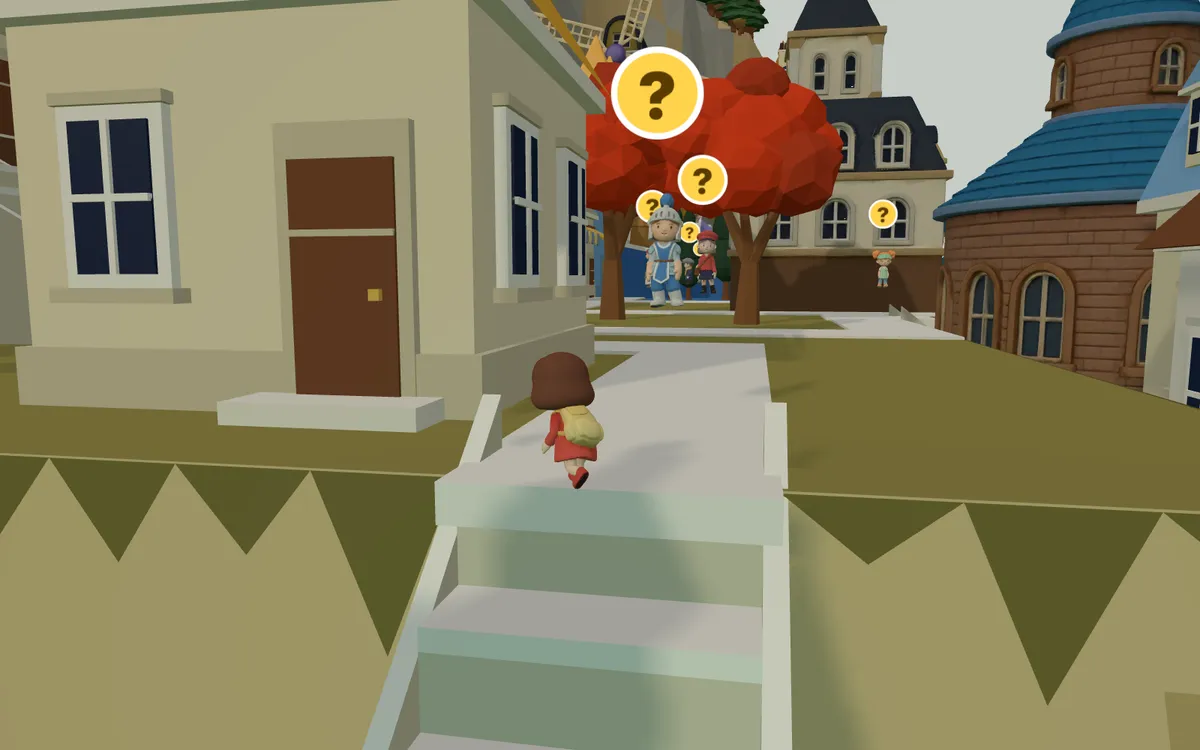
Wonder Town is a 3D math adventure game that puts math questions inside a world your child wants to explore. A villager stands in the road and asks one question; answering it is how you reach the next street, so there is a reason to try. Rounds last five minutes and always end, saved or lost, and a wrong answer brings a short explanation and a fresh question instead of a red mark.
For a child who has fallen behind, start easy. Load the question bank of the grade below, let your child save a few towns, and move up when the questions feel quick. With a Passport, the exact questions they missed at school can become the villagers’ questions too.
Wonder Town at a glance
- What it is
- A 3D math adventure game for kids in grades 1–5 (ages 6–11)
- Free
- The first 3 towns
- Account
- None needed for the first town; a free account for towns 2 and 3
- Passport
- $19.80 a month: all 13 towns, cancel any time
- Own question banks
- With the Passport, from photos of tests and homework
- Towns
- 13, each with its own story; the last one reviews every topic
- Ads and chat
- None
- Plays on
- Computers, iPad and other tablets, iPhone and Android phones, in the browser; no download
Sample questions from the game
Explanations, not red marks: after a wrong answer the villager shows a way to think about the problem, like these, then asks a new one of the same kind.
2 + 1 = ?
- 5
- 3
- 6
- 2
How to think about it: Start at 2 and count on 1 more: you land on 3.
66 + 24 = ?
- 93
- 100
- 90
- 89
How to think about it: Add the tens (60 + 20), then the ones (6 + 4): 90.
3 × 8 = ?
- 24
- 28
- 27
- 16
How to think about it: 3 groups of 8: 8 + 8 + 8 = 24.
What helps a child who dislikes math
A reason to answer
On a worksheet the reward for one question is the next question. In a town it is the road opening, a coin and the next street.
Mistakes are cheap
A wrong answer costs one of ten hearts and shows how to think about it. Nobody sees it but your child.
Short and finite
Five minutes on the clock, and the clock stops while a question is open, so there is no rush to answer. Two rounds make a session.
Success first
Starting a grade below means the first towns can be won. Confidence comes before difficulty.
Their own questions
With a Passport, a photo of a marked test turns the missed questions into the villagers’ questions until they are known.
Choice
Your child picks the hero and the route through town. Being in charge of something matters to a reluctant learner.
What to try this week
- Day 1: play the first town together; it needs no account. Let your child drive, and read a word problem aloud only if asked.
- Days 2 and 3: sign up free and play towns 2 and 3 with the grade below. Stop after two rounds, while it is still fun.
- Day 4: move to your child’s own grade. If a question often takes more than twenty seconds, go back down for a few days.
- Later: photograph a marked test and let the villagers ask the questions that were missed (Passport).
Who it suits
A good fit if
- Your child avoids worksheets but enjoys games
- Your child needs many small wins before harder work
- You want practice that ends on its own after a few minutes
Look elsewhere if
- Your child has strong math anxiety or you suspect a learning difficulty such as dyscalculia: talk to the teacher or a specialist; a game can support that help but not replace it
- Any clock upsets your child: every round has a five-minute clock, paused during questions
Questions parents ask
Will a game make my child like math?
It may not make math the favourite subject, but it often changes how practice feels: questions become the way forward in a story instead of a page to get through, and a mistake costs a heart, not a red mark. Many children who refuse a worksheet will answer twenty questions to save a town.
How long should my child play?
Two or three rounds a day, about ten to fifteen minutes, works better than one long session. Each round ends on its own, which makes stopping easy.
Is the timer stressful?
The clock gives five minutes to reach the gate and stops while a question is open, so your child never has to answer against the clock. What runs out is walking time, and hearts.
What if my child keeps getting answers wrong?
Switch to the grade below for a while; you can change the question bank at any time. Each wrong answer brings an explanation and a new question of the same kind, so the idea is practised, not just the numbers.
Is it free?
The first three towns are free: the first without an account, towns 2 and 3 with a free account. The Passport ($19.80 a month) opens all thirteen towns and question banks of your own.
Further reading
- A math RPG for kids, without the battles
- Turn your child’s math homework into a 3D adventure
- A math game for kids with no ads
- The learning ideas behind Wonder Town
- Math games: questions parents ask
- Turn your child’s worksheets into a math game
Math games by grade: 1st grade · 2nd grade · 3rd grade · 4th grade · 5th grade
More answers for parents
Math RPG games · A Prodigy alternative · Math games with no ads · Multiplication games · Fraction games · Singapore Math games · Chinese math games · Bilingual math games · Turn a worksheet into a game