
Lapis lazuli · Grade 7
Wonder Town › Question banks › Japan › Grade 7
JapanJapanese 7th grade math questions (junior high year 1)
This bank follows Japan’s Course of Study for the first year of junior high school (中学 1 年), where arithmetic becomes mathematics (数学). It practises adding, subtracting, multiplying and dividing positive and negative numbers, simplifying expressions with the distributive law, linear equations solved by moving terms across (移項), equation word problems, y = ax and y = a/x, arc lengths and areas of sectors, volumes and surface areas of solids, and relative frequency. Every question has four choices and a short explanation.
Free. Loading needs a sign-in; reading this page does not.
What the Japanese 7th grade math questions (junior high year 1) cover
Adding and subtracting negatives
(−7) + (+3), (+5) − (−8) (subtracting is adding the opposite), and rows of terms such as −3 + 8 − 6.
Negatives: ×, ÷ and powers
Signs of products and quotients, (−3)² against −3² and (−2)³, and the order of operations in 5 − (−3) × 4.
Algebraic expressions
Remove brackets with the distributive law (3(2x − 5) − 4(x − 2) = 2x − 7), divide by a number, and substitute negative numbers.
Linear equations
Solve by moving terms across (移項), with brackets, by clearing fractions, and proportions such as x : 6 = 4 : 3.
Equation word problems
Sharing sweets with some left over or some short, ages, and a brother catching up with his sister.
y = ax and y = a/x
Proportion and inverse proportion with negative numbers: the constant of proportionality, values of y, points on a graph.
Sectors
Arc length 2πr × a/360 and area πr² × a/360 of a sector, the central angle, and S = 1/2ℓr.
Volume and surface area
Volumes of cones, pyramids and spheres (1/3 × base area × height, 4/3πr³), and surface areas of spheres and cylinders.
Data and relative frequency
Relative frequency, probability from many trials (about 0.62 for 620 out of 1000), and the mode of a frequency table.
Which town practises which topic
Wonder Town has 13 towns, opened one after another. With this bank the first 12 walk through its 9 topics in the order of the curriculum, one topic per town, and the core topics get more than one town. The last town mixes every topic as a review. Each question bank keeps its own progress, so changing banks never loses your place in another.
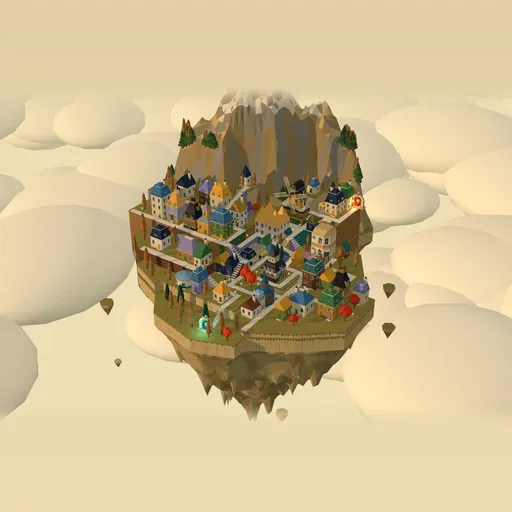 Town 1CloudrestAdding and subtracting negatives
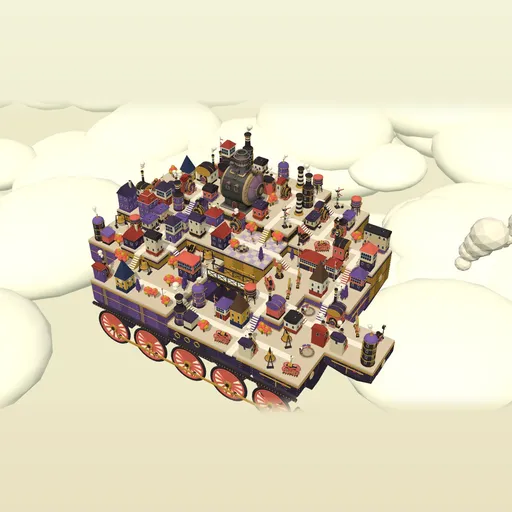 Town 2IronwhistleAdding and subtracting negatives
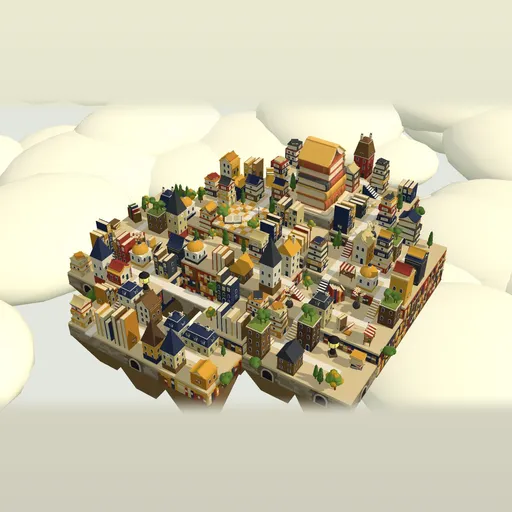 Town 3PagewickNegatives: ×, ÷ and powers
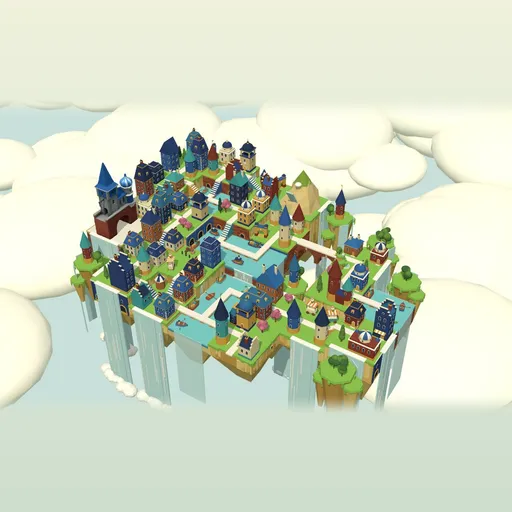 Town 4Blue FallsNegatives: ×, ÷ and powers
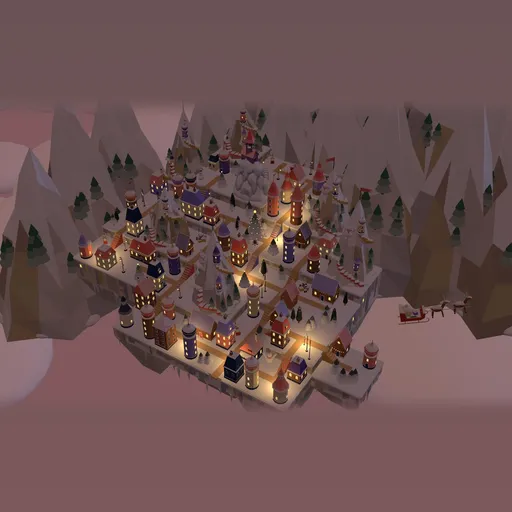 Town 5FrostpeakAlgebraic expressions
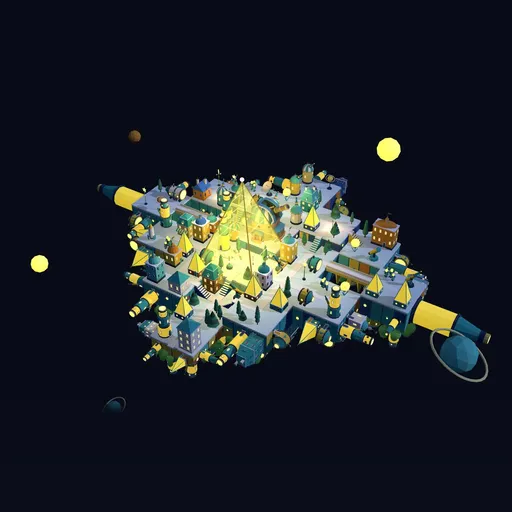 Town 6StarhavenLinear equations
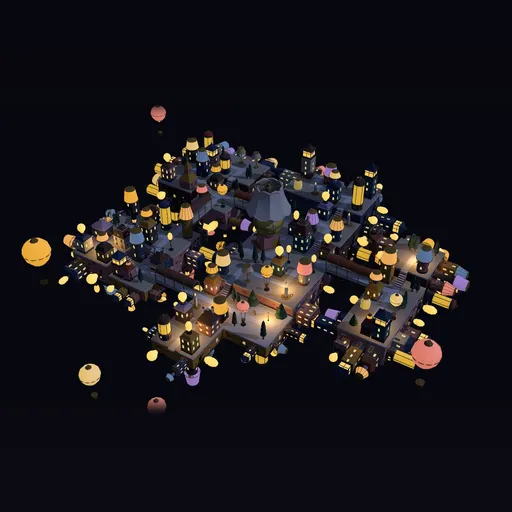 Town 7LumenLinear equations
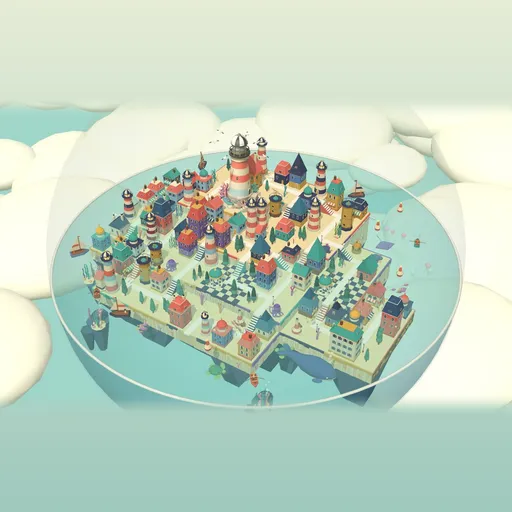 Town 8CoralportEquation word problems
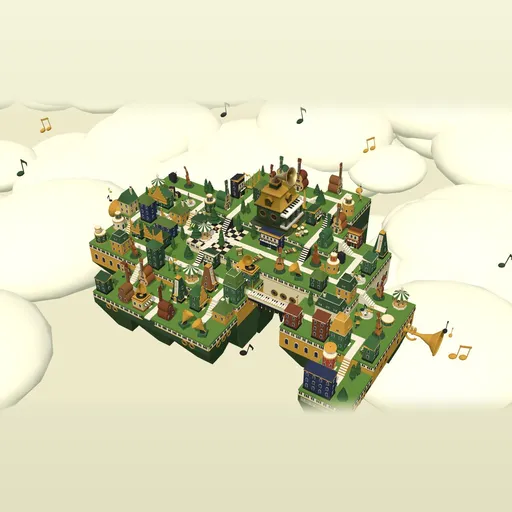 Town 9Harmoniay = ax and y = a/x
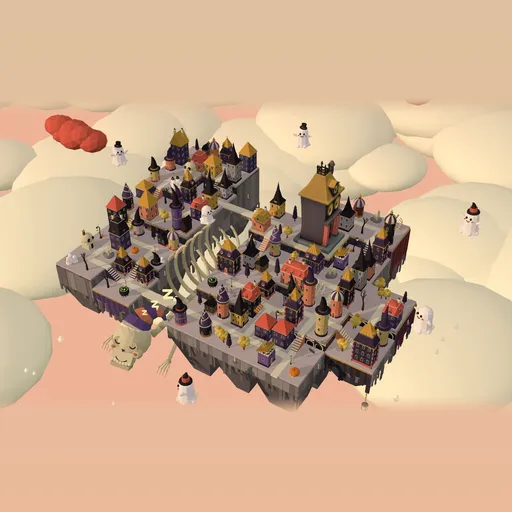 Town 10HollowmereSectors
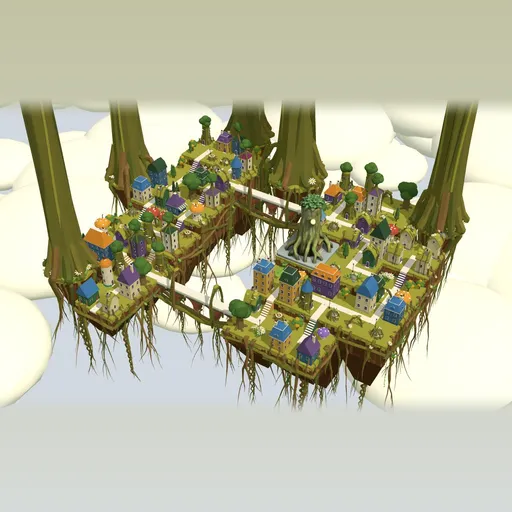 Town 11RootwoodVolume and surface area
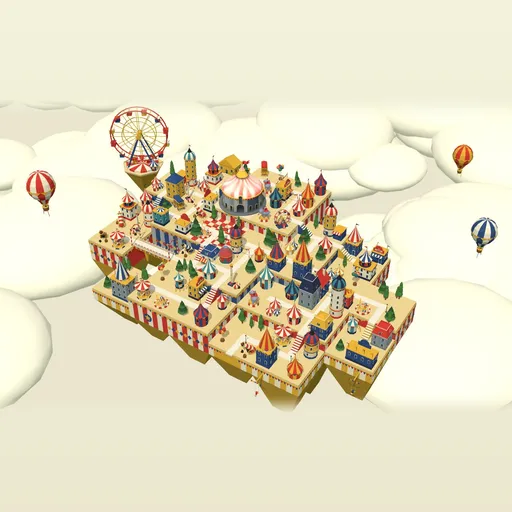 Town 12BigtopData and relative frequency
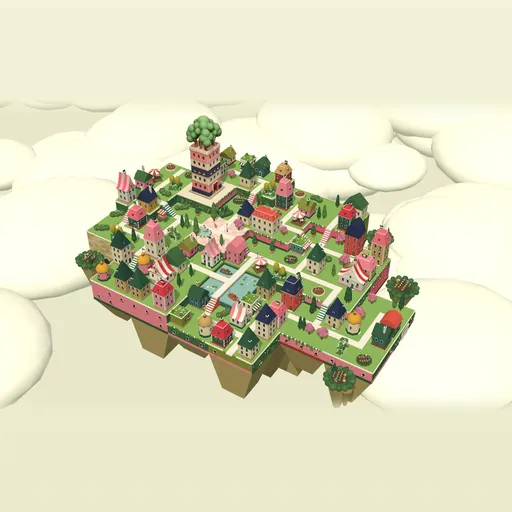 Town 13RosemoorReview of all 9 topics
Sample questions with answers
These were produced by the same generator the game uses, so the questions in the town look like these with different numbers. The correct choice is marked.
(−1) + (+10) = ?
- −11
- 11
- 9
- −9
How to think about it: Different signs: subtract the smaller absolute value from the larger and take the sign of the larger: 9.
A sector has a radius of 8 cm and an arc length of 12π cm. What is its area in cm²?
- 12π
- 96π
- 48π
- 64π
How to think about it: Area = 1/2 × arc length × radius = 1/2 × 12π × 8 = 48π cm².
(−3) − (+3) = ?
- −10
- 0
- 6
- −6
How to think about it: Subtracting a number is adding its opposite: (−3) + (−3). Same signs: add the absolute values and keep the sign: −6.
Sharing sweets among some children: 5 each leaves 23 over, but 8 each would be 1 short. How many children are there?
- 8
- 24
- 63
- 9
How to think about it: Let x be the number of children. The sweets are 5x + 23 = 8x − 1, so 3x = 24 and x = 8.
y is proportional to x, and y = −10 when x = −2. Find y when x = −3.
- −11
- 15
- −15
- 2
How to think about it: y = ax with a = −10 ÷ (−2) = 5, so y = 5 × (−3) = −15.
7 − 6 × 2 = ?
- 5
- −5
- 19
- 2
How to think about it: Multiply first: 6 × 2 = 12. Then 7 − 12 = −5.
How to practise with this bank
- Press “Load this question bank”. Its crystal is set into the stele of your account.
- Enter the town and pick a character. A round lasts five minutes.
- Each villager on your road asks one question from this bank. Answer it to pass.
- After a wrong answer, read the explanation and try a new question of the same kind.
The Lapis lazuli crystal
Lapis lazuli is an opaque deep blue, flecked with specks that glitter like gold; painters once ground it into the bluest paint there was. It holds the seventh grade, when negative numbers and letters for numbers become everyday tools.
At a glance
- Country
- Japan
- Grade
- Grade 7
- Subject
- Math
- Question types
- 9
- Format
- Multiple choice, 4 options
- Follows
- Japan’s Course of Study for junior high mathematics (MEXT), year 1
- Languages
- English, 中文, 日本語
- Price
- Free bank; in the game, the first 3 towns are free and the Passport ($9.80 a month) opens all 13
Other grades · Japan
Grade 7 in other countries
Questions about this bank
What do the Japanese 7th grade math questions (junior high year 1) cover?
This bank follows Japan’s Course of Study for the first year of junior high school (中学 1 年), where arithmetic becomes mathematics (数学). It practises adding, subtracting, multiplying and dividing positive and negative numbers, simplifying expressions with the distributive law, linear equations solved by moving terms across (移項), equation word problems, y = ax and y = a/x, arc lengths and areas of sectors, volumes and surface areas of solids, and relative frequency. Every question has four choices and a short explanation. Topics: Adding and subtracting negatives, Negatives: ×, ÷ and powers, Algebraic expressions, Linear equations, Equation word problems, y = ax and y = a/x, Sectors, Volume and surface area, Data and relative frequency.
Are these Japanese 7th grade math questions (junior high year 1) free?
Yes. The bank is free to read here and to load, with no ads. In the game the first three towns are free with it: the first town needs no account, towns 2 and 3 a free account. The Passport ($9.80 a month) opens all thirteen towns and question banks of your own.
Do the questions come with answers?
Yes. Every question has one correct choice out of four and a short explanation. In the game the explanation appears after a wrong answer; on this page it is shown under each sample.
How many questions are in the bank?
There is no fixed number. Questions are generated with new numbers each time, so every round is different while the skills stay the same.
What if the Grade 7 questions are too hard or too easy?
Load the bank for Grade 6 or Grade 8 instead. You can change banks as often as you like.