
Obsidian · Grade 9
Wonder Town › Question banks › Japan › Grade 9
JapanJapanese 9th grade math questions (junior high year 3)
This bank follows Japan’s Course of Study for the third and last year of junior high school (中学 3 年). It practises expanding brackets with the multiplication formulas, factorising by finding two numbers with a given sum and product, square roots, quadratic equations (by factorising, by square roots and with the quadratic formula), the function y = ax², similar figures, the inscribed angle theorem, the Pythagorean theorem (三平方の定理) and sampling. Every question has four choices and a short explanation.
Free. Loading needs a sign-in; reading this page does not.
What the Japanese 9th grade math questions (junior high year 3) cover
Expanding brackets
(x + 3)(x − 5), (x + 6)² = x² + 12x + 36, (x + 3)(x − 3) and 3x(x − 2), with the multiplication formulas.
Factorising
Common factors, x² − 14x + 48 = (x − 6)(x − 8) from a sum and a product, perfect squares, and x² − a².
Square roots
The square roots of 16 (±4), √72 = 6√2, √12 + √27 = 5√3, √3 × √6, 6/√3 = 2√3, and the smallest n that makes √(54n) whole.
Quadratic equations
Solve by factorising, x² = 5x (do not lose x = 0), (x + 2)² = 20 by square roots, and the quadratic formula.
y = ax²
The constant a, values of y, the rate of change between two x values, the range of y, and a falling ball (y = 5x²).
Similar figures
Corresponding sides, area and volume ratios (m² : n², m³ : n³), parallel lines and segment ratios, and the midpoint theorem.
Inscribed angles
An inscribed angle is half the central angle, angles on the same arc are equal, and the angle in a semicircle is 90°.
Pythagorean theorem
Hypotenuses and legs, the distance between two points, diagonals, and the 1 : 1 : √2 and 1 : 2 : √3 triangles.
Sampling
Estimate the whole from a random sample: pupils who walk to school, white stones in a bag, faulty lanterns.
Which town practises which topic
Wonder Town has 13 towns, opened one after another. With this bank the first 12 walk through its 9 topics in the order of the curriculum, one topic per town, and the core topics get more than one town. The last town mixes every topic as a review. Each question bank keeps its own progress, so changing banks never loses your place in another.
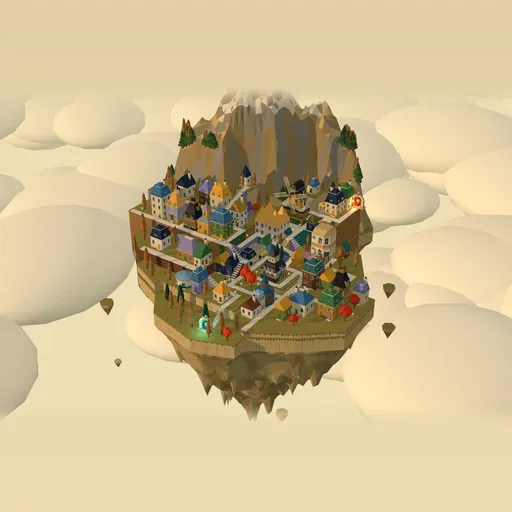 Town 1CloudrestExpanding brackets
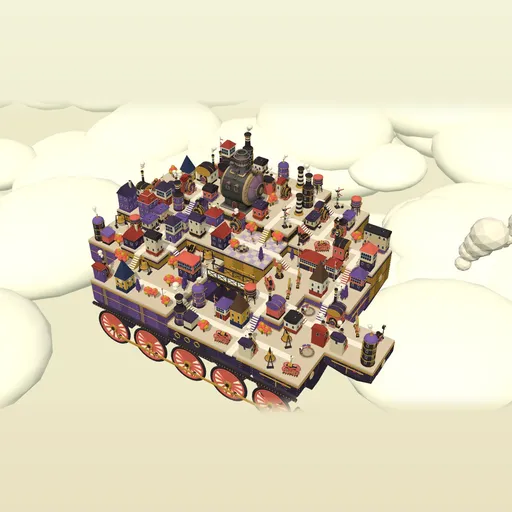 Town 2IronwhistleExpanding brackets
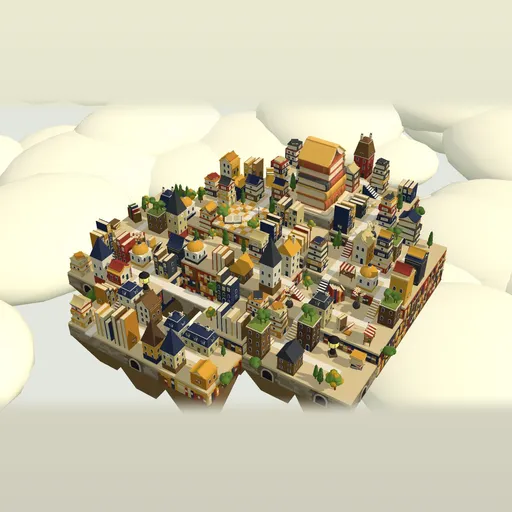 Town 3PagewickFactorising
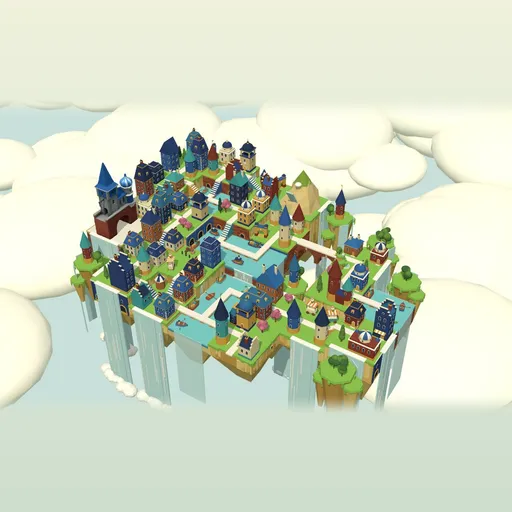 Town 4Blue FallsFactorising
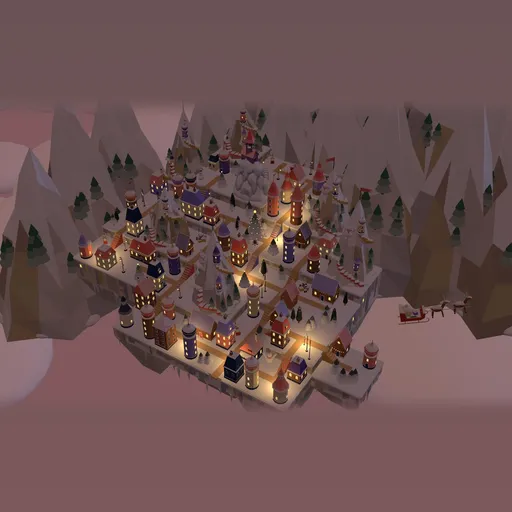 Town 5FrostpeakSquare roots
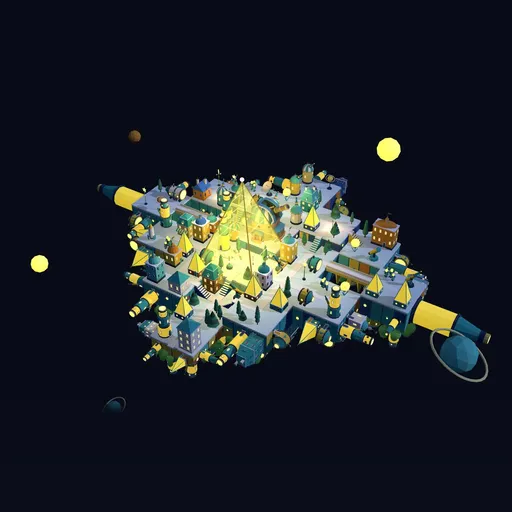 Town 6StarhavenSquare roots
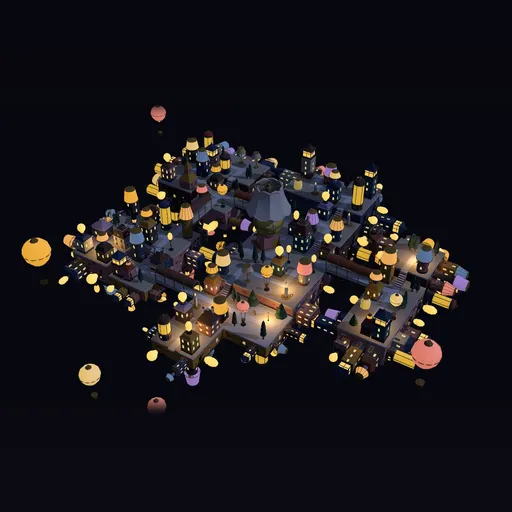 Town 7LumenQuadratic equations
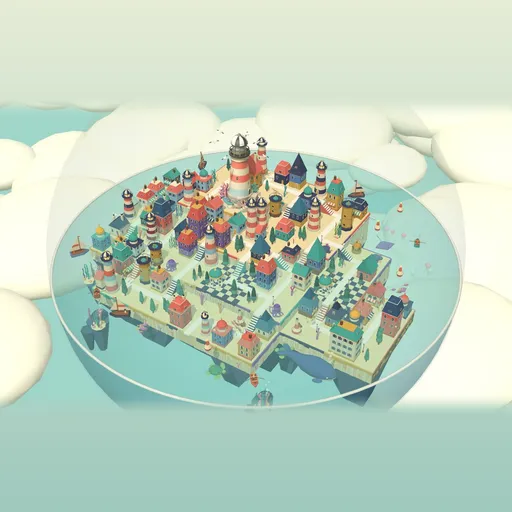 Town 8Coralporty = ax²
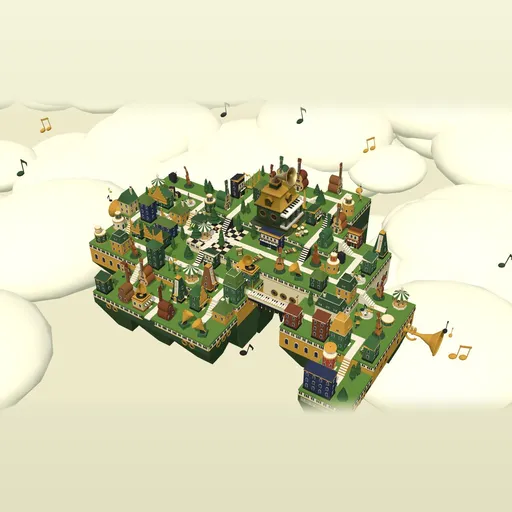 Town 9HarmoniaSimilar figures
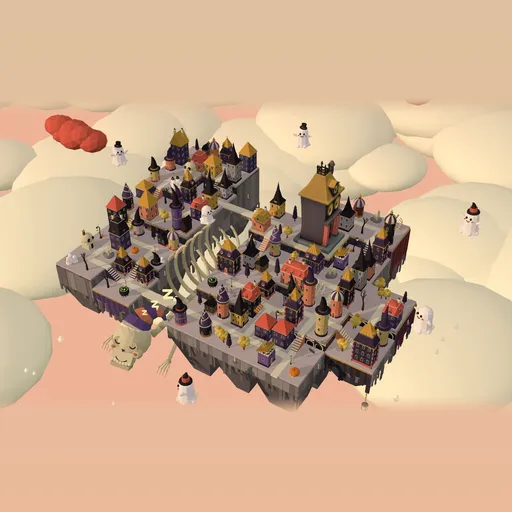 Town 10HollowmereInscribed angles
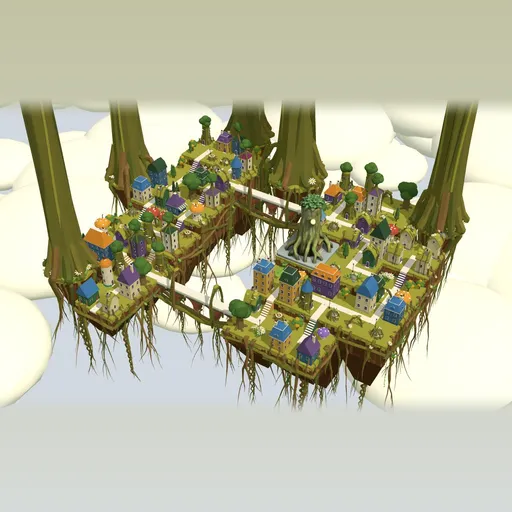 Town 11RootwoodPythagorean theorem
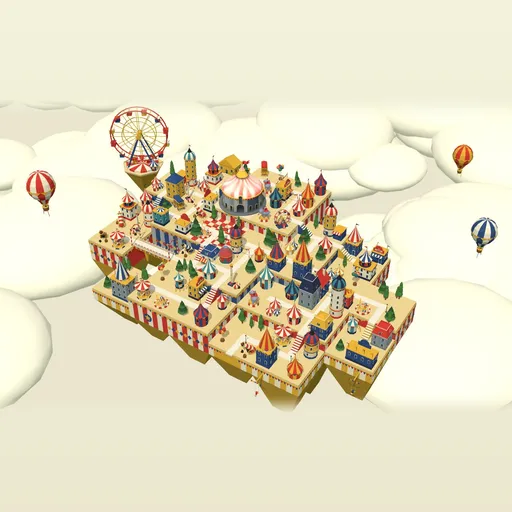 Town 12BigtopSampling
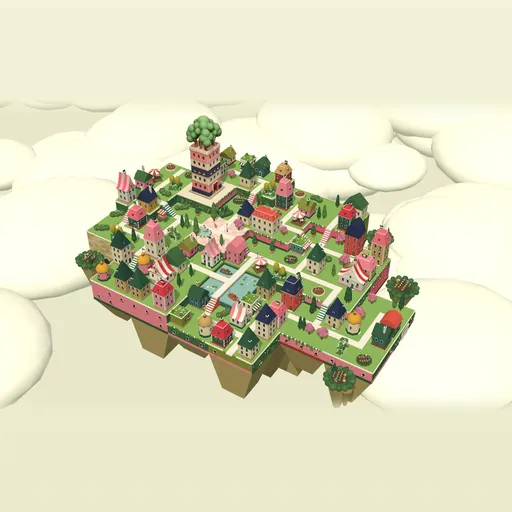 Town 13RosemoorReview of all 9 topics
Sample questions with answers
These were produced by the same generator the game uses, so the questions in the town look like these with different numbers. The correct choice is marked.
Factorise: x² + 6x + 5
- (x + 1)(x − 5)
- (x − 1)(x − 5)
- (x + 5)(x − 1)
- (x + 5)(x + 1)
How to think about it: Find two numbers with sum 6 and product 5: 5 and 1. So (x + 5)(x + 1).
△ABC ∽ △DEF with AB = 9 cm, DE = 15 cm and BC = 6 cm. How long is EF, in cm?
- 11
- 12
- 10
- 20
How to think about it: The similarity ratio is AB : DE = 9 : 15 = 3 : 5, so EF = 6 × 5/3 = 10 cm.
What is the length of a diagonal of a square with sides of 4 cm?
- 8
- 8√2
- 4√3
- 4√2
How to think about it: The diagonal makes a 45°–45°–90° triangle, sides 1 : 1 : √2: 4 × √2 = 4√2 cm.
What is the distance between A(2, −3) and B(−2, −1)?
- 2√5
- 2√3
- 20
- 6
How to think about it: The horizontal difference is 4 and the vertical difference is 2: AB² = 4² + 2² = 20, AB = 2√5.
A school has 300 pupils. In a random sample of 40, 10 walk to school. About how many pupils in the whole school walk?
- 85
- 75
- 150
- 225
How to think about it: The sample rate 10/40 is about the same for the whole school: 300 × 10/40 = 75.
What is the smallest natural number n that makes √(28n) a natural number?
- 7
- 2
- 4
- 28
How to think about it: 28 = 2² × 7. 28n is a square number when n = 7: √(28 × 7) = 14.
How to practise with this bank
- Press “Load this question bank”. Its crystal is set into the stele of your account.
- Enter the town and pick a character. A round lasts five minutes.
- Each villager on your road asks one question from this bank. Answer it to pass.
- After a wrong answer, read the explanation and try a new question of the same kind.
The Obsidian crystal
Obsidian is volcanic glass: nearly black, smooth, and lit with a faint rainbow sheen at its edge. It holds the ninth grade, the last year of junior high in China and Japan.
At a glance
- Country
- Japan
- Grade
- Grade 9
- Subject
- Math
- Question types
- 9
- Format
- Multiple choice, 4 options
- Follows
- Japan’s Course of Study for junior high mathematics (MEXT), year 3
- Languages
- English, 中文, 日本語
- Price
- Free bank; in the game, the first 3 towns are free and the Passport ($9.80 a month) opens all 13
Other grades · Japan
Grade 9 in other countries
Questions about this bank
What do the Japanese 9th grade math questions (junior high year 3) cover?
This bank follows Japan’s Course of Study for the third and last year of junior high school (中学 3 年). It practises expanding brackets with the multiplication formulas, factorising by finding two numbers with a given sum and product, square roots, quadratic equations (by factorising, by square roots and with the quadratic formula), the function y = ax², similar figures, the inscribed angle theorem, the Pythagorean theorem (三平方の定理) and sampling. Every question has four choices and a short explanation. Topics: Expanding brackets, Factorising, Square roots, Quadratic equations, y = ax², Similar figures, Inscribed angles, Pythagorean theorem, Sampling.
Are these Japanese 9th grade math questions (junior high year 3) free?
Yes. The bank is free to read here and to load, with no ads. In the game the first three towns are free with it: the first town needs no account, towns 2 and 3 a free account. The Passport ($9.80 a month) opens all thirteen towns and question banks of your own.
Do the questions come with answers?
Yes. Every question has one correct choice out of four and a short explanation. In the game the explanation appears after a wrong answer; on this page it is shown under each sample.
How many questions are in the bank?
There is no fixed number. Questions are generated with new numbers each time, so every round is different while the skills stay the same.
What if the Grade 9 questions are too hard or too easy?
Load the Grade 8 bank for review. You can change banks as often as you like.