
Turquoise · Grade 8
Wonder Town › Question banks › Japan › Grade 8
JapanJapanese 8th grade math questions (junior high year 2)
This bank follows Japan’s Course of Study for the second year of junior high school (中学 2 年). It practises calculating with polynomials and monomials, simultaneous equations solved by elimination (加減法) or substitution (代入法) and their word problems, linear functions and the rate of change, interior and exterior angles of polygons, isosceles triangles and parallelograms, probability with dice, coins and bags, and quartiles and box plots. Every question has four choices and a short explanation.
Free. Loading needs a sign-in; reading this page does not.
What the Japanese 8th grade math questions (junior high year 2) cover
Calculating with polynomials
(4a + 7b) − (3a + 5b), 4a² × (−2a), 12a²b ÷ 4ab, (−3a)², and solving 6x + 2y = 10 or S = ah/2 for one letter.
Simultaneous equations
Solve pairs such as 2x + y = 8 and x − y = 1 by elimination (加減法) or substitution (代入法); answers as (x, y).
Simultaneous equation problems
Two prices (apples and pears, adult and child tickets, big and small lanterns) and walking then running.
Linear functions
Values of y, the rate of change and the increase in y, the line through two points, and where two lines meet.
Interior and exterior angles
Angle sums of polygons (180° × (n − 2)), exterior angles of regular polygons, and the exterior angle of a triangle.
Triangles and parallelograms
Base angles of isosceles triangles, and the angles, sides and diagonals of parallelograms.
Probability
One die, two dice (a sum of 10 or more is 1/6), coins with a tree diagram, and balls drawn from a bag.
Quartiles and box plots
The first and third quartiles and the interquartile range of a data set, and reading a box plot.
Which town practises which topic
Wonder Town has 13 towns, opened one after another. With this bank the first 12 walk through its 8 topics in the order of the curriculum, one topic per town, and the core topics get more than one town. The last town mixes every topic as a review. Each question bank keeps its own progress, so changing banks never loses your place in another.
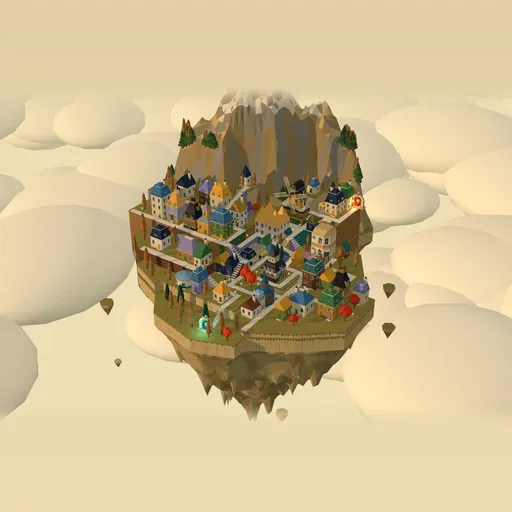 Town 1CloudrestCalculating with polynomials
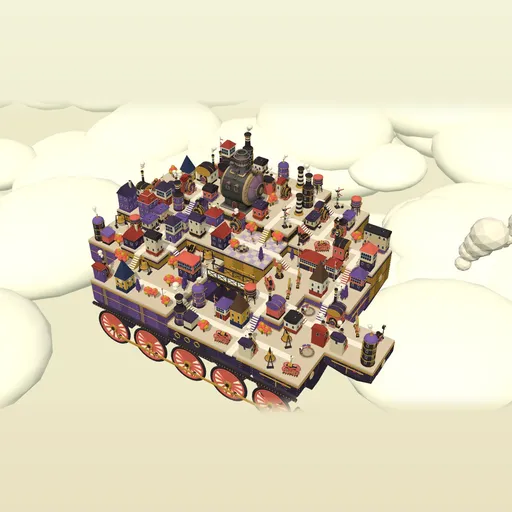 Town 2IronwhistleCalculating with polynomials
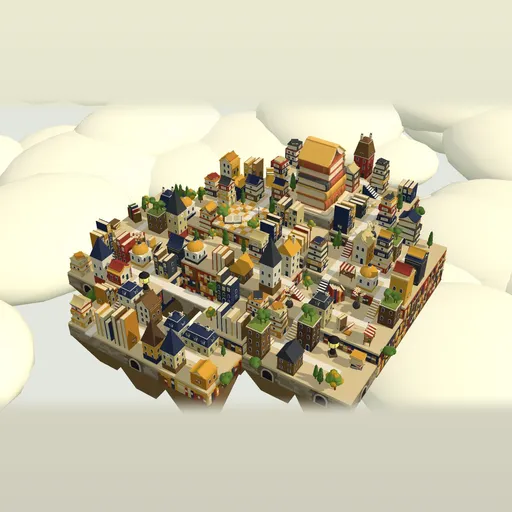 Town 3PagewickSimultaneous equations
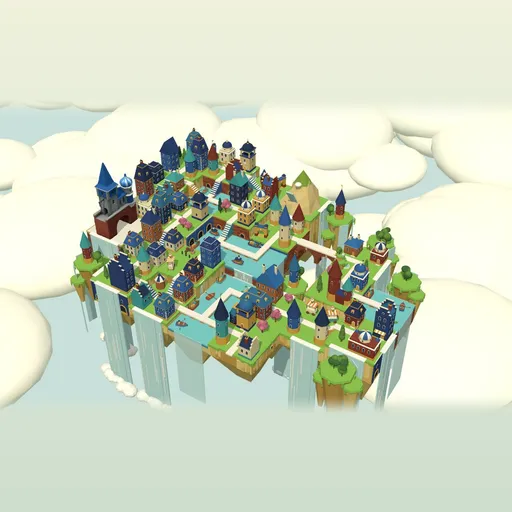 Town 4Blue FallsSimultaneous equations
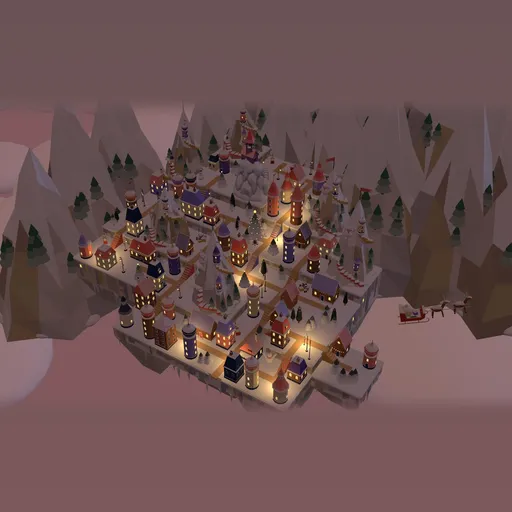 Town 5FrostpeakSimultaneous equation problems
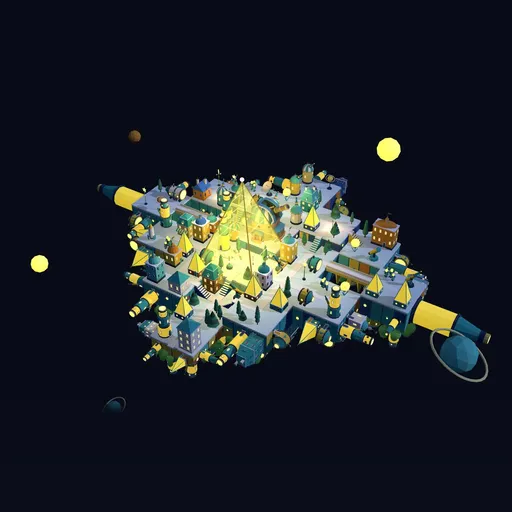 Town 6StarhavenLinear functions
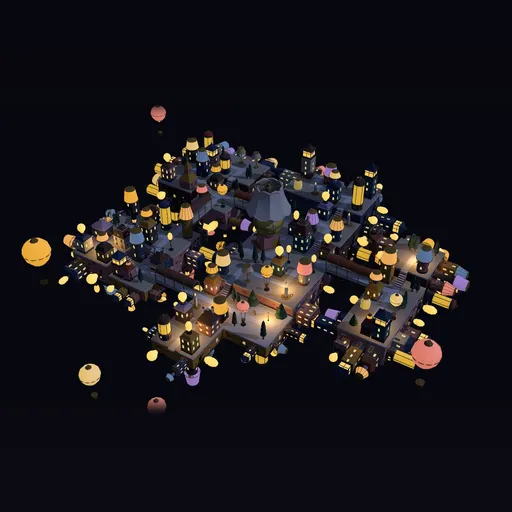 Town 7LumenLinear functions
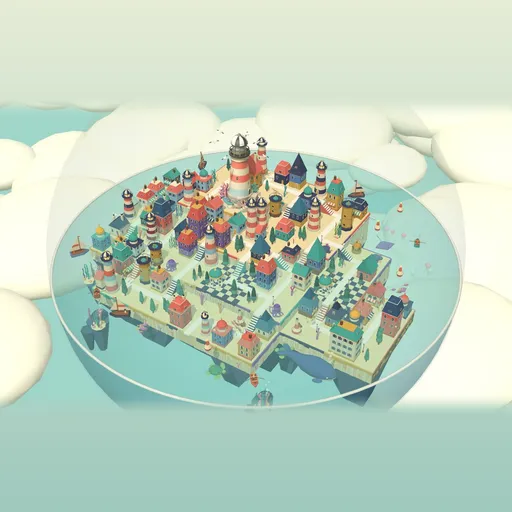 Town 8CoralportInterior and exterior angles
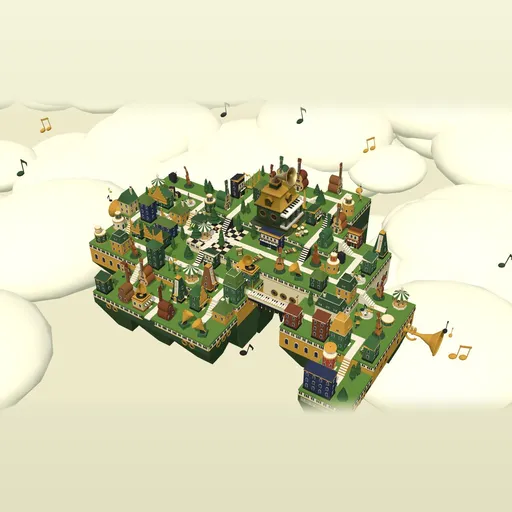 Town 9HarmoniaTriangles and parallelograms
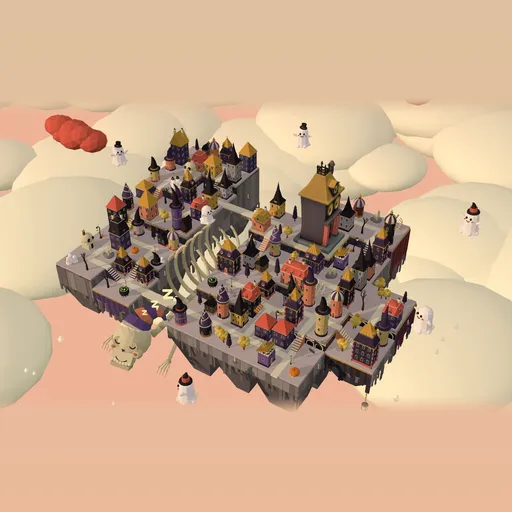 Town 10HollowmereProbability
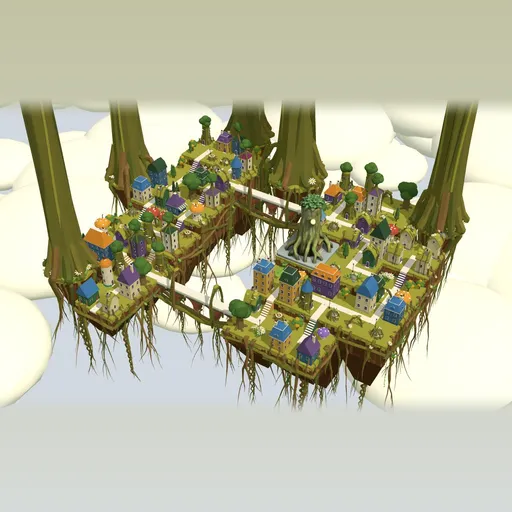 Town 11RootwoodProbability
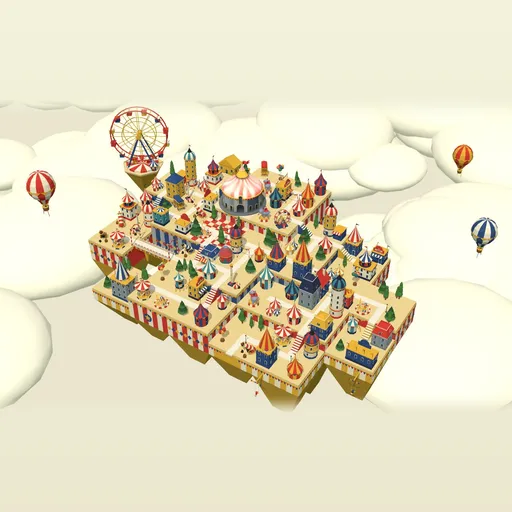 Town 12BigtopQuartiles and box plots
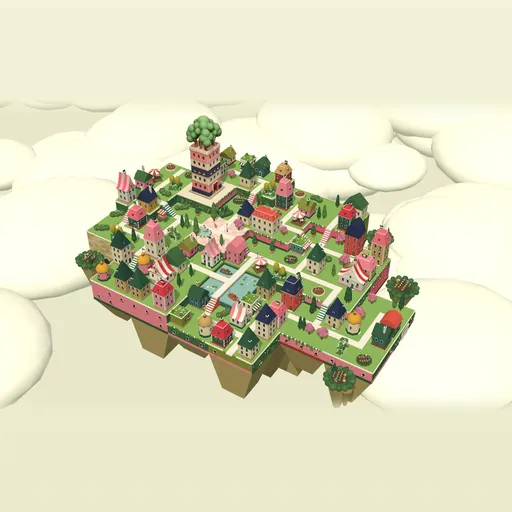 Town 13RosemoorReview of all 8 topics
Sample questions with answers
These were produced by the same generator the game uses, so the questions in the town look like these with different numbers. The correct choice is marked.
Solve 16x + 4y = 16 for y.
- y = −4x − 4
- y = −16x + 16
- y = −4x + 4
- y = 4x + 4
How to think about it: Move 16x to the right: 4y = −16x + 16, then divide both sides by 4: y = −4x + 4.
These 11 scores are in order: 1, 1, 2, 3, 5, 16, 19, 20, 21, 22, 25. What is the third quartile?
- 2
- 20.5
- 16
- 21
How to think about it: Leave out the median 16. Lower half: 1, 1, 2, 3, 5, its median is Q1 = 2. Upper half: 19, 20, 21, 22, 25, Q3 = 21.
A linear function has a rate of change of −2, and y = 0 when x = −1. What is its equation?
- y = 2x − 2
- y = −2x − 2
- y = −2x + 2
- y = 2x + 2
How to think about it: y = −2x + b. Put in x = −1, y = 0: 0 = 2 + b, so b = −2. y = −2x − 2.
Simplify: 25ab ÷ (−5ab)
- 5
- 25
- −5
- −5ab
How to think about it: Write it as a fraction and cancel: 25 ÷ (−5) = −5, and the letters cancel to give −5.
A bag has 3 red balls and 2 white balls; two balls are drawn together. What is the probability that both are red?
- 3/5
- 3/25
- 7/10
- 3/10
How to think about it: There are 10 ways to choose 2 of the 5 balls, and 3 of them fit: 3/10.
For the linear function y = 5x − 4, find y when x = 4.
- 5
- 16
- 24
- −24
How to think about it: Substitute x = 4: y = 5 × 4 − 4 = 16.
How to practise with this bank
- Press “Load this question bank”. Its crystal is set into the stele of your account.
- Enter the town and pick a character. A round lasts five minutes.
- Each villager on your road asks one question from this bank. Answer it to pass.
- After a wrong answer, read the explanation and try a new question of the same kind.
The Turquoise crystal
Turquoise is an opaque sky-blue green, crossed by a fine web of darker veins, like the lines of a graph. It holds the eighth grade, where graphs and equations start working together.
At a glance
- Country
- Japan
- Grade
- Grade 8
- Subject
- Math
- Question types
- 8
- Format
- Multiple choice, 4 options
- Follows
- Japan’s Course of Study for junior high mathematics (MEXT), year 2
- Languages
- English, 中文, 日本語
- Price
- Free bank; in the game, the first 3 towns are free and the Passport ($9.80 a month) opens all 13
Other grades · Japan
Grade 8 in other countries
Questions about this bank
What do the Japanese 8th grade math questions (junior high year 2) cover?
This bank follows Japan’s Course of Study for the second year of junior high school (中学 2 年). It practises calculating with polynomials and monomials, simultaneous equations solved by elimination (加減法) or substitution (代入法) and their word problems, linear functions and the rate of change, interior and exterior angles of polygons, isosceles triangles and parallelograms, probability with dice, coins and bags, and quartiles and box plots. Every question has four choices and a short explanation. Topics: Calculating with polynomials, Simultaneous equations, Simultaneous equation problems, Linear functions, Interior and exterior angles, Triangles and parallelograms, Probability, Quartiles and box plots.
Are these Japanese 8th grade math questions (junior high year 2) free?
Yes. The bank is free to read here and to load, with no ads. In the game the first three towns are free with it: the first town needs no account, towns 2 and 3 a free account. The Passport ($9.80 a month) opens all thirteen towns and question banks of your own.
Do the questions come with answers?
Yes. Every question has one correct choice out of four and a short explanation. In the game the explanation appears after a wrong answer; on this page it is shown under each sample.
How many questions are in the bank?
There is no fixed number. Questions are generated with new numbers each time, so every round is different while the skills stay the same.
What if the Grade 8 questions are too hard or too easy?
Load the bank for Grade 7 or Grade 9 instead. You can change banks as often as you like.