
Turquoise · Class 8
Wonder Town › Question banks › India › Class 8
IndiaClass 8 maths questions (India, NCERT)
These Class 8 maths questions follow Ganita Prakash Parts 1 and 2, the NCERT textbooks for Class 8 used in CBSE schools (NCF-SE 2023, published in 2025), in the order of their chapters. They practise squares, cubes and their roots, exponents and standard form, quadrilaterals, algebraic identities, ratio and proportion, percentages and interest, the Baudhāyana-Pythagoras theorem, map scales and inverse proportion, the mean and median, and area. Every question has four choices and a short explanation.
Free. Loading needs a sign-in; reading this page does not.
What the Indian Class 8 maths questions cover
Squares and cubes
Square roots by prime factorisation such as √1764, how many numbers lie between 20² and 21², cube roots, the smallest factor that makes a perfect square, the largest square handkerchief, and squares never ending in 2, 3, 7 or 8.
Powers and exponents
Laws of exponents (2⁵ × 2³, 5⁷ ÷ 5³, (3²)⁴), zero and negative exponents such as 2⁻³ = 1/8, powers of negative numbers, and standard form such as 5.9 × 10⁶.
Quadrilaterals
The angle sum of 360°, angles of parallelograms and trapeziums, diagonals of rectangles and parallelograms that bisect each other, and a rhombus diagonal bisecting its angles.
Algebraic identities
(a + b)², (a − b)², (a + b)(a − b) and (x + a)(x + b), and quick products such as 98 × 102, 104² and 53² − 47².
Ratio and proportion
Ratios in their simplest form, a : b :: c : ? by the rule of three, lemonade with the same sweetness, and sharing money in a ratio.
Percentages
A percent of a quantity, percentage increase and decrease, profit and loss on the cost price, discount and GST, and simple and compound interest.
Baudhāyana-Pythagoras theorem
The hypotenuse or a missing side of a right-angled triangle, which lengths make a right angle, a ladder against a wall, and the diagonal of a square as s√2.
Scales and inverse proportion
Map scales such as 1 : 1,00,000, sharing in a ratio of three terms, angles in a pie chart, and inverse proportion: more workers or a faster speed, less time.
Mean and median
The mean of a collection, a missing value from the mean, how the mean changes when every value goes up or a new value is included, and the median.
Area
Areas of triangles (½ × base × height), parallelograms (base × height, not the slanting side), rhombuses from their diagonals and trapeziums, and a height from the area.
Which town practises which topic
Wonder Town has 13 towns, opened one after another. With this bank the first 12 walk through its 10 topics in the order of the curriculum, one topic per town, and the core topics get more than one town. The last town mixes every topic as a review. Each question bank keeps its own progress, so changing banks never loses your place in another.
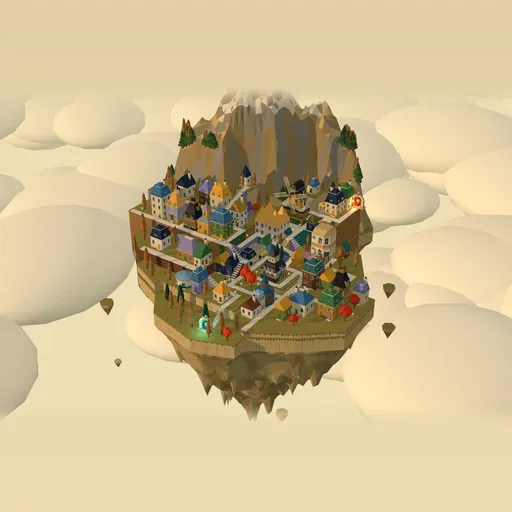 Town 1CloudrestSquares and cubes
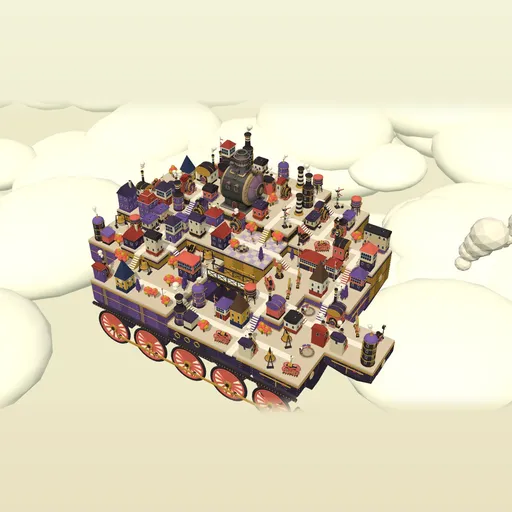 Town 2IronwhistleSquares and cubes
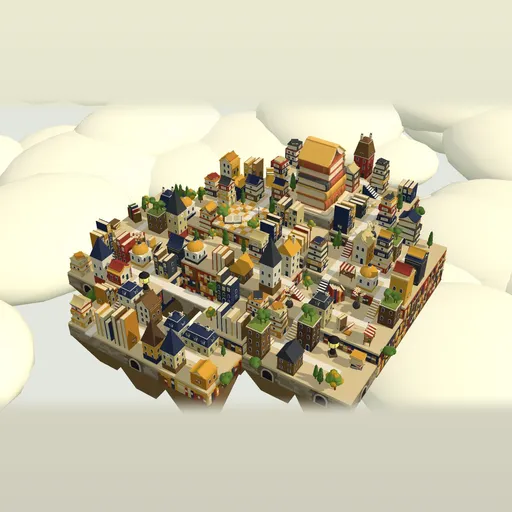 Town 3PagewickPowers and exponents
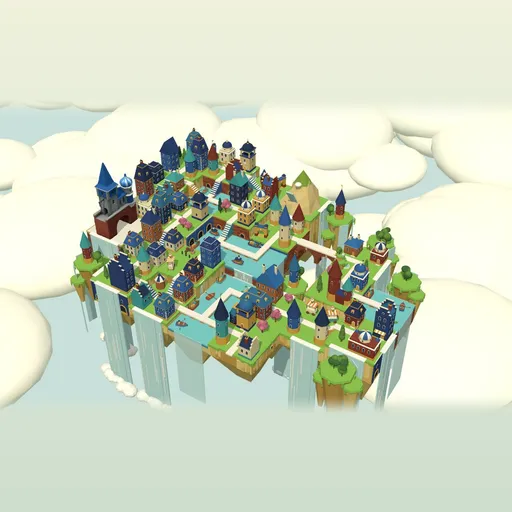 Town 4Blue FallsPowers and exponents
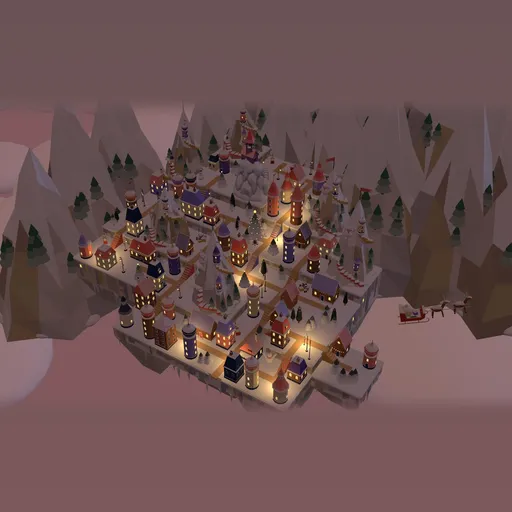 Town 5FrostpeakQuadrilaterals
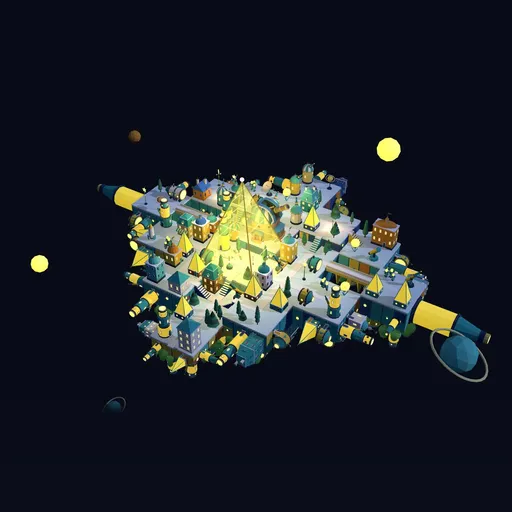 Town 6StarhavenAlgebraic identities
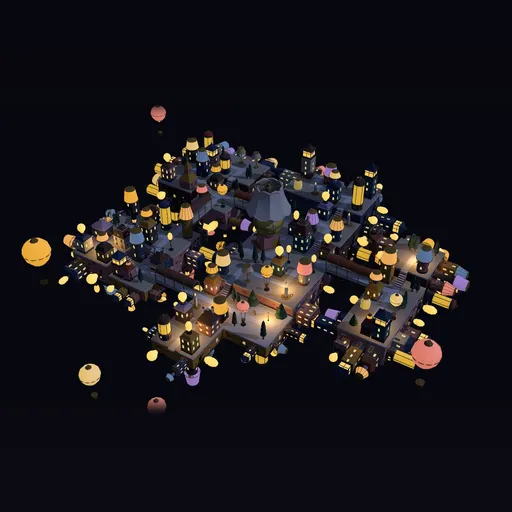 Town 7LumenRatio and proportion
 Town 8CoralportPercentages
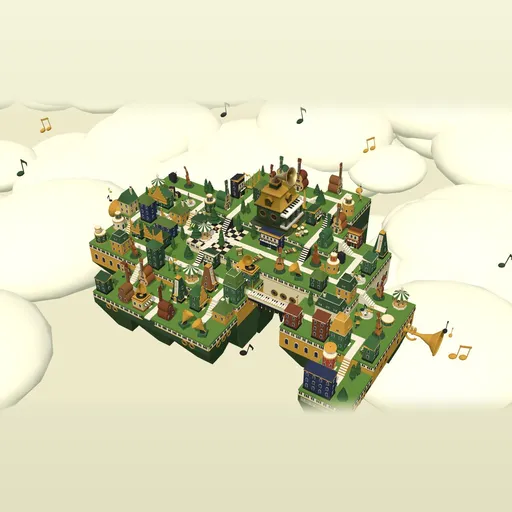 Town 9HarmoniaBaudhāyana-Pythagoras theorem
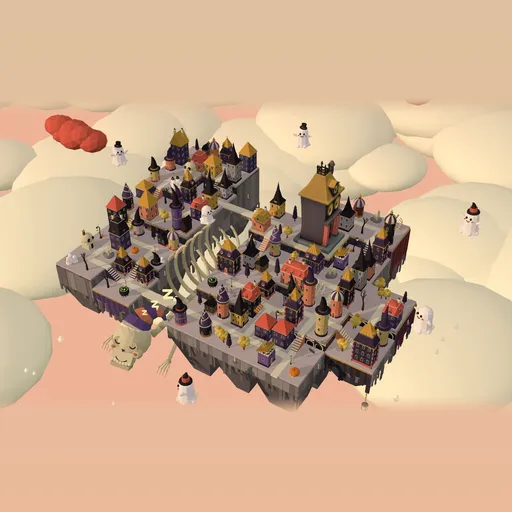 Town 10HollowmereScales and inverse proportion
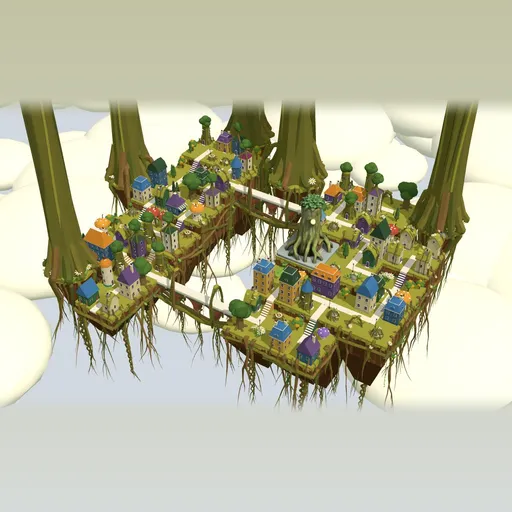 Town 11RootwoodMean and median
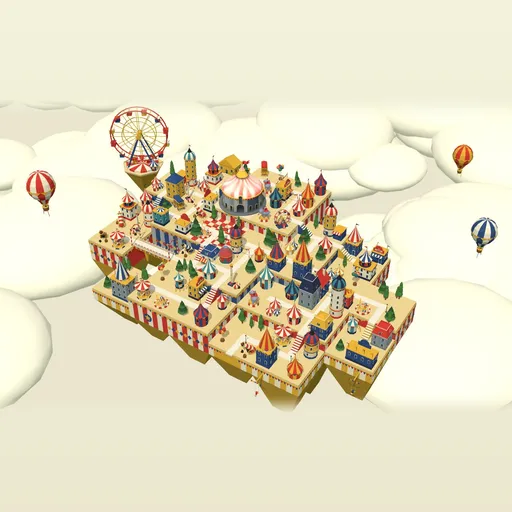 Town 12BigtopArea
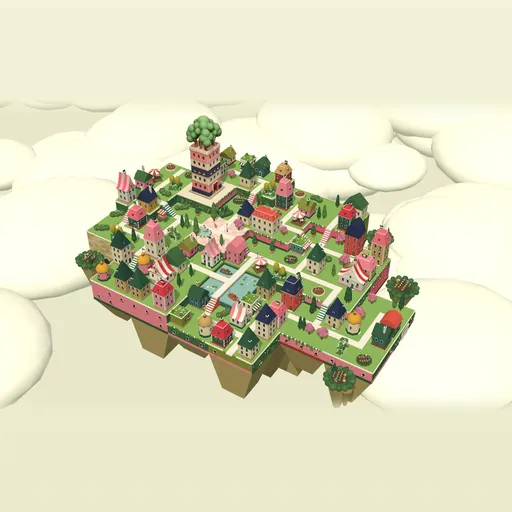 Town 13RosemoorReview of all 10 topics
Sample questions with answers
These were produced by the same generator the game uses, so the questions in the town look like these with different numbers. The correct choice is marked.
The diagonals of rectangle ABCD meet at O. If AC = 18 cm, how long is OB?
- 11 cm
- 9 cm
- 36 cm
- 18 cm
How to think about it: The diagonals of a rectangle are equal and bisect each other, so BD = AC = 18 cm and OB = 18 ÷ 2 = 9 cm.
₹20,000 is deposited at 10% per annum, compounded annually. What is the amount after 2 years?
- ₹24,000
- ₹4200
- ₹22,000
- ₹24,200
How to think about it: After year 1: 20,000 + 10% = ₹22,000. Year 2 earns interest on ₹22,000: 22,000 + 10% = ₹24,200. (Without compounding it would be ₹24,000.)
A right-angled triangle has legs (the sides around the right angle) of 8 cm and 15 cm. How long is the hypotenuse?
- 17 cm
- 18 cm
- 23 cm
- 16 cm
How to think about it: Baudhāyana-Pythagoras: hypotenuse² = 8² + 15² = 64 + 225 = 289, so the hypotenuse is √289 = 17 cm.
The mean of 6 numbers is 25. The number 60 is included. What is the new mean?
- 30
- 25
- 43
- 35
How to think about it: Old total = 6 × 25 = 150. New total = 150 + 60 = 210, for 7 numbers: 210 ÷ 7 = 30.
3.2 × 10⁵ = ?
- 3,20,00,000
- 32,00,000
- 3,20,000
- 32,000
How to think about it: Multiplying by 10⁵ moves the decimal point 5 places to the right: 3.2 → 3,20,000.
What is the median of 4, 8, 29, 35, 36?
- 35
- 29
- 22
- 8
How to think about it: Sort the data first: 4, 8, 29, 35, 36. The middle (3rd) value is 29.
How to practise with this bank
- Press “Load this question bank”. Its crystal is set into the stele of your account.
- Enter the town and pick a character. A round lasts five minutes.
- Each villager on your road asks one question from this bank. Answer it to pass.
- After a wrong answer, read the explanation and try a new question of the same kind.
The Turquoise crystal
Turquoise is an opaque sky-blue green, crossed by a fine web of darker veins, like the lines of a graph. It holds the eighth grade, where graphs and equations start working together.
At a glance
- Country
- India
- Grade
- Class 8
- Subject
- Math
- Question types
- 10
- Format
- Multiple choice, 4 options
- Follows
- NCERT Ganita Prakash for Class 8 (NCF-SE 2023), as used in CBSE schools
- Languages
- English, 中文, 日本語
- Price
- Free bank; in the game, the first 3 towns are free and the Passport ($9.80 a month) opens all 13
Other grades · India
Class 8 in other countries
Questions about this bank
What do the Indian Class 8 maths questions cover?
These Class 8 maths questions follow Ganita Prakash Parts 1 and 2, the NCERT textbooks for Class 8 used in CBSE schools (NCF-SE 2023, published in 2025), in the order of their chapters. They practise squares, cubes and their roots, exponents and standard form, quadrilaterals, algebraic identities, ratio and proportion, percentages and interest, the Baudhāyana-Pythagoras theorem, map scales and inverse proportion, the mean and median, and area. Every question has four choices and a short explanation. Topics: Squares and cubes, Powers and exponents, Quadrilaterals, Algebraic identities, Ratio and proportion, Percentages, Baudhāyana-Pythagoras theorem, Scales and inverse proportion, Mean and median, Area.
Are these Indian Class 8 maths questions free?
Yes. The bank is free to read here and to load, with no ads. In the game the first three towns are free with it: the first town needs no account, towns 2 and 3 a free account. The Passport ($9.80 a month) opens all thirteen towns and question banks of your own.
Do the questions come with answers?
Yes. Every question has one correct choice out of four and a short explanation. In the game the explanation appears after a wrong answer; on this page it is shown under each sample.
How many questions are in the bank?
There is no fixed number. Questions are generated with new numbers each time, so every round is different while the skills stay the same.
What if the Class 8 questions are too hard or too easy?
Load the Class 7 bank for review. You can change banks as often as you like.