
Lapis lazuli · Class 7
Wonder Town › Question banks › India › Class 7
IndiaClass 7 maths questions (India, NCERT)
These Class 7 maths questions follow Ganita Prakash Parts 1 and 2, the NCERT textbooks for Class 7 used in CBSE schools (NCF-SE 2023, published in 2025), in the order of their chapters. They practise lakhs, crores and millions, decimals, expressions with letter-numbers, parallel and intersecting lines, the angles and sides of triangles, multiplying and dividing fractions, integers and decimals, HCF and LCM, and simple equations. Every question has four choices and a short explanation.
Free. Loading needs a sign-in; reading this page does not.
What the Indian Class 7 maths questions cover
Large numbers
Lakhs and crores against millions and billions (25 lakh = 2.5 million), the nearest lakh or crore, number names into figures, and the zeros in a crore.
Decimals: place value, + and −
Tenths, hundredths and thousandths, 3 m 5 cm = 3.05 m and ₹12 and 5 paise = ₹12.05, adding and subtracting decimals, and the greatest decimal.
Letter-number expressions
The value of 3a + 5 or 7(a + 9), adding like terms, removing brackets as in 20 − (x − 4), the cost of notebooks as 6c + 30, and matchstick patterns such as 3n + 1.
Parallel and intersecting lines
Linear pairs and vertically opposite angles, a linear pair where one angle is 3 times the other, corresponding, alternate and interior angles of parallel lines, and how many of the 8 angles are equal.
Triangles: angles and sides
The angle sum property, the third angle of a right-angled triangle, exterior angles, and the triangle inequality: which lengths make a triangle, and a possible third side.
Fractions: × and ÷
Multiplying fractions by Brahmagupta’s rule, 2/5 of ₹45, dividing by a fraction with its reciprocal, pieces of 3/4 m from a rope, and sugar for 6 batches of laddoos.
Integers: × and ÷
Products and quotients such as (−6) × 7 and (−48) ÷ (−6), products of three integers, and quiz scores with +3 for a right answer and −1 for a wrong one.
HCF and LCM
HCF and LCM by prime factorisation, when two temple bells next ring together, and the longest equal pieces two ribbons can be cut into.
Decimals: × and ÷
Products such as 0.6 × 0.7, multiplying and dividing by 10, 100 and 1000, 7.5 ÷ 3 and 1.2 ÷ 0.3, and the cost of 3.2 m of cloth.
Finding the unknown
Simple equations such as 3x + 5 = 20, 4(x − 2) = 24 and 5y + 4 = 3y + 22, solved by doing the same to both sides, and a balanced weighing scale.
Which town practises which topic
Wonder Town has 13 towns, opened one after another. With this bank the first 12 walk through its 10 topics in the order of the curriculum, one topic per town, and the core topics get more than one town. The last town mixes every topic as a review. Each question bank keeps its own progress, so changing banks never loses your place in another.
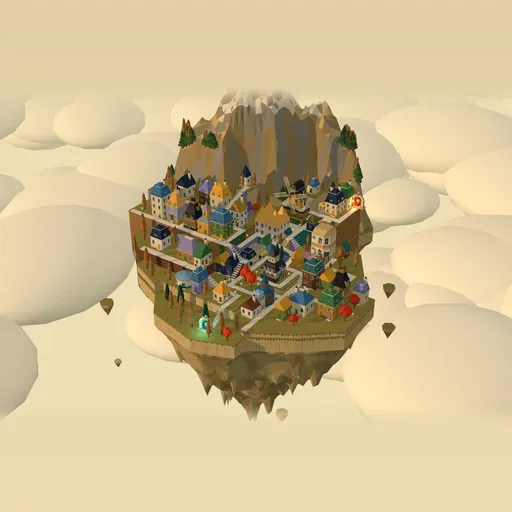 Town 1CloudrestLarge numbers
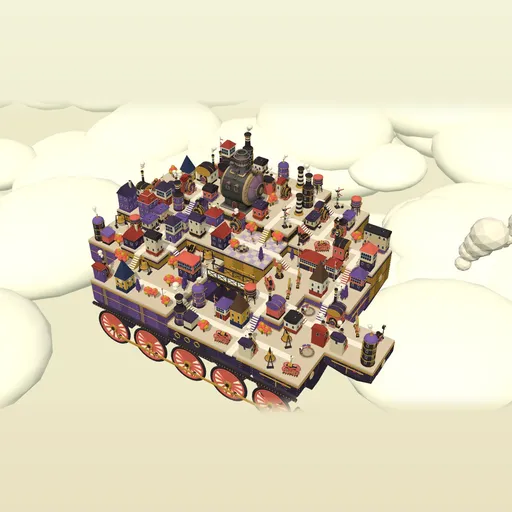 Town 2IronwhistleDecimals: place value, + and −
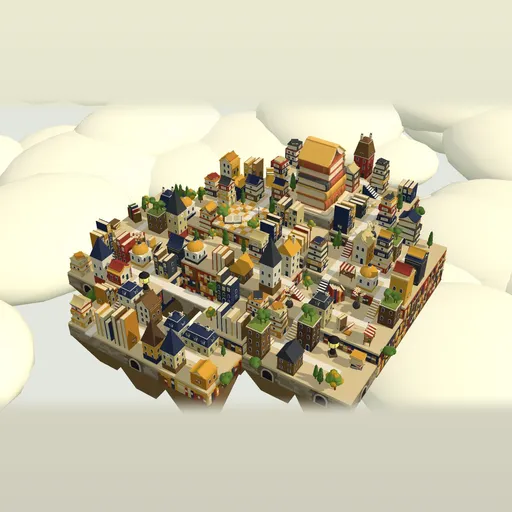 Town 3PagewickLetter-number expressions
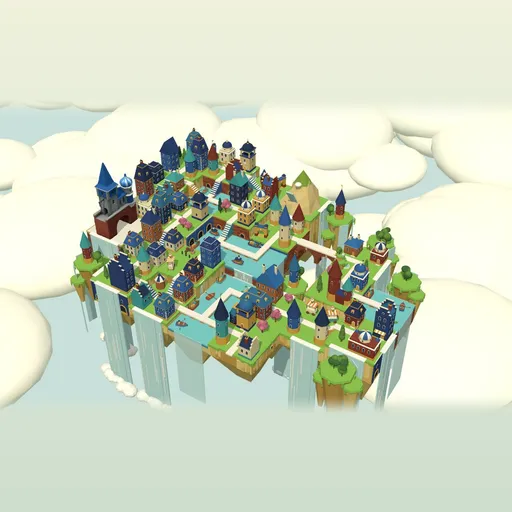 Town 4Blue FallsLetter-number expressions
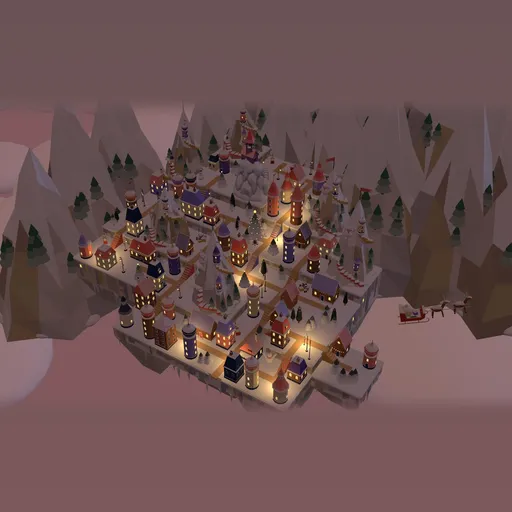 Town 5FrostpeakParallel and intersecting lines
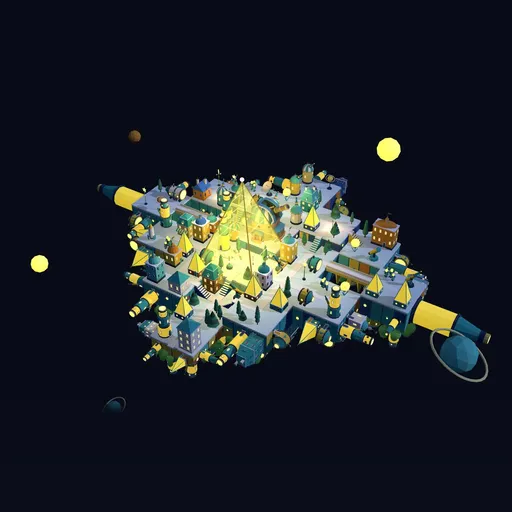 Town 6StarhavenParallel and intersecting lines
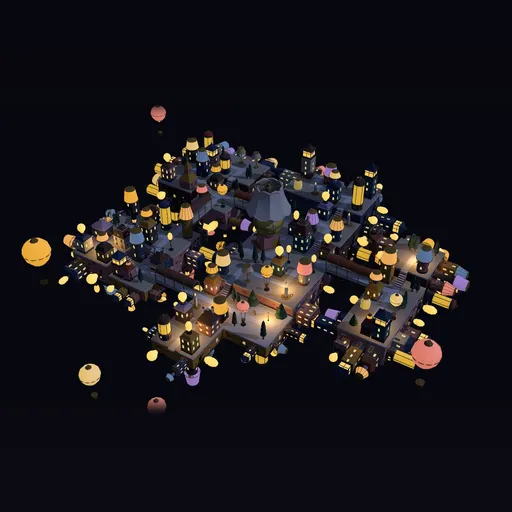 Town 7LumenTriangles: angles and sides
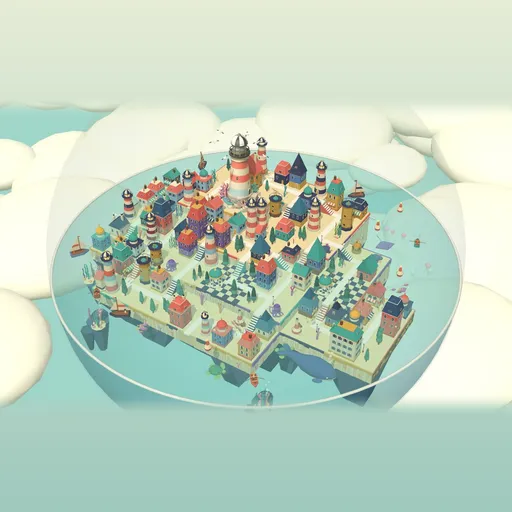 Town 8CoralportFractions: × and ÷
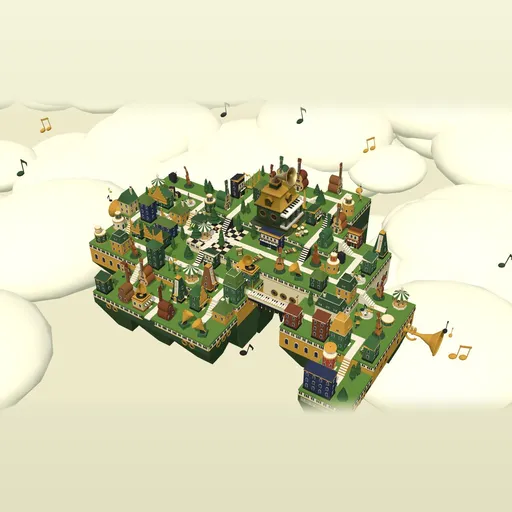 Town 9HarmoniaIntegers: × and ÷
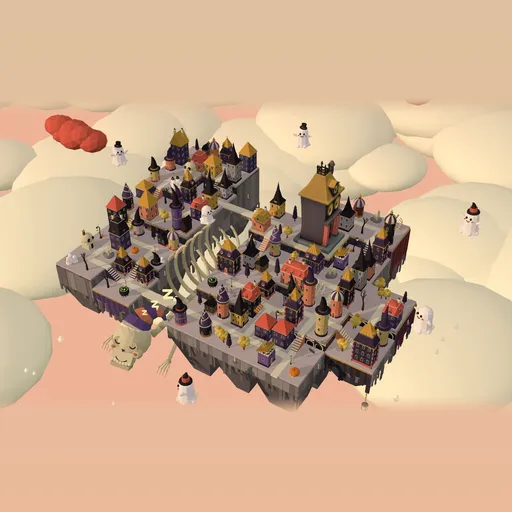 Town 10HollowmereHCF and LCM
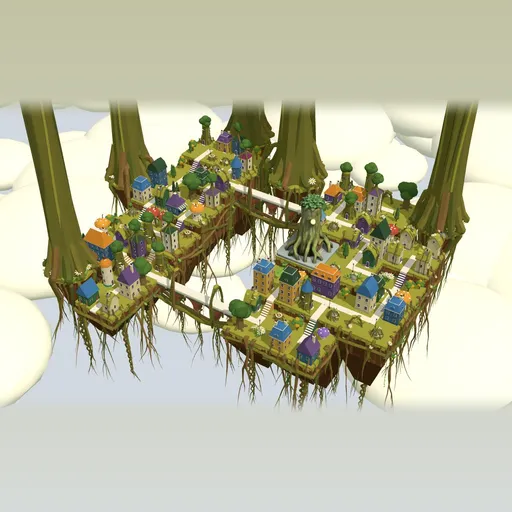 Town 11RootwoodDecimals: × and ÷
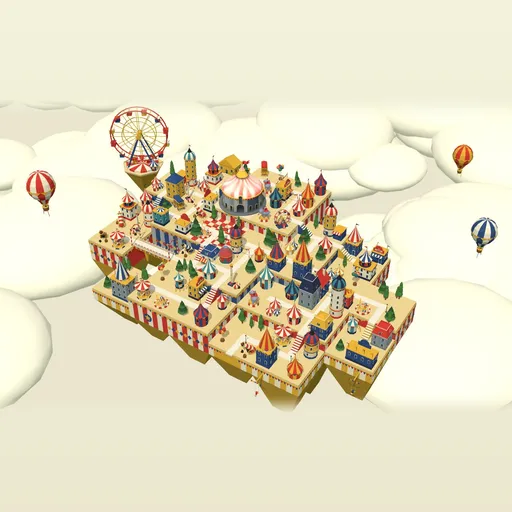 Town 12BigtopFinding the unknown
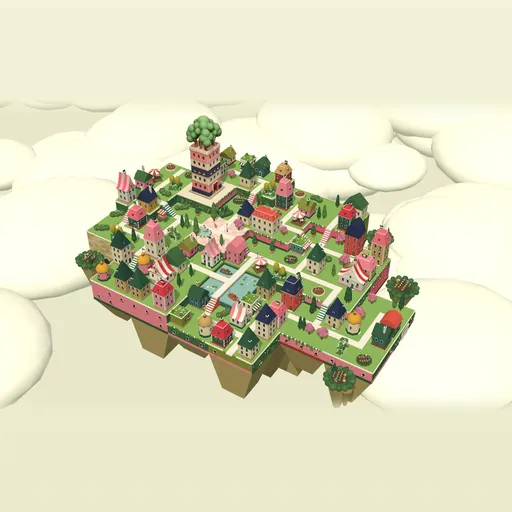 Town 13RosemoorReview of all 10 topics
Sample questions with answers
These were produced by the same generator the game uses, so the questions in the town look like these with different numbers. The correct choice is marked.
12a + 7y − 6a − 5y = ?
- 6a + 2y
- 8ay
- 6a + 12y
- 18a + 2y
How to think about it: Add or subtract like terms only: 12a − 6a = 6a and 7y − 5y = 2y. a and y terms cannot be combined, so the answer is 6a + 2y.
How many zeros are there in 1 billion, written in figures?
- 10
- 11
- 9
- 8
How to think about it: 1 billion = 1,00,00,00,000: 1 followed by 9 zeros.
Two sides of a triangle are 6 cm and 8 cm. Which of these could be the third side?
- 10 cm
- 2 cm
- 14 cm
- 19 cm
How to think about it: The third side must be less than 6 + 8 = 14 cm and more than 8 − 6 = 2 cm (triangle inequality). Only 10 cm is in between.
What is the HCF of 72 and 80?
- 72
- 720
- 8
- 2
How to think about it: 72 = 2 × 2 × 2 × 3 × 3 and 80 = 2 × 2 × 2 × 2 × 5. The common prime factors give the HCF: 2 × 2 × 2 = 8.
How many zeros are there in 1 crore, written in figures?
- 9
- 8
- 6
- 7
How to think about it: 1 crore = 1,00,00,000: 1 followed by 7 zeros.
In △ABC, ∠A = 85° and ∠B = 50°. What is ∠C?
- 135°
- 95°
- 45°
- 225°
How to think about it: The angles of a triangle add up to 180° (angle sum property): ∠C = 180° − 85° − 50° = 45°.
How to practise with this bank
- Press “Load this question bank”. Its crystal is set into the stele of your account.
- Enter the town and pick a character. A round lasts five minutes.
- Each villager on your road asks one question from this bank. Answer it to pass.
- After a wrong answer, read the explanation and try a new question of the same kind.
The Lapis lazuli crystal
Lapis lazuli is an opaque deep blue, flecked with specks that glitter like gold; painters once ground it into the bluest paint there was. It holds the seventh grade, when negative numbers and letters for numbers become everyday tools.
At a glance
- Country
- India
- Grade
- Class 7
- Subject
- Math
- Question types
- 10
- Format
- Multiple choice, 4 options
- Follows
- NCERT Ganita Prakash for Class 7 (NCF-SE 2023), as used in CBSE schools
- Languages
- English, 中文, 日本語
- Price
- Free bank; in the game, the first 3 towns are free and the Passport ($9.80 a month) opens all 13
Other grades · India
Class 7 in other countries
Questions about this bank
What do the Indian Class 7 maths questions cover?
These Class 7 maths questions follow Ganita Prakash Parts 1 and 2, the NCERT textbooks for Class 7 used in CBSE schools (NCF-SE 2023, published in 2025), in the order of their chapters. They practise lakhs, crores and millions, decimals, expressions with letter-numbers, parallel and intersecting lines, the angles and sides of triangles, multiplying and dividing fractions, integers and decimals, HCF and LCM, and simple equations. Every question has four choices and a short explanation. Topics: Large numbers, Decimals: place value, + and −, Letter-number expressions, Parallel and intersecting lines, Triangles: angles and sides, Fractions: × and ÷, Integers: × and ÷, HCF and LCM, Decimals: × and ÷, Finding the unknown.
Are these Indian Class 7 maths questions free?
Yes. The bank is free to read here and to load, with no ads. In the game the first three towns are free with it: the first town needs no account, towns 2 and 3 a free account. The Passport ($9.80 a month) opens all thirteen towns and question banks of your own.
Do the questions come with answers?
Yes. Every question has one correct choice out of four and a short explanation. In the game the explanation appears after a wrong answer; on this page it is shown under each sample.
How many questions are in the bank?
There is no fixed number. Questions are generated with new numbers each time, so every round is different while the skills stay the same.
What if the Class 7 questions are too hard or too easy?
Load the bank for Class 6 or Class 8 instead. You can change banks as often as you like.