
Garnet · Class 6
Wonder Town › Question banks › India › Class 6
IndiaClass 6 maths questions (India, NCERT)
These Class 6 maths questions follow Ganita Prakash, the NCERT textbook for Class 6 used in CBSE schools (NCF-SE 2023, first published in 2024), in the order of its chapters. They practise number patterns, lines and angles, number puzzles, tally marks and graphs, primes and prime factorisation, perimeter and area, fractions, symmetry and negative numbers. Every question has four choices and a short explanation.
Free. Loading needs a sign-in; reading this page does not.
What the Indian Class 6 maths questions cover
Patterns in mathematics
The next triangular or square number, cube, power of 2 or Virahānka number, sums such as 1 + 3 + 5 + … + 15, adding up and down, and 1 + 2 + 4 + … + 256.
Lines and angles
The smaller angle between the clock hands at 4 o’clock, the rest of a straight or right angle, acute, obtuse and reflex angles, and turning clockwise from North to West.
Number play
Supercells in a row, reverse-and-add palindromes, one step of Kaprekar’s routine towards 6174, Collatz sequences, and the smallest number whose digits add up to 14.
Data handling and presentation
Tally marks in bundles of five, pictographs where one picture stands for 10 mangoes, the scale of a bar graph, and reading a table of votes.
Prime time
The idli-vada game (common multiples), spotting the prime, co-prime pairs, prime factorisation such as 84 = 2 × 2 × 3 × 7, and the divisibility test for 4.
Perimeter and area
Rounds of a rectangular park, the area of a square from its perimeter, a triangle as half a rectangle, a perimeter from the area, and a square with the same perimeter as a rectangle.
Fractions
Adding and subtracting fractions with different denominators, lowest terms, comparing fractions with the same numerator by their fractional units, and 2 3/4 = ?/4.
Symmetry
Lines of symmetry of squares, rectangles, triangles, kites and regular polygons, and the smallest angle of symmetry, such as 60° for a regular hexagon.
The other side of zero
Bela’s lift (Floor +3, press −5), adding and subtracting integers such as (+4) − (−6), a temperature rising from −8°C, and the smallest of four integers.
Which town practises which topic
Wonder Town has 13 towns, opened one after another. With this bank the first 12 walk through its 9 topics in the order of the curriculum, one topic per town, and the core topics get more than one town. The last town mixes every topic as a review. Each question bank keeps its own progress, so changing banks never loses your place in another.
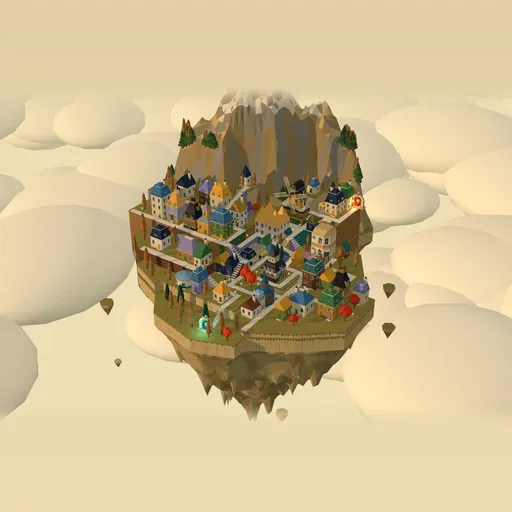 Town 1CloudrestPatterns in mathematics
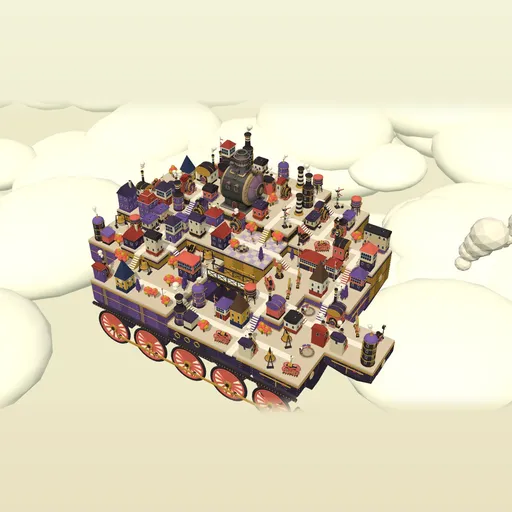 Town 2IronwhistleLines and angles
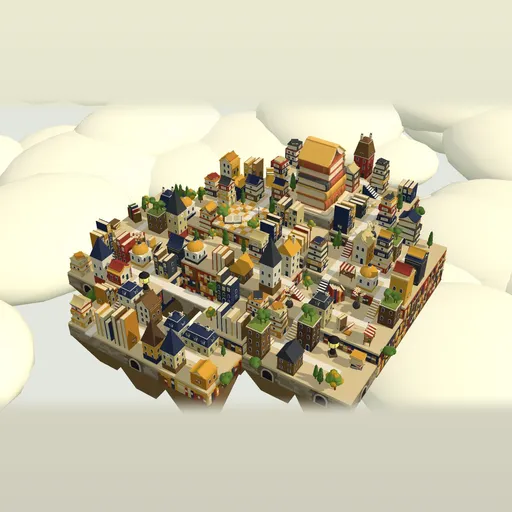 Town 3PagewickNumber play
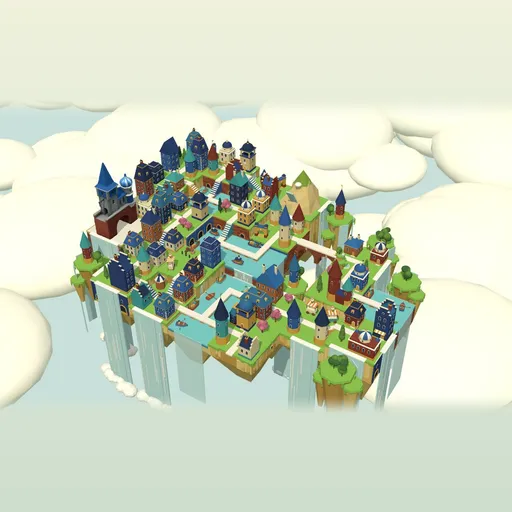 Town 4Blue FallsData handling and presentation
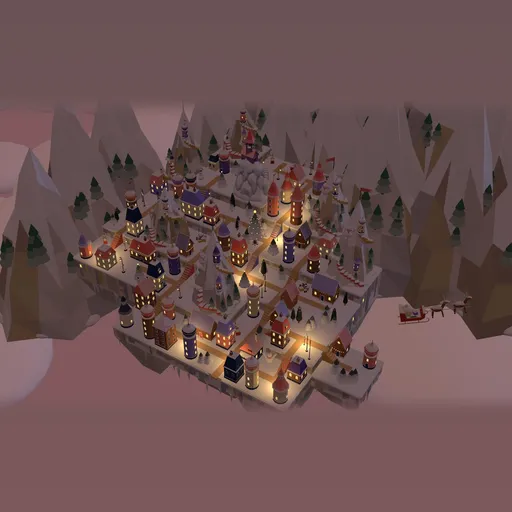 Town 5FrostpeakPrime time
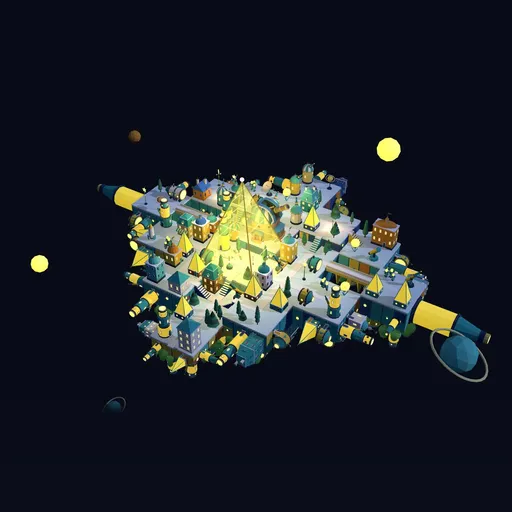 Town 6StarhavenPrime time
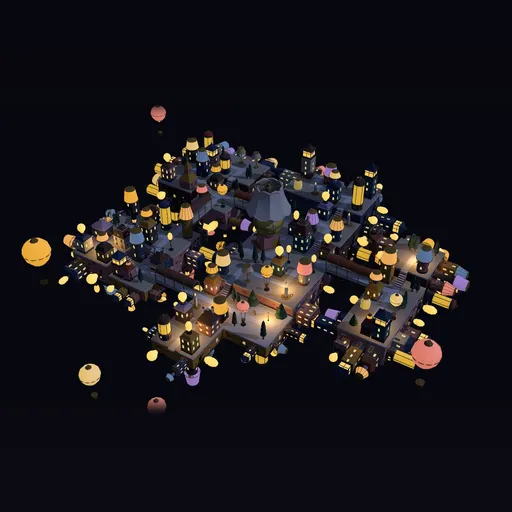 Town 7LumenPerimeter and area
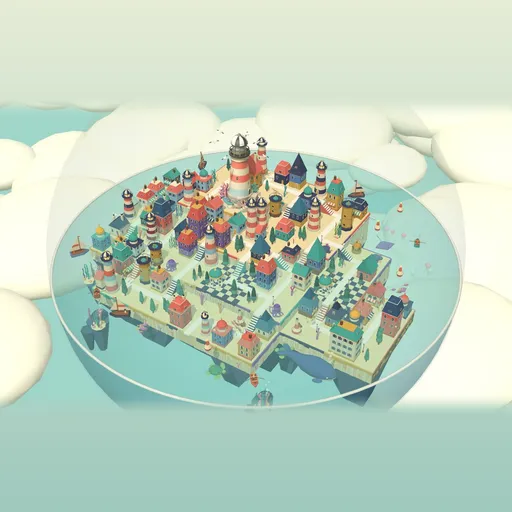 Town 8CoralportPerimeter and area
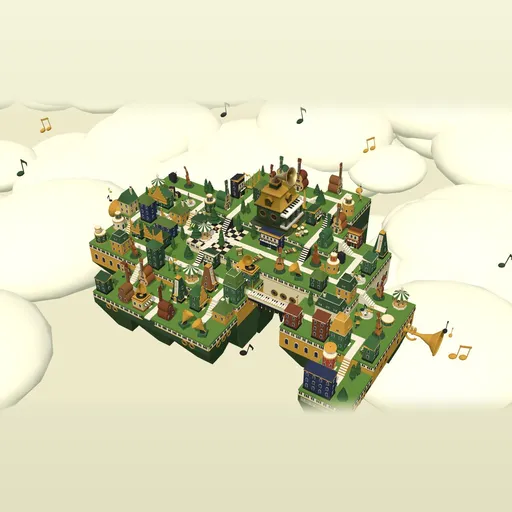 Town 9HarmoniaFractions
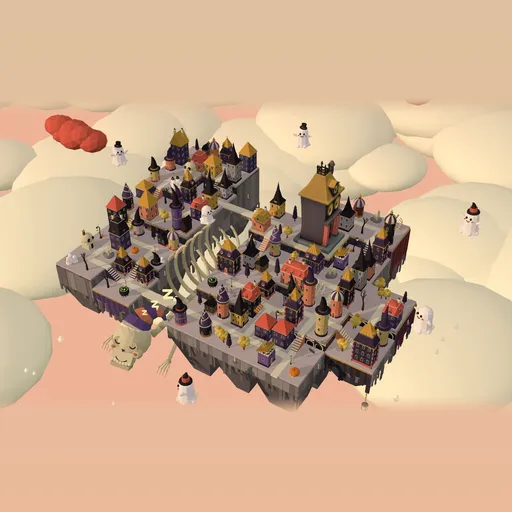 Town 10HollowmereFractions
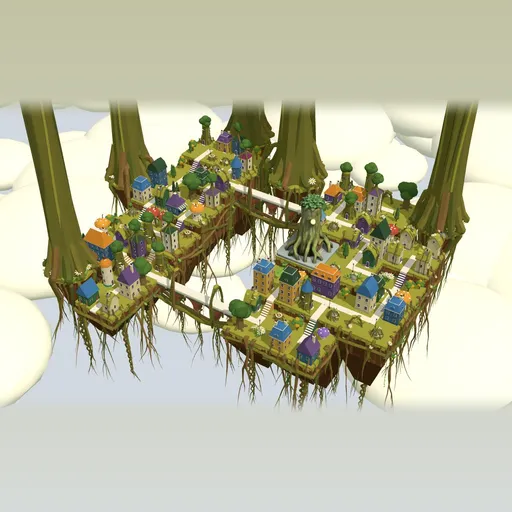 Town 11RootwoodSymmetry
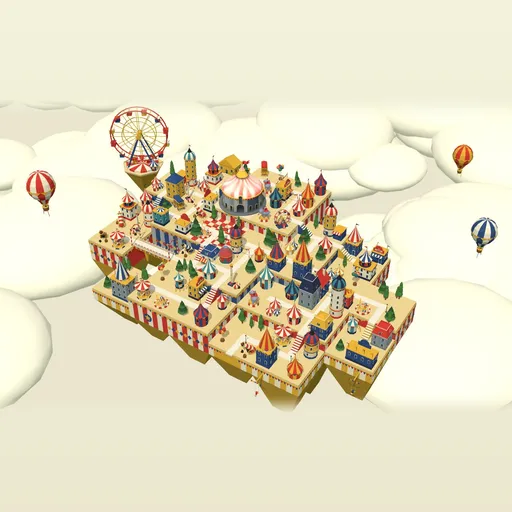 Town 12BigtopThe other side of zero
 Town 13RosemoorReview of all 9 topics
Sample questions with answers
These were produced by the same generator the game uses, so the questions in the town look like these with different numbers. The correct choice is marked.
What is the smaller angle between the hands of a clock at 11 o’clock?
- 30°
- 330°
- 60°
- 55°
How to think about it: The 12 numbers split a full turn of 360° into 12 equal parts of 360° ÷ 12 = 30°. At 11 o’clock the hands are 1 part apart: 1 × 30° = 30°.
Which pair of numbers is co-prime?
- 29, 38
- 9, 15
- 21, 63
- 10, 25
How to think about it: 29 and 38 have no common factor except 1, so they are co-prime. In the other pairs: 21 and 63 share the factor 21; 9 and 15 share the factor 3; 10 and 25 share the factor 5.
Idli-vada game: say “idli” for multiples of 3, “vada” for multiples of 4, and “idli-vada” for both. Counting 1 to 60, how many idli-vadas?
- 6
- 5
- 20
- 15
How to think about it: “Idli-vada” comes on the common multiples of 3 and 4: 12, 24, 36, 48, 60 (multiples of 12). That is 5 times.
Which fraction is the greatest?
- 3/6
- 3/8
- 3/10
- 3/7
How to think about it: All have the numerator 3, so compare the fractional units: the more equal parts a whole is split into, the smaller each part. 1/6 is the biggest unit, so 3/6 is the greatest.
Which number is the smallest?
- −9
- −8
- −15
- 6
How to think about it: On the number line, numbers further to the left are smaller: −15 < −9 < −8 < 6. So the smallest is −15.
In Bela’s Building of Fun the ground floor is 0. The lift is at Floor −2 and Bela presses +2. Which floor does it reach?
- +4
- −4
- −1
- 0
How to think about it: Pressing +2 goes up 2 floors: (−2) + (+2) = 0.
How to practise with this bank
- Press “Load this question bank”. Its crystal is set into the stele of your account.
- Enter the town and pick a character. A round lasts five minutes.
- Each villager on your road asks one question from this bank. Answer it to pass.
- After a wrong answer, read the explanation and try a new question of the same kind.
The Garnet crystal
Garnet is a deep red stone, clear enough to glow from inside, with flat faces that flash as it turns. It holds the sixth year, the bridge from arithmetic to the algebra that follows.
At a glance
- Country
- India
- Grade
- Class 6
- Subject
- Math
- Question types
- 9
- Format
- Multiple choice, 4 options
- Follows
- NCERT Ganita Prakash for Class 6 (NCF-SE 2023), as used in CBSE schools
- Languages
- English, 中文, 日本語
- Price
- Free bank; in the game, the first 3 towns are free and the Passport ($9.80 a month) opens all 13
Other grades · India
Class 6 in other countries
Questions about this bank
What do the Indian Class 6 maths questions cover?
These Class 6 maths questions follow Ganita Prakash, the NCERT textbook for Class 6 used in CBSE schools (NCF-SE 2023, first published in 2024), in the order of its chapters. They practise number patterns, lines and angles, number puzzles, tally marks and graphs, primes and prime factorisation, perimeter and area, fractions, symmetry and negative numbers. Every question has four choices and a short explanation. Topics: Patterns in mathematics, Lines and angles, Number play, Data handling and presentation, Prime time, Perimeter and area, Fractions, Symmetry, The other side of zero.
Are these Indian Class 6 maths questions free?
Yes. The bank is free to read here and to load, with no ads. In the game the first three towns are free with it: the first town needs no account, towns 2 and 3 a free account. The Passport ($9.80 a month) opens all thirteen towns and question banks of your own.
Do the questions come with answers?
Yes. Every question has one correct choice out of four and a short explanation. In the game the explanation appears after a wrong answer; on this page it is shown under each sample.
How many questions are in the bank?
There is no fixed number. Questions are generated with new numbers each time, so every round is different while the skills stay the same.
What if the Class 6 questions are too hard or too easy?
Load the bank for Class 5 or Class 7 instead. You can change banks as often as you like.