
Garnet · Primary 6
Wonder Town › Question banks › Singapore › Primary 6
SingaporeSingapore Primary 6 math questions (PSLE year)
These Singapore Primary 6 math questions follow MOE’s primary mathematics syllabus (2021), which Primary 6, the PSLE year, has used since 2026. They practise dividing fractions, finding the whole from a percentage and percentage change, ratio with the bar model, letters for unknowns and simple equations, circles, semicircles and quarter circles, volume, angles in composite figures, and average. Speed is no longer a primary topic under this syllabus; it is taught in Secondary 1. Every question has four choices and a short explanation.
Free. Loading needs a sign-in; reading this page does not.
What the Singapore Primary 6 math questions cover
Dividing fractions
A fraction ÷ a whole number, a whole number or a fraction ÷ a fraction (3/4 ÷ 1/8 = 6), and word problems such as a ribbon cut into 1/8 m pieces.
Percentage
The whole from a part (35% is 84 pages), the usual price before a discount, the price before 9% GST, and percentage increase or decrease.
Ratio
Simplest form after changing units, sharing $T in a ratio, a ratio with the difference given, fractions and ratios, and A : B : C from two ratios.
Algebra
Simplify 5a + 3 − 2a + 7, find 4k − 5 when k = 7, write expressions such as 4n + 5, and solve 3x + 7 = 31 by the balancing method.
Circles
Circumference and area from the radius or diameter with π = 22/7 or 3.14, and the radius or diameter from the circumference.
Semicircles and quarter circles
Perimeter and area of semicircles and quarter circles, a square with a semicircle on one side, and a square with a quarter circle cut out.
Volume of cube and cuboid
Height from the volume and base area, area of the base, the edge of a cube (∛), the side of a square base (√), and the depth of water in a tank.
Angles in composite figures
Unknown angles in a rhombus, trapezium, parallelogram, rectangle or square with triangles drawn in, without extra lines.
Average
Average = total ÷ number of data, the total from the average, a missing value, and the new average when one more joins.
Which town practises which topic
Wonder Town has 13 towns, opened one after another. With this bank the first 12 walk through its 9 topics in the order of the curriculum, one topic per town, and the core topics get more than one town. The last town mixes every topic as a review. Each question bank keeps its own progress, so changing banks never loses your place in another.
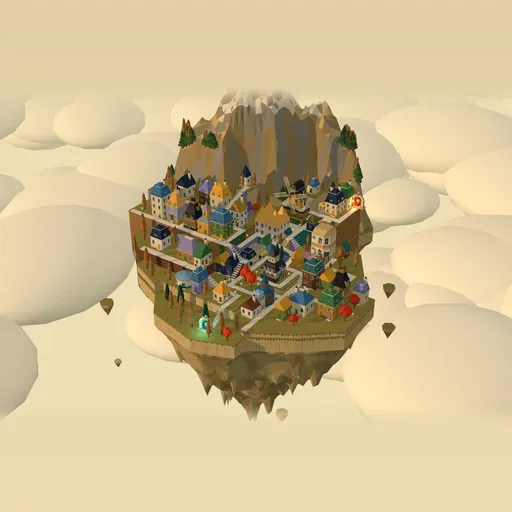 Town 1CloudrestDividing fractions
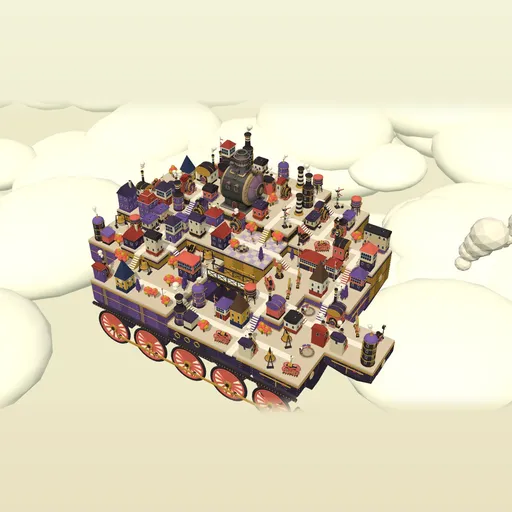 Town 2IronwhistleDividing fractions
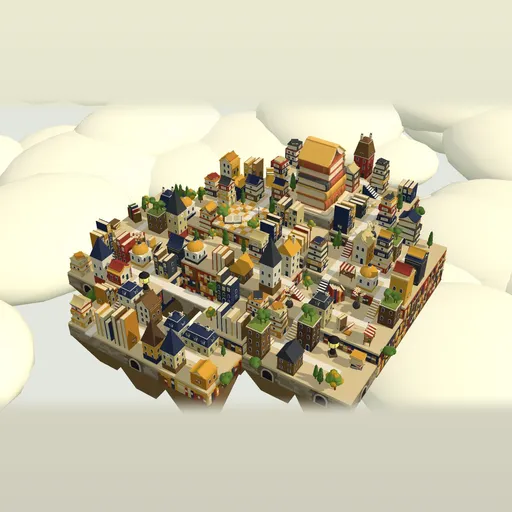 Town 3PagewickPercentage
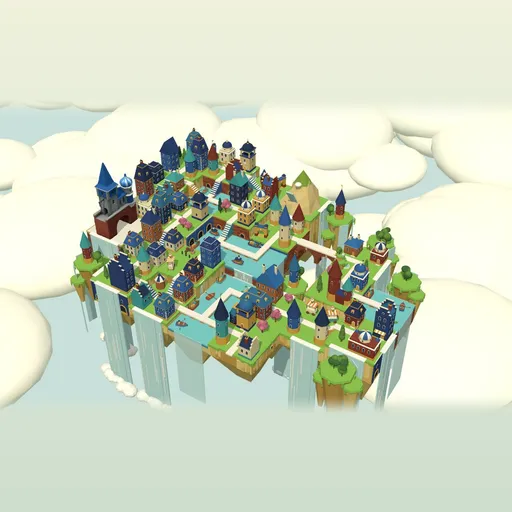 Town 4Blue FallsPercentage
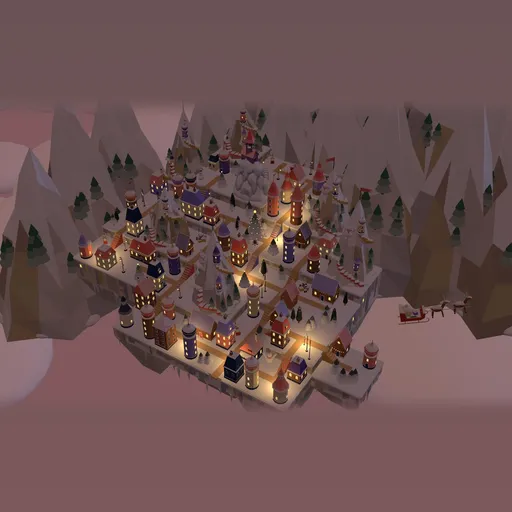 Town 5FrostpeakRatio
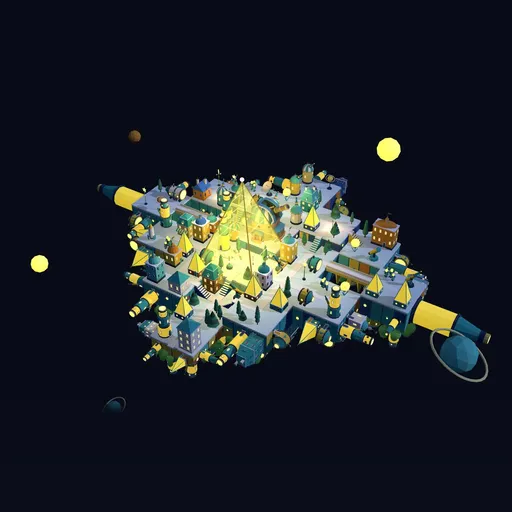 Town 6StarhavenRatio
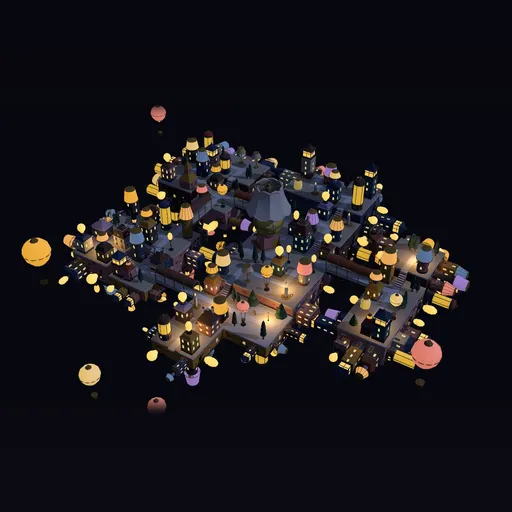 Town 7LumenAlgebra
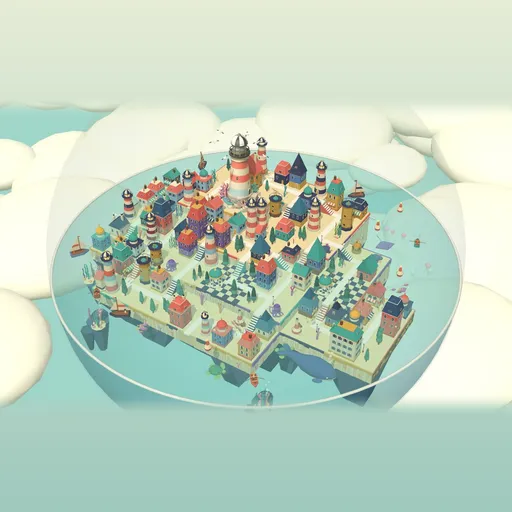 Town 8CoralportCircles
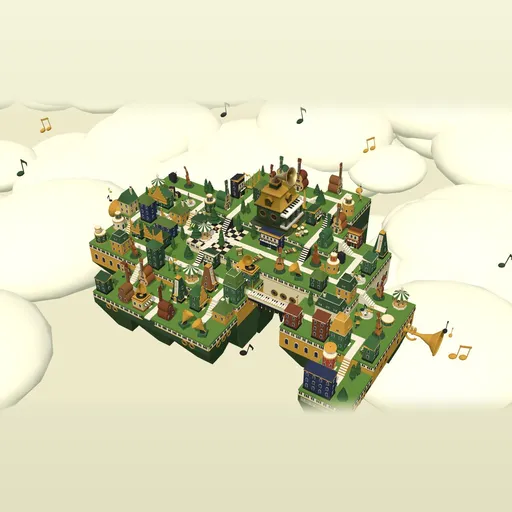 Town 9HarmoniaSemicircles and quarter circles
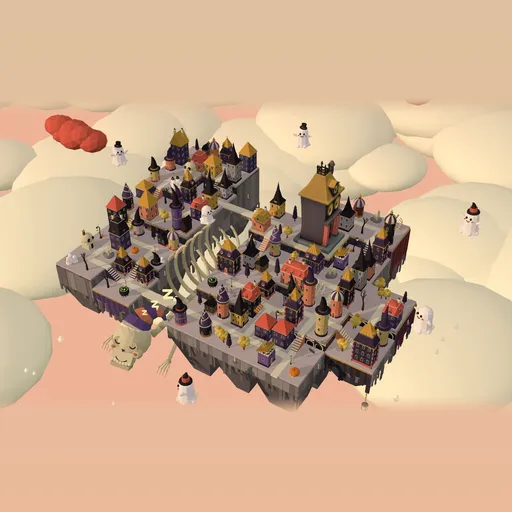 Town 10HollowmereVolume of cube and cuboid
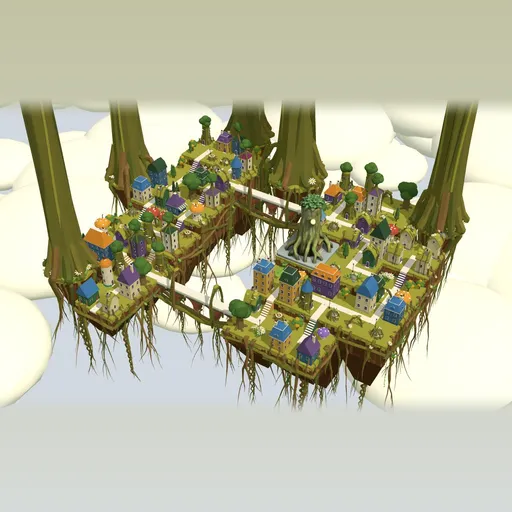 Town 11RootwoodAngles in composite figures
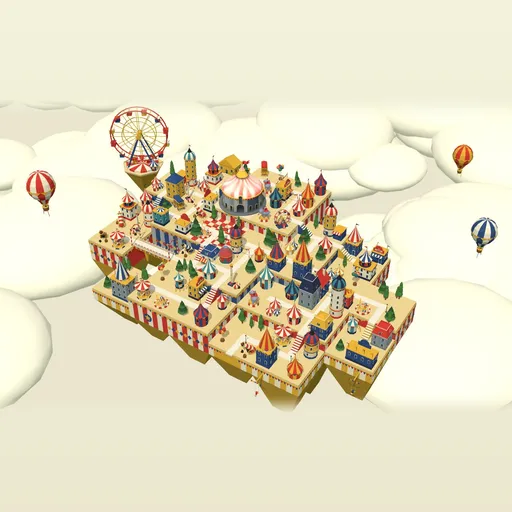 Town 12BigtopAverage
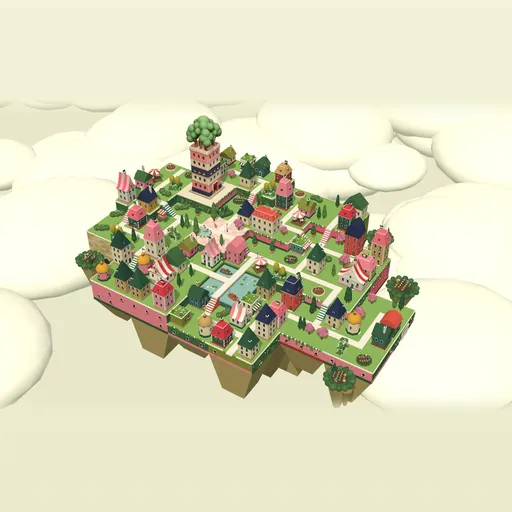 Town 13RosemoorReview of all 9 topics
Sample questions with answers
These were produced by the same generator the game uses, so the questions in the town look like these with different numbers. The correct choice is marked.
A circle has a diameter of 14 cm. Find its area. (Take π = 22/7.)
- 22 cm²
- 154 cm²
- 616 cm²
- 44 cm²
How to think about it: Radius = 14 ÷ 2 = 7 cm. Area = π × radius × radius = 22/7 × 7 × 7 = 154 cm².
A cuboid has a volume of 468 cm³. Its height is 13 cm. Find the area of its base.
- 455 cm²
- 49 cm²
- 72 cm²
- 36 cm²
How to think about it: Volume = base area × height, so base area = 468 ÷ 13 = 36 cm².
A ribbon 4/5 m long is cut into pieces that are each 1/10 m long. How many pieces are there?
- 40
- 10
- 8
- 13
How to think about it: 4/5 ÷ 1/10 = 4/5 × 10 = 8, so there are 8 pieces.
A circle has a radius of 8 cm. Find its circumference. (Take π = 3.14.)
- 100.48 cm
- 25.12 cm
- 50.24 cm
- 200.96 cm
How to think about it: Diameter = 2 × 8 = 16 cm. Circumference = π × diameter = 3.14 × 16 = 50.24 cm.
7/8 ÷ 6 = ?
- 6 6/7
- 5 1/4
- 1/2
- 7/48
How to think about it: Dividing by 6 is the same as multiplying by 1/6: 7/8 × 1/6 = 7/48.
A circle has a diameter of 21 cm. Find its circumference. (Take π = 22/7.)
- 132 cm
- 346.5 cm
- 66 cm
- 33 cm
How to think about it: Circumference = π × diameter = 22/7 × 21 = 66 cm.
How to practise with this bank
- Press “Load this question bank”. Its crystal is set into the stele of your account.
- Enter the town and pick a character. A round lasts five minutes.
- Each villager on your road asks one question from this bank. Answer it to pass.
- After a wrong answer, read the explanation and try a new question of the same kind.
The Garnet crystal
Garnet is a deep red stone, clear enough to glow from inside, with flat faces that flash as it turns. It holds the sixth year, the bridge from arithmetic to the algebra that follows.
At a glance
- Country
- Singapore
- Grade
- Primary 6
- Subject
- Math
- Question types
- 9
- Format
- Multiple choice, 4 options
- Follows
- Singapore MOE Primary Mathematics Syllabus (2021), Primary 6
- Languages
- English, 中文, 日本語
- Price
- Free bank; in the game, the first 3 towns are free and the Passport ($9.80 a month) opens all 13
Other grades · Singapore
Primary 6 in other countries
Questions about this bank
What do the Singapore Primary 6 math questions cover?
These Singapore Primary 6 math questions follow MOE’s primary mathematics syllabus (2021), which Primary 6, the PSLE year, has used since 2026. They practise dividing fractions, finding the whole from a percentage and percentage change, ratio with the bar model, letters for unknowns and simple equations, circles, semicircles and quarter circles, volume, angles in composite figures, and average. Speed is no longer a primary topic under this syllabus; it is taught in Secondary 1. Every question has four choices and a short explanation. Topics: Dividing fractions, Percentage, Ratio, Algebra, Circles, Semicircles and quarter circles, Volume of cube and cuboid, Angles in composite figures, Average.
Are these Singapore Primary 6 math questions free?
Yes. The bank is free to read here and to load, with no ads. In the game the first three towns are free with it: the first town needs no account, towns 2 and 3 a free account. The Passport ($9.80 a month) opens all thirteen towns and question banks of your own.
Do the questions come with answers?
Yes. Every question has one correct choice out of four and a short explanation. In the game the explanation appears after a wrong answer; on this page it is shown under each sample.
How many questions are in the bank?
There is no fixed number. Questions are generated with new numbers each time, so every round is different while the skills stay the same.
What if the Primary 6 questions are too hard or too easy?
Load the bank for Primary 5 or Secondary 1 instead. You can change banks as often as you like.