
Garnet · Grade 6
Wonder Town › Question banks › United States › Grade 6
United States6th grade math questions
Sixth grade, the first year of middle school in most US districts, is where arithmetic starts turning into algebra. This question bank follows the Common Core for grade 6 and practises ratios and unit rates, percents, dividing fractions, decimals, common factors and multiples, negative numbers and absolute value, exponents, one-step equations, area, and the mean and median.
Free. Loading needs a sign-in; reading this page does not.
What the 6th grade math questions cover
Ratios and unit rates
A unit price such as 4 lanterns for $18, then 6 at the same price, and equivalent ratios such as 3 : 5 = 12 : ?.
Percent of a number
What is 30% of 70? And the whole from a part and its percent: 18 is 30% of what number?
Dividing fractions
Fraction by fraction such as 2/3 ÷ 4/5 with keep–change–flip, and how many 3/4-cup servings are in 6 cups.
Multiplying and dividing decimals
Products such as 1.2 × 0.4 and quotients such as 4.8 ÷ 0.6 or 0.36 ÷ 0.04, placing the decimal point.
Common factors and multiples
The greatest common factor of two numbers up to 100, and the least common multiple as two bells that ring together.
Integers and absolute value
The least or greatest of four integers, expressions such as |−12| − |5|, and the distance from 9 m above to 6 m below sea level.
Exponents and expressions
The order of operations with exponents, such as 4 + 3² × 2 or (2 + 5)² − 9, and the value of 3x² + 5 when x = 4.
One-step equations
Equations such as x + 7 = 15, 4x = 36 or x ÷ 3 = 8, solved with the inverse operation.
Triangle and parallelogram area
Triangles (½ × base × height) and parallelograms (base × height), where the slanted side is not the height.
Mean and median
The mean of five numbers, and the median of 5 or 7 numbers that first need putting in order.
Which town practises which topic
Wonder Town has 13 towns, opened one after another. With this bank the first 12 walk through its 10 topics in the order of the curriculum, one topic per town, and the core topics get more than one town. The last town mixes every topic as a review. Each question bank keeps its own progress, so changing banks never loses your place in another.
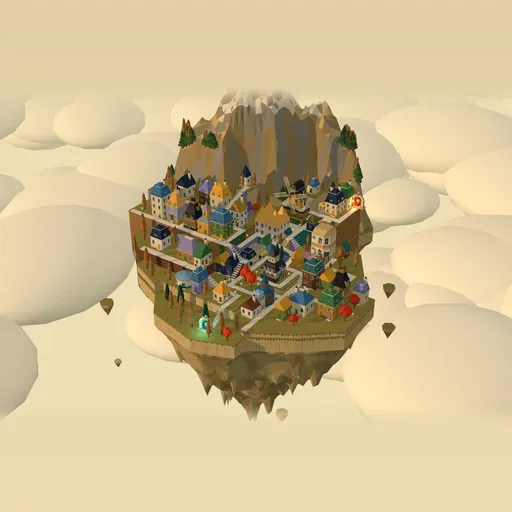 Town 1CloudrestRatios and unit rates
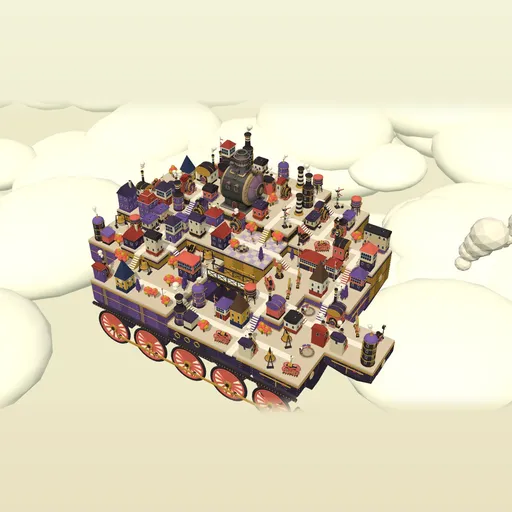 Town 2IronwhistleRatios and unit rates
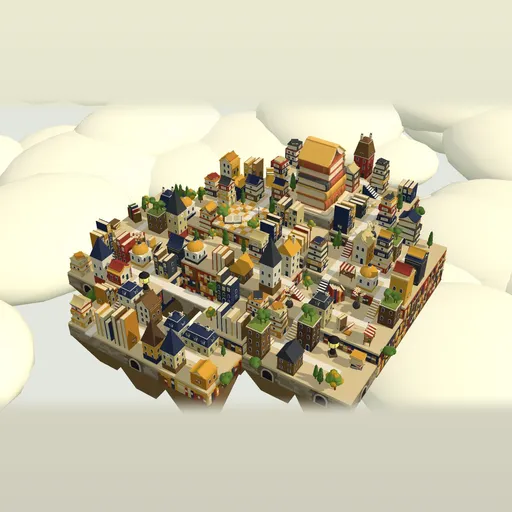 Town 3PagewickPercent of a number
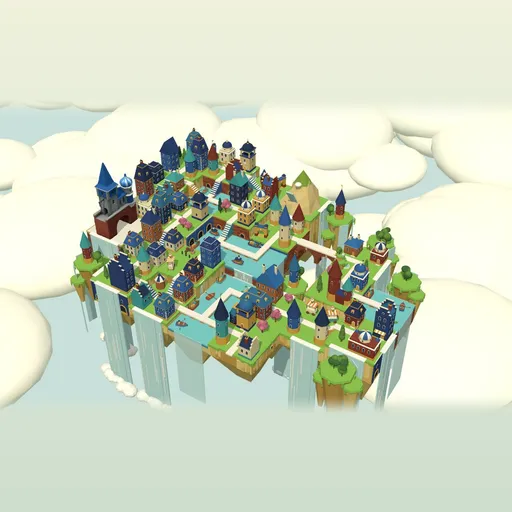 Town 4Blue FallsDividing fractions
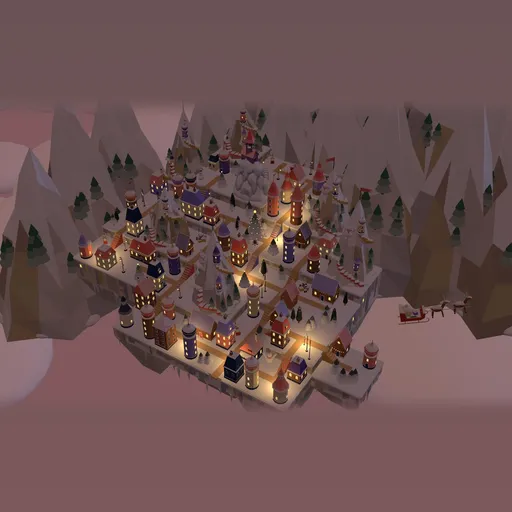 Town 5FrostpeakDividing fractions
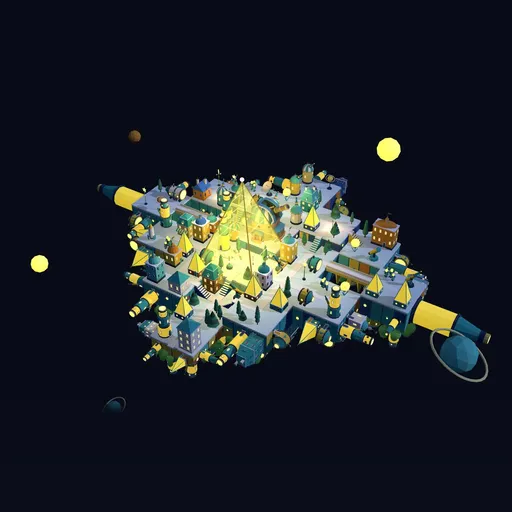 Town 6StarhavenMultiplying and dividing decimals
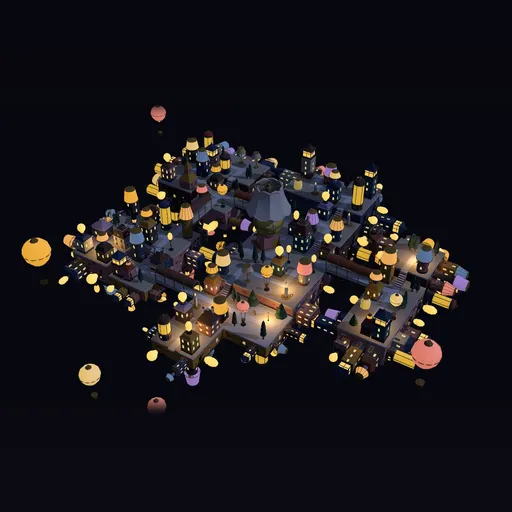 Town 7LumenCommon factors and multiples
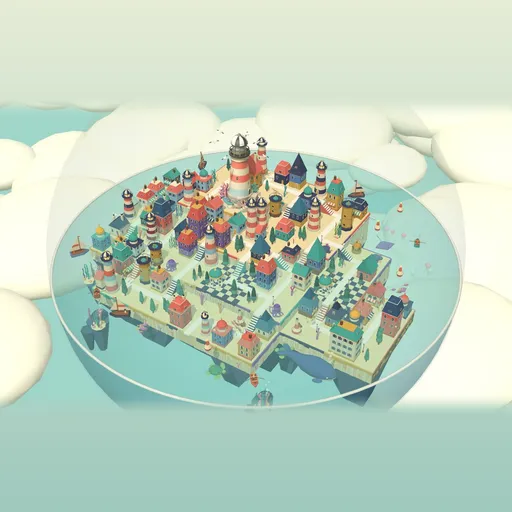 Town 8CoralportIntegers and absolute value
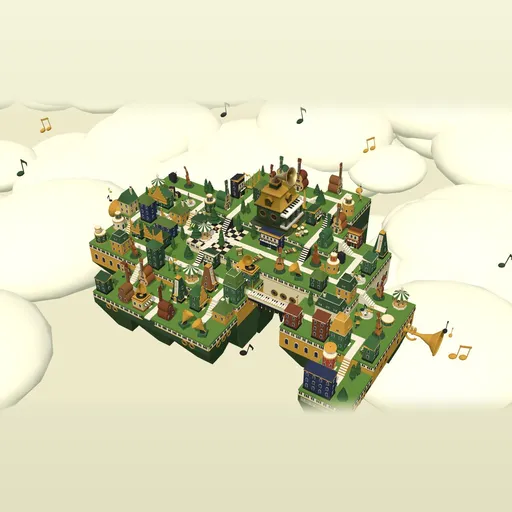 Town 9HarmoniaExponents and expressions
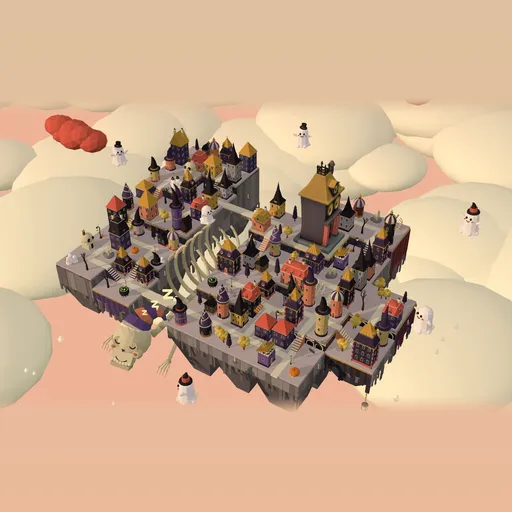 Town 10HollowmereOne-step equations
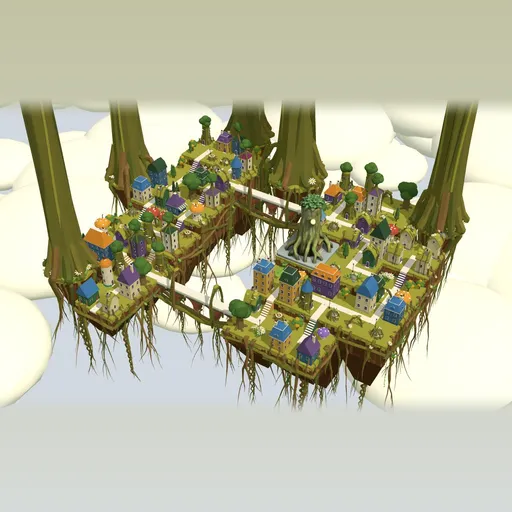 Town 11RootwoodTriangle and parallelogram area
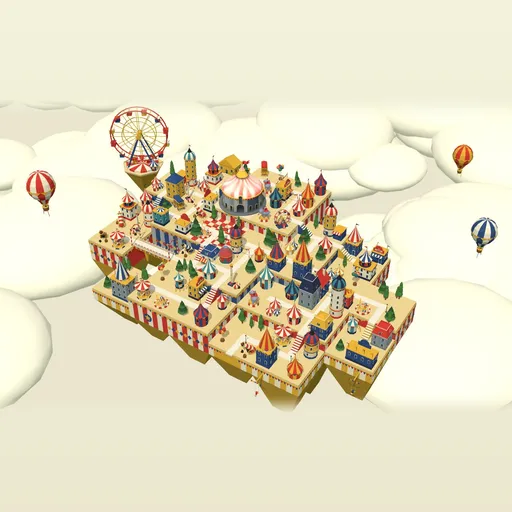 Town 12BigtopMean and median
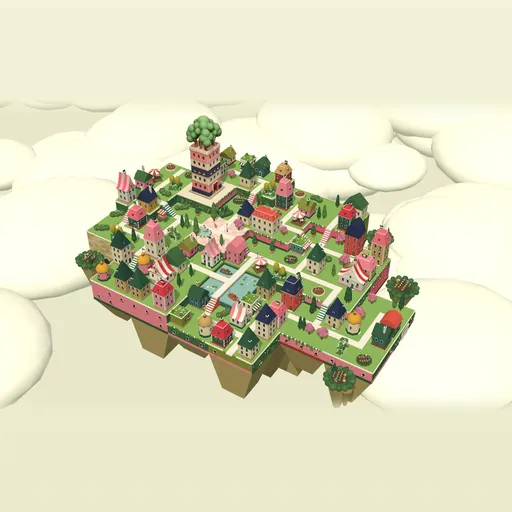 Town 13RosemoorReview of all 10 topics
Sample questions with answers
These were produced by the same generator the game uses, so the questions in the town look like these with different numbers. The correct choice is marked.
A triangular sail has a base of 16 m and a height of 5 m. What is its area in m²?
- 42
- 40
- 80
- 21
How to think about it: Area of a triangle = ½ × base × height = ½ × 16 × 5 = 40.
Five villagers picked 26, 14, 17, 17 and 26 apples. What is the mean number of apples?
- 12
- 20
- 25
- 17
How to think about it: Add them: 26 + 14 + 17 + 17 + 26 = 100. Divide by how many there are: 100 ÷ 5 = 20.
One bell rings every 8 minutes and another every 9 minutes. They ring together now. In how many minutes will they next ring together?
- 17
- 1
- 144
- 72
How to think about it: Multiples of 9: 9, 18, 27, 36, 45, 54, 63, 72. The first that is also a multiple of 8 is 72, the least common multiple (LCM).
What is the greatest common factor (GCF) of 35 and 25?
- 5
- 1
- 175
- 25
How to think about it: 35 = 5 × 7 and 25 = 5 × 5. 7 and 5 share no factor but 1, so the GCF is 5.
1/2 ÷ 2/3 = ?
- 3/4
- 1 1/3
- 3
- 1/3
How to think about it: Keep, change, flip: 1/2 × 3/2 = 3/4.
The ratio of red to blue lanterns is 5 : 2. There are 15 red lanterns. How many blue lanterns are there?
- 21
- 6
- 12
- 8
How to think about it: 5 × 3 = 15, so multiply 2 by 3 too: 5 : 2 = 15 : 6.
How to practise with this bank
- Press “Load this question bank”. Its crystal is set into the stele of your account.
- Enter the town and pick a character. A round lasts five minutes.
- Each villager on your road asks one question from this bank. Answer it to pass.
- After a wrong answer, read the explanation and try a new question of the same kind.
The Garnet crystal
Garnet is a deep red stone, clear enough to glow from inside, with flat faces that flash as it turns. It holds the sixth year, the bridge from arithmetic to the algebra that follows.
At a glance
- Country
- United States
- Grade
- Grade 6
- Subject
- Math
- Question types
- 10
- Format
- Multiple choice, 4 options
- Follows
- US Common Core math domains for grade 6
- Languages
- English, 中文, 日本語
- Price
- Free bank; in the game, the first 3 towns are free and the Passport ($9.80 a month) opens all 13
Other grades · United States
Grade 6 in other countries
Questions about this bank
What do the 6th grade math questions cover?
Sixth grade, the first year of middle school in most US districts, is where arithmetic starts turning into algebra. This question bank follows the Common Core for grade 6 and practises ratios and unit rates, percents, dividing fractions, decimals, common factors and multiples, negative numbers and absolute value, exponents, one-step equations, area, and the mean and median. Topics: Ratios and unit rates, Percent of a number, Dividing fractions, Multiplying and dividing decimals, Common factors and multiples, Integers and absolute value, Exponents and expressions, One-step equations, Triangle and parallelogram area, Mean and median.
Are these 6th grade math questions free?
Yes. The bank is free to read here and to load, with no ads. In the game the first three towns are free with it: the first town needs no account, towns 2 and 3 a free account. The Passport ($9.80 a month) opens all thirteen towns and question banks of your own.
Do the questions come with answers?
Yes. Every question has one correct choice out of four and a short explanation. In the game the explanation appears after a wrong answer; on this page it is shown under each sample.
How many questions are in the bank?
There is no fixed number. Questions are generated with new numbers each time, so every round is different while the skills stay the same.
What if the Grade 6 questions are too hard or too easy?
Load the bank for Grade 5 or Grade 7 instead. You can change banks as often as you like.