
Lapis lazuli · Grade 7
Wonder Town › Question banks › United States › Grade 7
United States7th grade math questions
Seventh grade is the year of negative numbers and equations. This question bank follows the Common Core for grade 7 and practises adding, subtracting, multiplying and dividing integers, simplifying expressions, two-step equations and inequalities, proportional relationships, percent problems, probability, circles and angle relationships.
Free. Loading needs a sign-in; reading this page does not.
What the 7th grade math questions cover
Adding and subtracting integers
Sums and differences such as −7 + 12 or −4 − (−10), by adding the opposite, and temperature changes in °F.
Multiplying and dividing integers
Products and quotients such as (−6) × 7 or (−48) ÷ (−6), and three factors, using the sign rules.
Simplifying expressions
Distribute and combine like terms, as in 4(x − 3) + 2x or 5x − 2(x + 4), minding the minus sign in front of the parentheses.
Two-step equations
Equations such as 3x + 5 = 20 or 4(x − 2) = 20, solved by undoing the operations in reverse order; answers can be negative.
Two-step inequalities
Inequalities such as −3x + 2 ≤ 14, flipping the sign when dividing by a negative number.
Proportional relationships
The constant of proportionality k = y ÷ x, a missing value in y = kx, and unit rates with fractions such as 3/4 mile in 1/4 hour.
Percent problems
Discounts, tips, sales tax, markups, simple interest, and percent increase or decrease.
Probability
Simple events as a fraction, such as a marble from a bag or a roll of a number cube, and a coin flip with a number cube.
Circle circumference and area
Circumference and area from a radius or a diameter, answered in terms of π.
Angle relationships
Complementary, supplementary and vertical angles, and a short equation such as x + (2x + 30) = 180.
Which town practises which topic
Wonder Town has 13 towns, opened one after another. With this bank the first 12 walk through its 10 topics in the order of the curriculum, one topic per town, and the core topics get more than one town. The last town mixes every topic as a review. Each question bank keeps its own progress, so changing banks never loses your place in another.
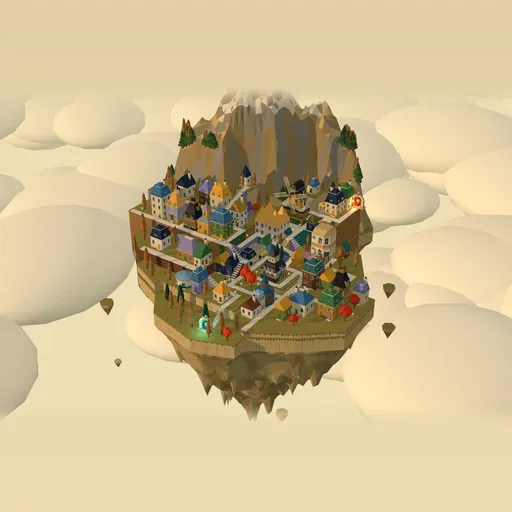 Town 1CloudrestAdding and subtracting integers
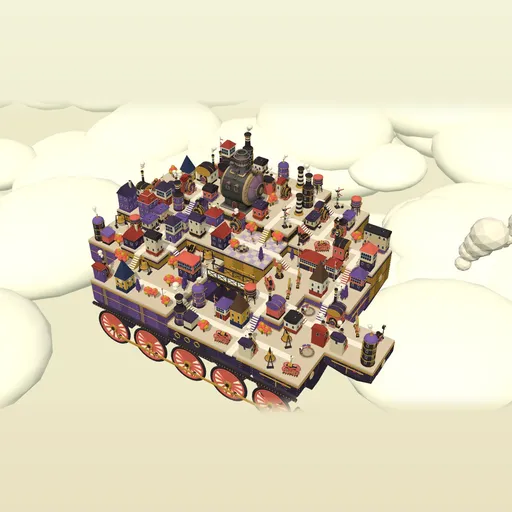 Town 2IronwhistleAdding and subtracting integers
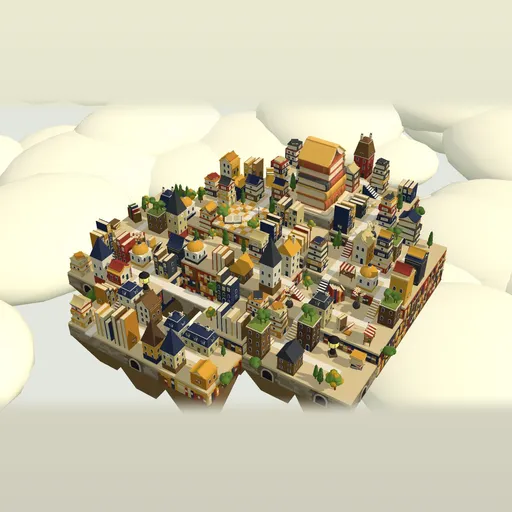 Town 3PagewickMultiplying and dividing integers
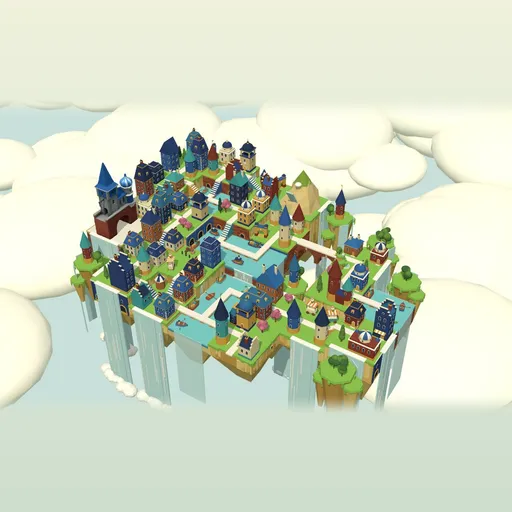 Town 4Blue FallsSimplifying expressions
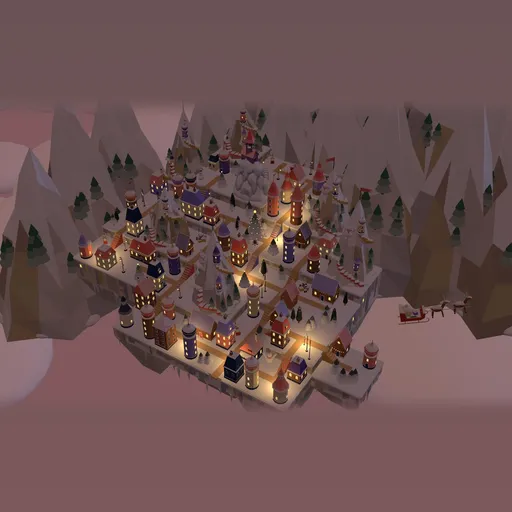 Town 5FrostpeakTwo-step equations
 Town 6StarhavenTwo-step equations
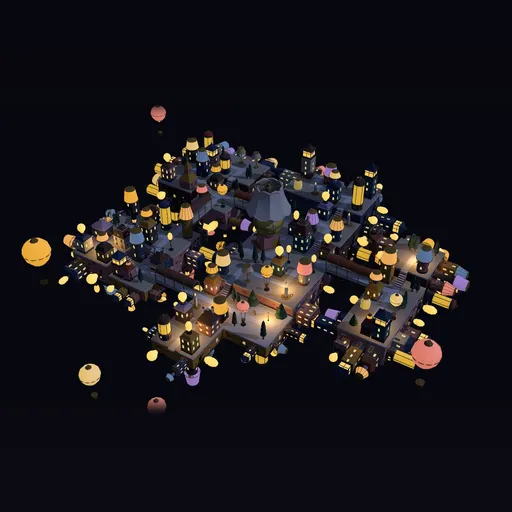 Town 7LumenTwo-step inequalities
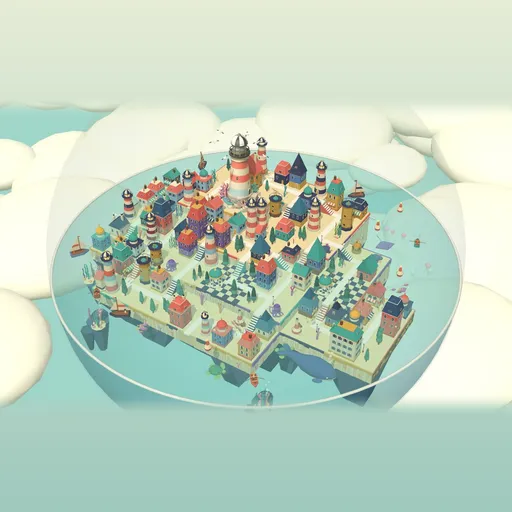 Town 8CoralportProportional relationships
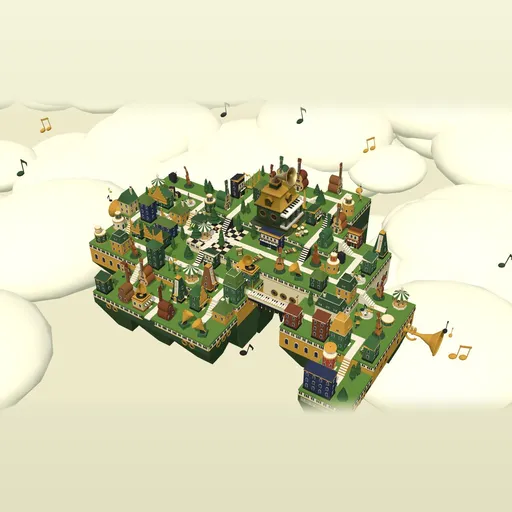 Town 9HarmoniaPercent problems
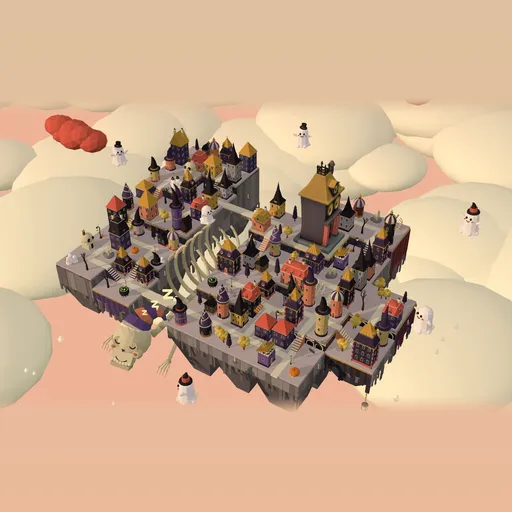 Town 10HollowmereProbability
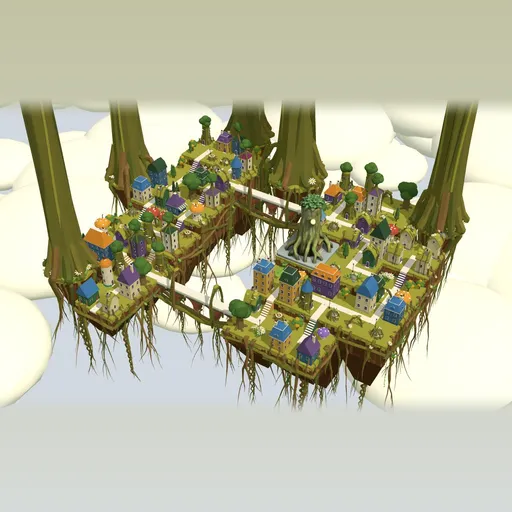 Town 11RootwoodCircle circumference and area
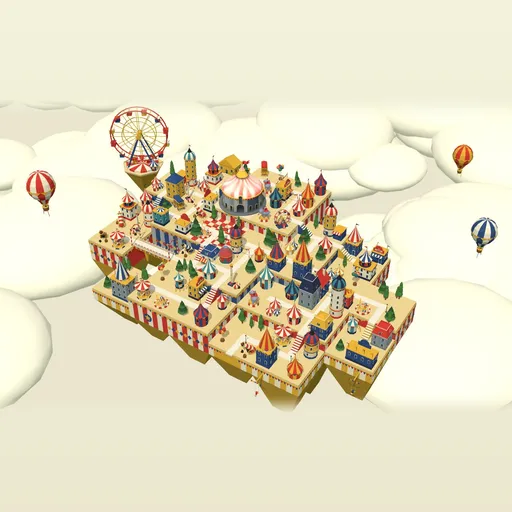 Town 12BigtopAngle relationships
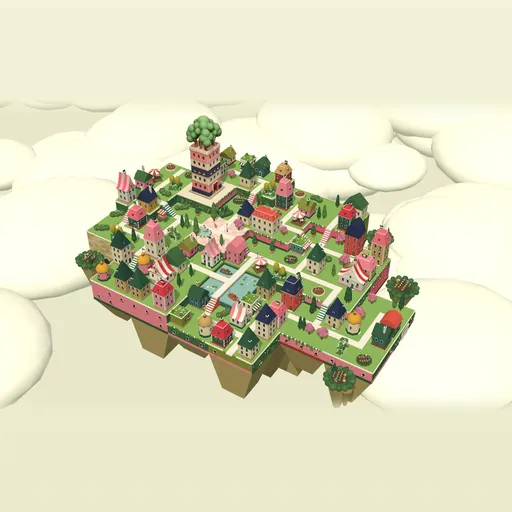 Town 13RosemoorReview of all 10 topics
Sample questions with answers
These were produced by the same generator the game uses, so the questions in the town look like these with different numbers. The correct choice is marked.
A round pond has a radius of 8 m. What is its area? Answer in terms of π.
- 256π
- 64π
- 8π
- 16π
How to think about it: A = πr² = π × 8² = 64π.
You flip a coin and roll a number cube. What is the probability of getting tails and a 6?
- 1/8
- 2/3
- 1/6
- 1/12
How to think about it: There are 2 × 6 = 12 equally likely outcomes, and 1 of them are tails with a 6: 1/12.
$1,500 is saved at 3% simple interest per year. How much interest does it earn in 5 years?
- $1,725
- $2,250
- $225
- $45
How to think about it: Interest = principal × rate × time = 1500 × 0.03 × 5 = $225.
Simplify: 4(x − 2) − x
- 3x − 8
- −8
- 3x − 2
- 3x + 8
How to think about it: Distribute: 4(x − 2) = 4x − 8. Combine like terms: 4x − x = 3x. So 3x − 8.
Two angles are supplementary. One measures x° and the other (4x + 50)°. What is x?
- 154
- 26
- 8
- 23
How to think about it: Supplementary angles add up to 180°: x + 4x + 50 = 180, so 5x = 130 and x = 26.
A villager walks 3/4 mile in 2/3 hour. How many miles per hour is that?
- 2
- 8/9
- 1 1/8
- 1/2
How to think about it: Unit rate = miles ÷ hours = 3/4 ÷ 2/3 = 3/4 × 3/2 = 9/8 = 1 1/8 miles per hour.
How to practise with this bank
- Press “Load this question bank”. Its crystal is set into the stele of your account.
- Enter the town and pick a character. A round lasts five minutes.
- Each villager on your road asks one question from this bank. Answer it to pass.
- After a wrong answer, read the explanation and try a new question of the same kind.
The Lapis lazuli crystal
Lapis lazuli is an opaque deep blue, flecked with specks that glitter like gold; painters once ground it into the bluest paint there was. It holds the seventh grade, when negative numbers and letters for numbers become everyday tools.
At a glance
- Country
- United States
- Grade
- Grade 7
- Subject
- Math
- Question types
- 10
- Format
- Multiple choice, 4 options
- Follows
- US Common Core math domains for grade 7
- Languages
- English, 中文, 日本語
- Price
- Free bank; in the game, the first 3 towns are free and the Passport ($9.80 a month) opens all 13
Other grades · United States
Grade 7 in other countries
Questions about this bank
What do the 7th grade math questions cover?
Seventh grade is the year of negative numbers and equations. This question bank follows the Common Core for grade 7 and practises adding, subtracting, multiplying and dividing integers, simplifying expressions, two-step equations and inequalities, proportional relationships, percent problems, probability, circles and angle relationships. Topics: Adding and subtracting integers, Multiplying and dividing integers, Simplifying expressions, Two-step equations, Two-step inequalities, Proportional relationships, Percent problems, Probability, Circle circumference and area, Angle relationships.
Are these 7th grade math questions free?
Yes. The bank is free to read here and to load, with no ads. In the game the first three towns are free with it: the first town needs no account, towns 2 and 3 a free account. The Passport ($9.80 a month) opens all thirteen towns and question banks of your own.
Do the questions come with answers?
Yes. Every question has one correct choice out of four and a short explanation. In the game the explanation appears after a wrong answer; on this page it is shown under each sample.
How many questions are in the bank?
There is no fixed number. Questions are generated with new numbers each time, so every round is different while the skills stay the same.
What if the Grade 7 questions are too hard or too easy?
Load the bank for Grade 6 or Grade 8 instead. You can change banks as often as you like.