
Wonder Town › Guides › Math at home
Multiplication games: learning the times tables at home

Third grade is the year of multiplication in American schools. By the end of it, children are expected to know the facts up to 9 × 9 well enough that they no longer have to count, because 4th grade builds long multiplication and long division on top of them. The good news: there are fewer facts to learn than it looks, and a few minutes a day is enough.
Understand it before memorising it
A fact sticks better when a child knows what it means. Three pictures of multiplication do most of the work:
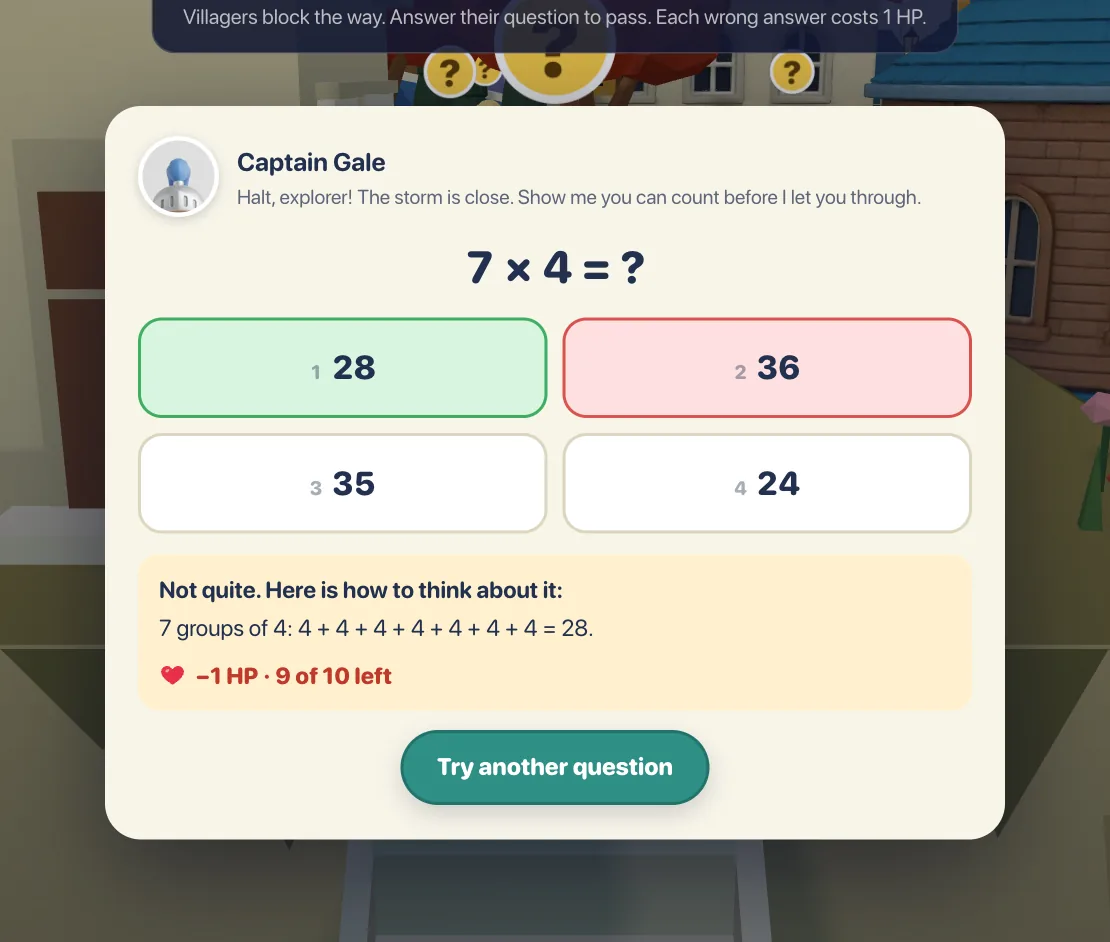
- Equal groups. 7 × 4 is seven groups of four: 4 + 4 + 4 + 4 + 4 + 4 + 4 = 28.
- Arrays. Seven rows of four dots. Turn the paper sideways and it is four rows of seven, which shows that 7 × 4 and 4 × 7 are the same.
- Skip counting. 4, 8, 12, 16, 20, 24, 28: the fourth times table is counting by fours.
A smart order for the facts
There are 100 facts from 0 × 0 to 9 × 9, but most of them come almost free:
- × 0, × 1, × 10: a rule each (anything times 0 is 0; times 1 stays the same; times 10 adds a zero).
- × 2 and × 5: doubling, and counting by fives on a clock face.
- Turnarounds: 3 × 8 is 8 × 3. Once a child trusts this, almost half the table is already learned.
- × 4 and × 9: times 4 is “double, then double again”. Times 9 is “times 10, minus one group” (9 × 7 = 70 − 7 = 63), and the digits of the answer always add up to 9.
- Squares: 3 × 3, 6 × 6, 7 × 7, 8 × 8. They are easy to picture as squares and make good anchors.
- The last few: 6 × 7, 6 × 8, 7 × 8 and their turnarounds. Work them out from a neighbour (6 × 8 is 5 × 8 plus one more 8) until they are remembered.
Five multiplication games for home
- Multiplication war. Remove the face cards from a deck. Each player turns over two cards and multiplies them; the bigger answer takes all four cards.
- Dice arrays. Roll two dice, draw the array on squared paper and write the fact. Fill a page and talk about which facts came up twice.
- Times-table bingo. Draw a 4 × 4 grid and fill it with answers (12, 24, 36…). Call out facts like “6 × 4”; first full row wins.
- Skip-count steps. On the stairs or along the pavement, count one step per multiple: 7, 14, 21… Say the fact out loud on the last step.
- Beat yesterday’s you. Ten facts a day, untimed or with a relaxed timer. Track how many were instant, not how fast the whole set was. The aim is to stop counting on fingers, not to race.
How often: little and often beats one long session. Five minutes on most days, mixing old facts in with new ones, is what moves facts into long-term memory.
Multiplication facts in Wonder Town
Wonder Town is a math adventure game in the browser. Your child explores a floating 3D town and answers each villager’s question to clear the road to the gate before disaster strikes.
In the US 3rd grade question bank, towns 1 and 2 practise the multiplication facts up to 9 × 9 and towns 3 and 4 the matching division facts, with fresh numbers every time. Town 1 needs no account, so your child can start right now. A free account opens the first three towns; the Passport opens all thirteen.
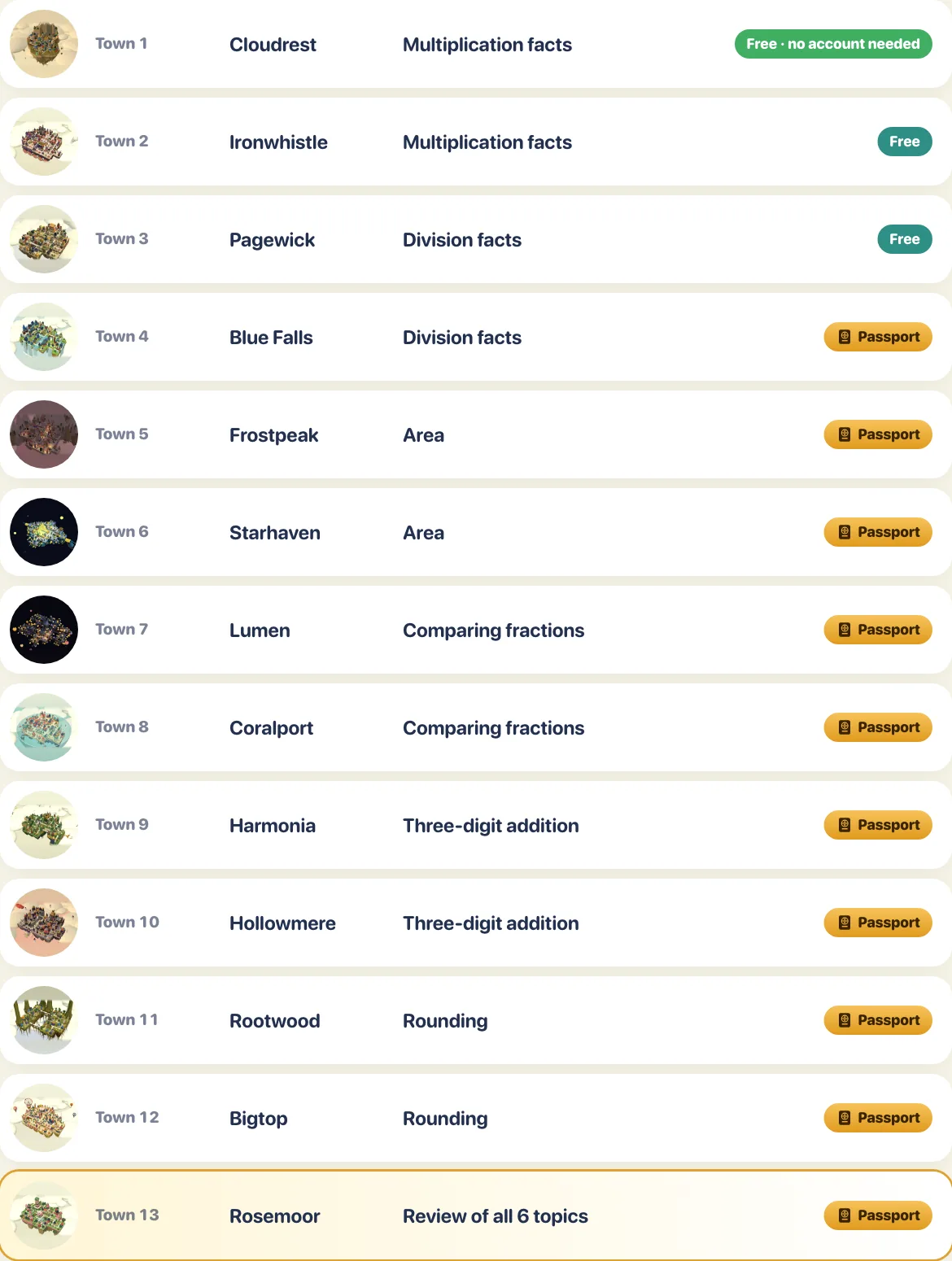
Each round is short (a five-minute clock that pauses while a question is open) and asks a question at every villager on the way, which makes it the “little and often” practice described above. A wrong answer costs one of ten hearts, shows how to think about the fact, and is followed by a new question of the same kind.
Other question banks with the times tables:
- China 2nd grade: the times tables in towns 5 and 6, explained with the times-table rhymes Chinese classrooms use (“five sevens are thirty-five”).
- Japan 2nd grade: the kuku times-table chant in towns 5 and 6.
- Singapore: the tables of 2, 3, 4, 5 and 10 in Primary 2 (towns 5 and 6), and of 6, 7, 8 and 9 in Primary 3 (towns 3 and 4).
When the school sends home a marked times-table quiz, photograph it and turn it into a question bank: the facts your child missed come back by spaced repetition until they are known.
Start here: Math games for 3rd graders · All 3rd grade math questions, with answers · Long division games, which come next
More guides
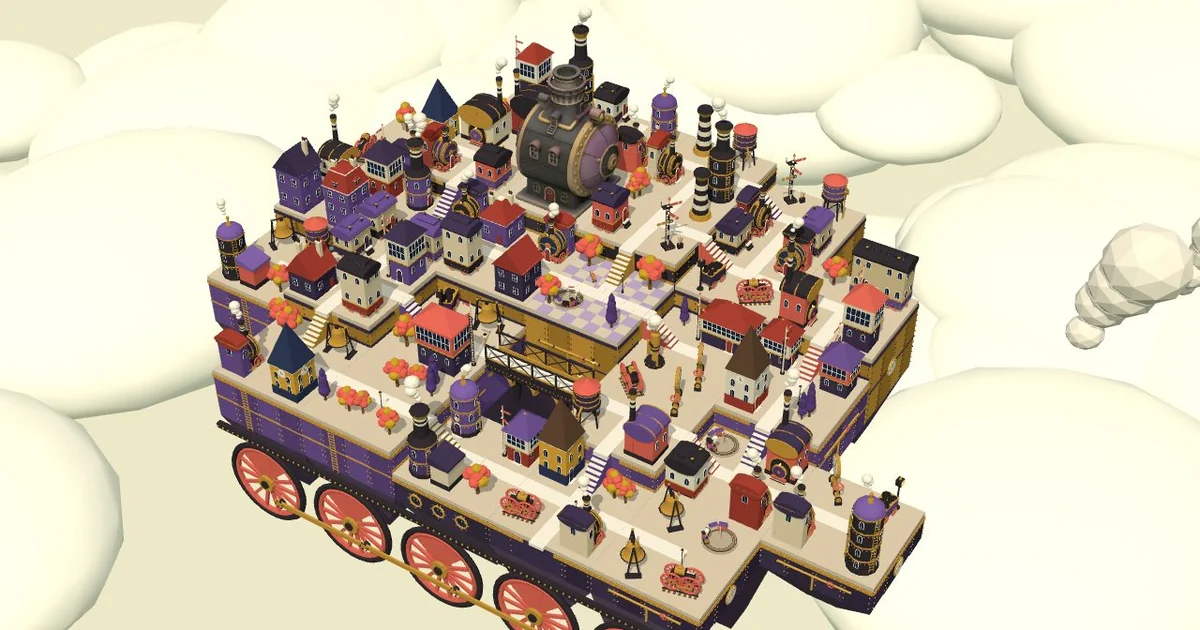 Math at homeLong division games: the steps explained for parentsHow long division works, the two ways schools teach it, four games to play at home, and how to practise it as an adventure in Wonder Town’s 4th grade towns.November 21, 2026 · 4 min read
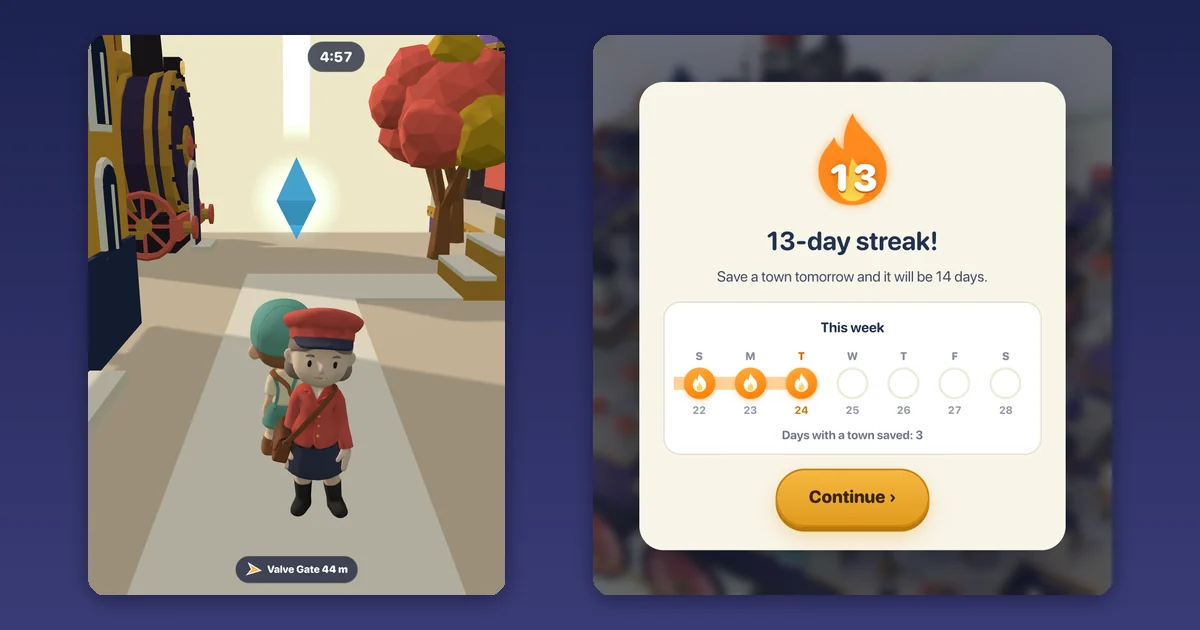 How-to guidesDaily streak and freeze gems: save a town every daySave any town in Wonder Town on a day and that day counts for your daily streak. Where to see the streak and the week, how freeze gems keep it through a missed day, and where the gems hide.November 24, 2026 · 6 min read
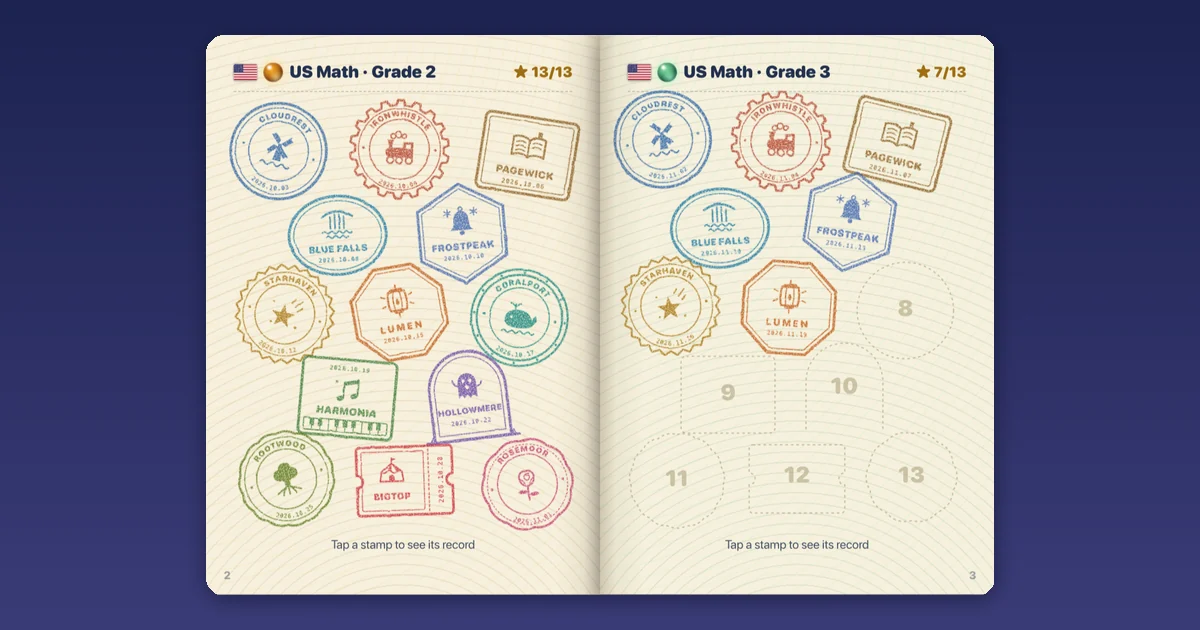 How-to guidesPassport stamps: one for every town you saveEvery town saved in Wonder Town puts a stamp in your Passport, a little book with a page per question bank. How to open it, turn its pages and read each stamp.November 22, 2026 · 6 min read